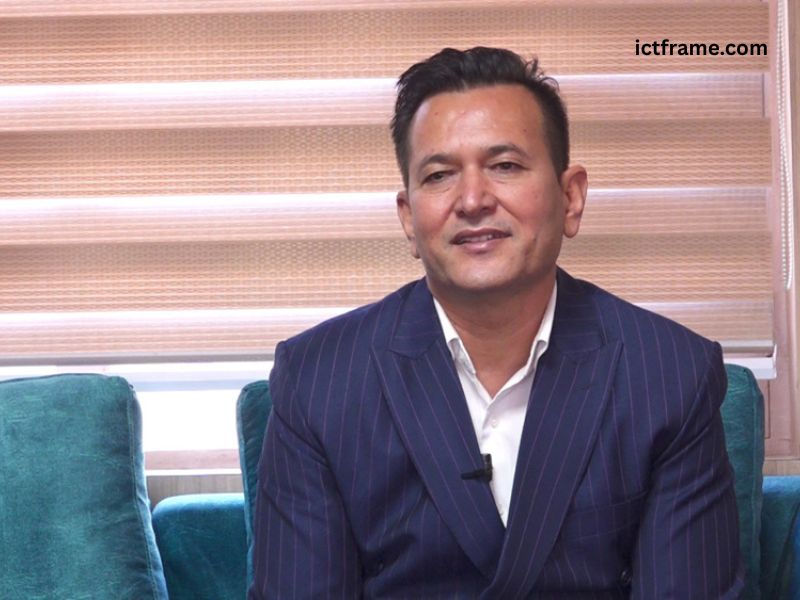
Government Should Open All PPAs; Ready to Export Electricity: IPPAN President Karki

Export Electricity IPPAN President
4th December 2025, Kathmandu
In a significant development for Nepal’s energy sector, the government is preparing to open Power Purchase Agreements (PPA) for hydropower projects up to 10 MW after a prolonged halt.
Export Electricity IPPAN President
This decision, routed through the Ministry of Energy to the Cabinet, is seen as a cautious first step. However, the Independent Power Producers’ Association, Nepal (IPPAN) believes this is insufficient for realizing the nation’s energy aspirations.
IPPAN President Ganesh Karki has emphasized that the government must expand PPAs to cover larger projects. Furthermore, he confidently stated that the private sector is ready to export electricity to neighboring countries, provided the government grants the necessary permissions.
This edited excerpt from an interview with President Karki details the private sector’s perspective on power generation, sales, and the importance of easing PPA restrictions for Nepal’s hydropower future.

Why Limiting PPAs HAMPERS National Goals
The government’s decision to open PPAs only for projects up to 10 MW will not deliver the expected development and progress. We have set ambitious targets, such as selling 10,000 MW to India within the next decade.
Nepal is already selling power to Bangladesh and plans to increase this trade. Recently, the governments of Nepal and India agreed to construct three new transmission lines, primarily to facilitate the flow of Nepali electricity into the Indian market.
India is progressively getting ready to buy our electricity. Therefore, limiting PPAs to just 10 MW projects is counterproductive. Such restrictions make it difficult to achieve our dream of becoming a major electricity export electricity hub. Consequently, the government should continuously open PPAs for projects exceeding the 10 MW threshold.
The Magnitude of Waiting Projects
Currently, over 13,000 MW worth of projects have already submitted applications to the Nepal Electricity Authority (NEA). The government must adopt a long-term plan.
It has previously stated a goal of generating 28,500 MW by 2035. How can this target be realistically achieved? Our focus must shift to creating a roadmap. For instance, Bhutan aims for 25,000 MW by 2040 and is working towards it.
Instead of focusing on immediate consumption or current Indian demand, the planning must project the demand five to seven years ahead. A large-scale project takes five to seven years to become operational after the PPA is signed.
Yesterday, the NEA announced plans to immediately execute PPAs for 5,000 MW. At the very least, this announcement should be acted upon. While opening the 10 MW PPA is welcome, all other PPAs must be progressively opened simultaneously.
Balancing Power: The Need for Storage
The seasonal imbalance, where there is surplus power during the wet season and the need for imports during the dry season, persists. This imbalance is primarily due to the high output from Run-of-River (RoR) projects during the monsoon.
Advertisement

We successfully sold surplus power to India, which prevented it from being wasted. India has committed to purchasing up to 10,000 MW. We must increase production to avoid lifetime dependence on imports from India.
To increase production and prevent wastage, investment in storage projects is crucial. Although solar power and battery storage can offer some relief, they are not complete solutions. We must prioritize developing available resources, specifically by adding peaking projects and heavily investing in hydropower storage projects.
Adopting NEA’s 28,500 MW goal as the PPA benchmark is the most effective way forward. Currently, approximately 11,500 MW has been covered by PPAs.
If we only rely on this figure, winter load-shedding could become a permanent issue. Industries need a 12-month power supply, which we currently cannot guarantee.
A failure to assure a stable power supply in the future will discourage large industries from investing in Nepal. Emerging needs, such as data centers for mining, crypto, and AI, also necessitate a massive increase in power generation.
The Private Sector’s Role in Trading
Some government hesitancy might stem from concerns over managing increased production. However, the private sector can actively find markets once licensed by the government.
The dual issues facing the electricity sector are a lack of production permits and trading restrictions. Currently, only the NEA is authorized to trade power, while the private sector lacks this license.
While the government may have over-licensed projects in the past, it must now work closely with the private sector, given the investment already poured in.
A new Electricity Act, which would have granted trading licenses to the private sector, was close to being passed but was stalled due to the dissolution of parliament.
If the government permits the private sector to produce and sell independently, IPPAN is ready. We are producing power now. The government needs to build the necessary transmission lines and grant a sales license.
With a trading license, the private sector can secure long-term power purchase agreements (25-30 years) with private traders in India and Bangladesh at competitive rates.
While discussions are underway at multiple levels, success hinges on the government granting the crucial trading licenses. We are prepared to export electricity immediately, given the clearance.
For more: Export Electricity IPPAN President