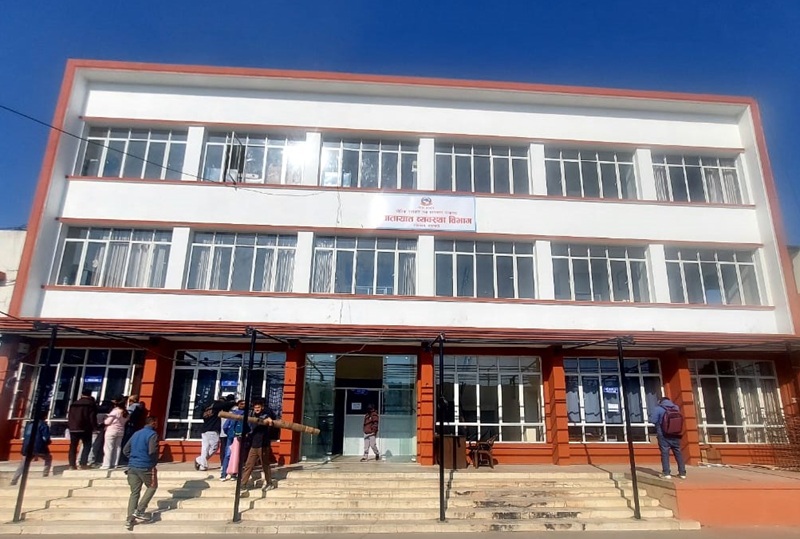

Agricultural Development Bank Limited Nepal: From Rural Credit Pioneer to Modern Banking Powerhouse

22nd December 2025, Kathmandu
The landscape of financial institutions in Nepal is both diverse and competitive, yet few organizations carry the historical weight and socio-economic significance of Agricultural Development Bank Limited, ADBL.
RURAL TO MODERN BANKING
For over 58 years, this institution has functioned as more than just a bank; it has been a catalyst for rural transformation and a pillar of the national economy. As we move through 2025, ADBL has successfully navigated the complexities of a changing financial market to emerge as a modern banking powerhouse while staying true to its roots in the agrarian sector.

A GLORIOUS HISTORY SPANNING NEARLY SIX DECADES
The story of Agricultural Development Bank Limited began on January 21, 1968. Established under the Agricultural Development Bank Nepal Act of 1967, it was designed to solve a fundamental problem in the young nation: the lack of institutional credit for farmers. Before ADBL, the majority of the rural population relied on informal moneylenders, which often led to cycles of debt and stagnation. ADBL succeeded the Cooperative Bank, which had been established in 1963, and immediately took on the mandate of enhancing agricultural productivity.
A major milestone occurred in 1973 when the Land Reform Savings Corporation merged with ADBL. This consolidation allowed the bank to streamline rural credit and expand its footprint. Over the years, legislative updates empowered the bank to do more than just lend money for crops. It began supporting small farmers under group liability schemes and promoting cottage industries, which are vital for rural self-sufficiency. In 1984, realizing that external donor funding alone would not be sufficient for long-term growth, ADBL ventured into commercial banking operations. This shift allowed the bank to mobilize urban savings and redirect those resources into rural development projects.
The most significant legal transformation came with the enactment of the Banks and Financial Institutions Act or BAFIA in 2006. Under this framework, ADBL was registered as a public limited company and received its Class A financial institution license from Nepal Rastra Bank. This marked the formal transition of ADBL from a specialized development bank into a full-service commercial bank capable of competing with any private player in the market.
THE SKELETON AND SOUL
One of the unique aspects of ADBL is its ownership model. Unlike most commercial banks, ADBL maintains a strong partnership with the government and the people it serves. The Government of Nepal holds a 51 percent majority stake, while the remaining 49 percent belongs to the general public. Interestingly, a significant portion of the public shareholders are actually the bank’s own customers and employees. This model ensures that the bank’s objectives remain aligned with national interests and the prosperity of its stakeholders.
The current authorized capital of the bank stands at a massive 25 billion Nepalese Rupees. This is divided between equity share capital and preference share capital. As of the latest reports in late 2025, the issued and paid up capital is approximately 18.88 billion Nepalese Rupees. This robust capital base provides the bank with the stability required to handle large scale project financing while maintaining a safety net for its millions of depositors.
The vision of the bank is to be the Bank of Choice for Shared Prosperity. This is supported by its EASIER corporate values, which stand for Ethics, Accountability, Service, Innovation, Equality, and Respect. These values are not just buzzwords; they are reflected in the bank’s commitment to transparency, which has earned it multiple awards from the Institute of Chartered Accountants of Nepal and the South Asian Federation of Accountants.
FINANCIAL PERFORMANCE BREAKTHROUGH IN 2025
The financial year 2024/25 has been a landmark period for ADBL. According to the fourth quarter unaudited financial statements, the bank witnessed a remarkable 50 percent jump in net profit, reaching 4.15 billion Nepalese Rupees. This growth is particularly impressive given the broader economic challenges facing the region, including fluctuating credit demand and rising interest rates.
Key financial metrics highlight the bank’s operational efficiency. Total assets have expanded to 362.50 billion Nepalese Rupees, making it one of the largest financial entities in the country. Deposit mobilization has been equally strong, reaching 293.57 billion Nepalese Rupees. This indicates a high level of public trust in the bank’s stability. On the lending side, the loan portfolio has grown to 216.02 billion Nepalese Rupees, with a focus on both traditional agricultural sectors and modern retail segments.
The bank’s Earnings Per Share or EPS rose significantly from 18.56 to 27.63 Nepalese Rupees, providing excellent value for its shareholders. Furthermore, the bank has maintained a healthy interest rate spread of 3.96 percent. In terms of interest rates as of December 2025, the bank offers competitive returns, with the base rate sitting at 5.28 percent. Savings accounts like the Remittance Savings offer around 5.36 percent, while fixed deposits range depending on the duration, often exceeding 5.5 percent for remittance-linked accounts.
INNOVATIVE PRODUCTS AND NATIONWIDE REACH
With over 285 offices spread across all 7 provinces and 77 districts, ADBL has the most extensive geographic reach of any bank in Nepal. This network allows it to serve more than 2.2 million customers. The bank’s product portfolio has evolved to meet the needs of everyone from a subsistence farmer in the mountains to a corporate entrepreneur in Kathmandu.
Advertisement

Retail products include specialized savings accounts like the Hamro Bachat Khata and women-centric schemes. The bank also offers a variety of loan products, including home loans, auto loans, and gold loans. However, its core strength remains agricultural finance. The bank provides tailored credit for livestock, tea and coffee production, and agricultural mechanization.
One of the most innovative introductions in recent years is the Kisan Credit Card. Developed in collaboration with international partners like the International Fund for Agricultural Development, this card allows farmers to access credit for seeds, fertilizers, and tools in a cashless manner. Accompanied by the Kisan App, this initiative provides farmers with technical knowledge and market information, effectively bridging the gap between traditional farming and modern technology.
DIGITAL TRANSFORMATION AND THE CUSTOMER EXPERIENCE
In 2025, ADBL has accelerated its digital roadmap. The ADBL Smart Plus mobile banking app has become a central tool for customers, offering features like the Smart FoneLoan, which provides instant credit based on transaction history. The bank has integrated seamlessly with QR payment systems and ConnectIPS, making day to day transactions effortless.
For Nepalese living abroad, the bank offers online account opening services, including specialized NRN accounts. The implementation of a 5-in-1 account structure has simplified the banking experience, allowing users to manage savings, demat, and trading accounts through a single interface. These digital improvements have not only enhanced customer satisfaction but have also reduced operational costs, contributing to the bank’s recent profit surge.
OVERCOMING STRUGGLES AND BUILDING RESILIENCE
The journey of ADBL has not been without its hurdles. One of the primary struggles has been the management of non-performing loans or NPLs. The banking sector in Nepal saw a general rise in NPL ratios to around 4.6 percent by mid-2025. ADBL has had to implement rigorous risk management frameworks and strengthening provisioning policies to mitigate these risks.
There have also been challenges regarding the utilization of subsidized agricultural loans. In some instances, funds intended for farming were diverted to other sectors. In response, ADBL has enhanced its field oversight and monitoring mechanisms to ensure that credit is used for its intended productive purposes. Additionally, the bank has faced stiff competition from private commercial banks that often have more flexible marketing strategies. However, ADBL’s deep-rooted community ties and its role as a government-backed institution have helped it maintain its market share.
SOCIO ECONOMIC CONTRIBUTIONS AND CORPORATE RESPONSIBILITY
Beyond balance sheets, ADBL is a leader in Corporate Social Responsibility. The bank regularly supports educational institutions by providing materials and infrastructure. It has also been active in disaster relief and promoting financial literacy in remote areas. By conducting training programs through its dedicated training department, the bank empowers thousands of individuals with the financial skills needed to start their own enterprises.
The bank’s contribution to the national goal of Prosperous Nepal, Happy Nepali is evident in its focus on the deprived sector. By channeling credit to women, indigenous communities, and low-income individuals, ADBL is fostering inclusive growth that reaches the grassroots level of society.
THE ROAD AHEAD FOR ADBL
As we look toward the future, Agricultural Development Bank Limited is positioned for continued growth. Its strategy involves further expanding its digital footprint, strengthening its SME and corporate financing wings, and continuing to modernize the agricultural sector through technology and data-driven lending.
The bank is also exploring green banking initiatives, supporting renewable energy projects like hydropower and solar, which are vital for Nepal’s sustainable development. With its blend of historical legacy and modern vision, ADBL remains the cornerstone of the Nepalese financial system. It stands as a testament to the fact that a bank can be both profitable and socially responsible, serving as a reliable partner for millions of people on their journey toward prosperity.
THE BOTTOM LINE
From its humble beginnings as a rural credit provider in 1968 to its current status as a top-tier commercial bank, Agricultural Development Bank Limited has shown incredible adaptability. It has overcome systemic challenges, embraced the digital revolution, and delivered record-breaking financial results in 2025. For anyone interested in the financial health of Nepal, ADBL represents a unique case study in institutional evolution. It is not just a bank; it is the heartbeat of the nation’s economic progress.
For More: Rural to Modern Banking