
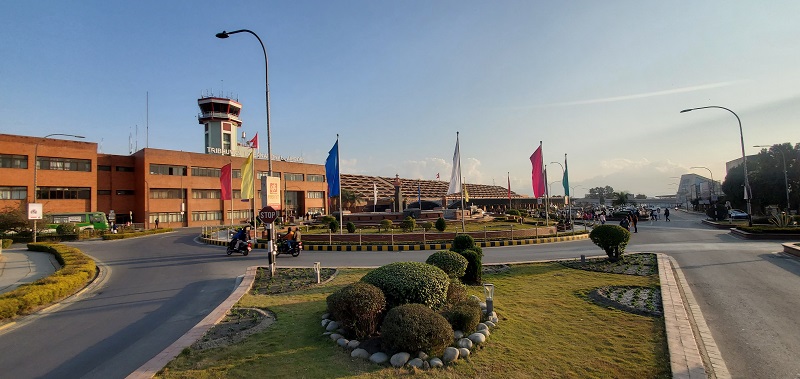
Tribhuvan International Airport passenger record reaches 97.7 lakh in 2025, marking historic growth in international and domestic travel.

15th January 2026, Kathmandu
The Tribhuvan International Airport passenger record reached a historic milestone in 2025, underscoring Nepal’s strong recovery and expansion in the aviation and tourism sectors. According to official data released by the Civil Aviation Authority of Nepal (CAAN) in early 2026, Tribhuvan International Airport (TIA), the country’s primary international gateway, handled an unprecedented 9.77 million (97.7 lakh) passengers during the 2025 calendar year. This represents the highest figure ever recorded in the airport’s operational history, surpassing the previous record of 9.42 million set in 2024.
Tribhuvan International Airport Passenger
Out of the total passenger volume, international travelers accounted for 5.25 million (52.5 lakh) passengers, while domestic air travel contributed 4.52 million (45.2 lakh) passengers. This balanced growth across both international and domestic segments highlights the airport’s central role in supporting tourism, business mobility, and regional connectivity within Nepal. Despite the rise of new international airports in Bhairahawa and Pokhara, TIA remains the dominant hub, facilitating over 95 percent of the country’s total international air traffic.

Flight Operations and Monthly Peaks
The Tribhuvan International Airport passenger surge also translated into a significant increase in flight operations. In 2025, TIA managed a total of 138,145 flights, reflecting intense operational activity throughout the year. The breakdown of these movements includes:
International Flights: 34,594 takeoffs and landings, connecting Kathmandu with over 40 global destinations.
Domestic Flights: 103,551 movements, linking the capital with major cities like Biratnagar and Pokhara, as well as remote STOL (Short Take-Off and Landing) airfields.
November 2025 emerged as the busiest month for international passenger traffic. During this period alone, the airport recorded more than 500,000 international passengers, driven largely by peak tourist arrivals, festival-related travel for Dashain and Tihar, and seasonal labor migration. The surge in the final quarter illustrates the strong correlation between Nepal’s cultural calendar and aviation demand.
Cargo Growth and Logistics Hub Importance
In addition to passenger traffic, cargo and mail services at Tribhuvan International Airport experienced notable growth in 2025. The airport handled approximately 279,572 tons of international cargo, supporting Nepal’s import-export activities and supply chain operations. Furthermore, international mail transport reached 463 tons, highlighting increased cross-border logistics and communication flows.
Advertisement

The rise in cargo volumes underscores TIA’s importance beyond passenger movement. As Nepal continues to refine its alternative international airports, TIA serves as the critical hub for trade, medical supplies, industrial goods, and time-sensitive shipments. The growth in cargo handling suggests expanding commercial activity and improved logistics coordination between airlines and freight forwarders.
Infrastructure Challenges and Future Upgrades
Despite the impressive Tribhuvan International Airport passenger record, the surge has intensified pressure on existing infrastructure. Designed to handle roughly 8 million passengers annually, TIA is currently operating significantly beyond its intended capacity. This has led to recurring challenges related to runway congestion, terminal overcrowding, and limited aircraft parking aprons.
To address these issues, CAAN is fast-tracking several upgrade projects scheduled for completion by late 2026. Key developments include:
Parallel Taxiway Expansion: Reducing runway occupancy time and “holding” delays for arriving aircraft.
New International Terminal: A planned facility at Tilganga that will eventually triple the current terminal’s capacity.
Hangar Relocation: Moving Nepal Airlines and Nepal Army infrastructure to create more space for commercial aircraft parking.
Conclusion
In conclusion, the Tribhuvan International Airport passenger record of 9.77 million travelers in 2025 marks a historic achievement for Nepal’s aviation sector. With strong growth in international and domestic travel, rising cargo volumes, and increasing flight operations, TIA has reaffirmed its strategic importance to the national economy. While infrastructure challenges persist, the record performance signals robust demand and sets a strong foundation for Nepal’s future aviation and tourism development.