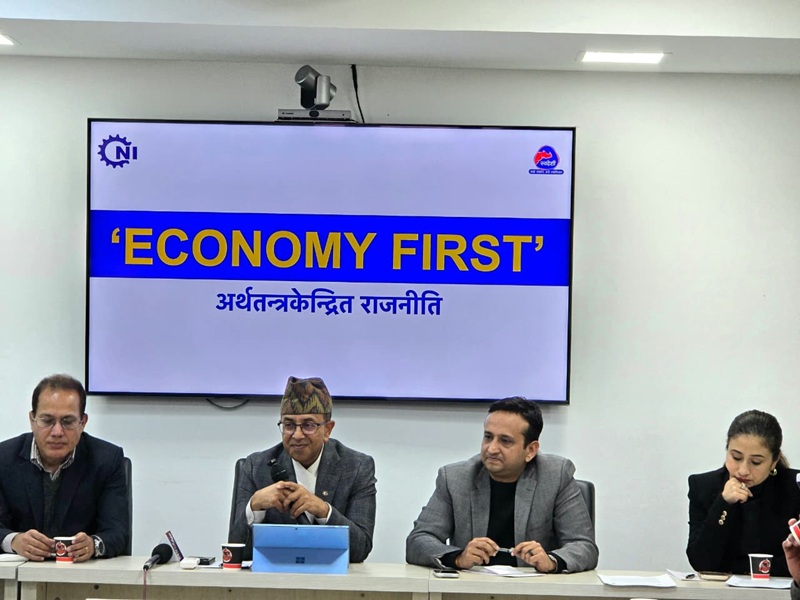
Nepal Industrialization 2026: 10 Key Policy Shifts to Drive a $100 Billion National Economy

19th January 2026, Kathmandu
As of January 2026, the discussion surrounding Nepal’s economic transformation has hit a pivotal milestone. Despite its strategic location between economic giants China and India, Nepal has yet to mirror their high-growth trajectories.
Nepal Industrialization 2026
To address this, a comprehensive roadmap has been proposed to achieve a $100 billion economy through aggressive industrialization and policy stability.

The Vision: Tapping into Nepal’s Comparative Advantage
Nepal possesses immense potential in hydropower, minerals, medicinal herbs, and information technology. However, the lack of a stable policy environment has hindered the transition from a remittance-based economy to a production-based one.
The core of the new economic vision focuses on two pillars: Import Substitution and Export Promotion.
By empowering the Nepalese private sector as the primary engine of growth, the country aims to reach double-digit GDP growth. The Confederation of Nepalese Industries (CNI) has identified 10 high-impact sectors, including manufacturing, infrastructure, IT, and tourism, as keys to this transformation.
Key Policy Recommendations for Economic Reform
1. Industrial Strengthening and Land Reforms
To foster a competitive manufacturing environment, the proposal suggests:
Land Use Policy: Abolishing land ceilings for industries and extending industrial land leases to 99 years, similar to international practices.
Infrastructure Support: Providing quality electricity at subsidized rates and ensuring the government refunds 75% of costs for access roads and transmission lines built by investors.
Exit Strategy: Simplifying the liquidation process for failing industries to allow for capital reallocation.
2. Legal Reforms and Investor Confidence
A major hurdle for investment has been the “climate of fear” regarding legal disputes. Proposed reforms include:
Decriminalizing Business: Shifting commercial disputes from criminal to civil liability to prevent the immediate arrest of business owners before a crime is proven.
Advertisement

Anticipatory Bail: Introducing legal provisions for anticipatory bail to protect investors from motivated or malicious prosecutions.
Payment Security: Enacting a Security of Payment Act to ensure businesses can recover dues from credit sales effectively.
3. Promoting “Make in Nepal” and Export Growth
To balance the trade deficit, the roadmap emphasizes:
Domestic Consumption: Making it mandatory for government bodies to purchase “Made in Nepal” products.
Export Incentives: Providing cash subsidies based on the value added to exported goods and establishing international-standard testing labs to ensure Nepalese products meet global ISI and NS standards.
Digital Services: Offering a 10-year income tax holiday for IT service exports to prevent “brain drain” and encourage “brain gain.”
4. Direct Foreign Investment (FDI) and Labor
Fast-Track FDI: Creating a “Trusted Investor” profile to allow credible international firms to bypass bureaucratic red tape.
Labor Flexibility: Allowing industries to adopt “Hire and Fire” policies for at least 10% of the workforce to adapt to technological changes and productivity needs.
Overcoming Structural Challenges
The roadmap acknowledges critical bottlenecks such as low capital expenditure, high cost of doing business, and policy inconsistency during government transitions. To achieve a $100 billion status, Nepal must ensure Policy Permanence, where economic strategies remain unchanged regardless of political shifts.
By implementing these integrated reforms from infrastructure development to intellectual property protection, Nepal can transition from a “potential-rich” nation to an industrial powerhouse in South Asia.
For more: Nepal Industrialization 2026