
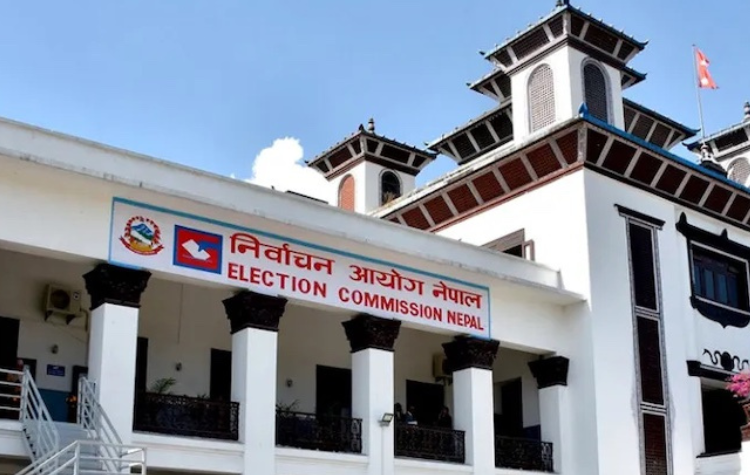
Election Commission Helicopter Ballots Delivery for Remote Districts

21st January 2026, Kathmandu
The Election Commission helicopter ballots delivery plan has been formally approved to ensure the safe and timely transportation of ballot papers to the most remote Himalayan districts of Nepal.
This logistical operation is vital for the upcoming House of Representatives election scheduled for March 5, 2026. The decision reflects the difficult realities of conducting a nationwide poll in a country where road access to high-altitude regions is severely limited, especially during the winter months.
Election Commission Helicopter Ballots
Airlifting ballots is not merely a matter of convenience but a democratic necessity. Without the use of helicopters, thousands of citizens in the high Himalayas would be effectively disenfranchised due to the impossibility of reaching their settlements via conventional transport within the required constitutional timelines.

Ballot Papers to Be Airlifted to Five Himalayan Districts
According to the Election Commission, ballot papers will be specifically transported by helicopter to five districts: Manang, Mustang, Humla, Mugu, and Dolpa. These regions are characterized by extreme geographical barriers, including rugged terrain and passes that are often blocked by heavy snowfall in February and March.
In addition to the physical ballots, other essential election materials—such as indelible ink, ballot boxes, and security seals—will be airlifted to Humla, Dolpa, and Mugu. The Commission has emphasized that air transport remains the only viable solution for these districts to ensure that polling stations are fully equipped well before the March 5 deadline.
Delivery Timeline and Logistical Planning
The Election Commission aims to complete the delivery of all ballot papers and election materials by the third week of February. This schedule provides a necessary buffer for local election offices to distribute materials from the district headquarters to individual polling centers.
While the commission has already secured courier services and truck transport for the more accessible Terai and Hill regions, the high Himalayan districts require a different approach. A formal notice was issued on January 1, 2026, calling for private helicopter service providers to submit bids for the transport process. However, as of late January, the lack of immediate applications from private operators has raised some concerns regarding execution readiness, potentially requiring the Commission to coordinate with the Nepal Army for aviation support.
The Complexity of Ballot Paper Distribution
The logistical challenge is significantly increased by the structure of the electoral system in Nepal. Under the First Past the Post (FPTP) system, the ballots are unique to each of the 165 constituencies. This means that the ballots for a constituency in Dolpa cannot be used in Mugu, requiring a highly organized sorting and labeling process before they are loaded onto helicopters.
Advertisement

In contrast, the Proportional Representation (PR) ballots are uniform across the country. These ballots feature 57 election symbols representing the 63 political parties registered for the proportional category. While the PR ballots are easier to manage in terms of content, the sheer volume required for millions of voters still poses a weight and space challenge for small mountain-capable helicopters.
Importance of Air Transport in Election Integrity
The Election Commission helicopter ballots strategy is a cornerstone of maintaining electoral integrity in isolated areas. By ensuring that ballots arrive on time and under strict security protocols, the Commission prevents the risk of local shortages that could lead to polling delays or disputes.
Every transported package follows a strict chain of custody. From the printing press at the Janak Education Materials Centre to the helicopter hangar and finally to the district election officer, each movement is monitored by security forces. This level of oversight is essential to prevent any tampering or loss of sensitive voting materials in transit.
Operational Risks and Weather Contingencies
Operating flights in the Himalayan region during late winter involves significant risks. Weather volatility, including sudden blizzards and high winds, can ground flights for days at a time. The Commission has noted that they are prepared with contingency plans, which include the use of all-weather capable military aircraft if private operators are unable to fulfill the requirements.
The high operational costs of mountain flying also play a role in the planning process. However, the Election Commission has stated that the cost of airlifting is secondary to the constitutional mandate of ensuring that every eligible voter, regardless of their geographical location, has the opportunity to cast their vote.
Ensuring Nationwide Democratic Participation
The decision to airlift ballots underscores the commitment of the state to equal electoral access. From the densely populated urban centers of Kathmandu to the highest settlements in Dolpa, the mandate of the Commission is to reach every corner of the nation.
As Nepal prepares for the March 5 parliamentary elections, the successful execution of the helicopter delivery plan will be a major indicator of the country’s organizational capacity. It ensures that the democratic process remains functional even under the most challenging environmental conditions, upholding the principle that every vote counts.
For More: Election Commission Helicopter Ballots


