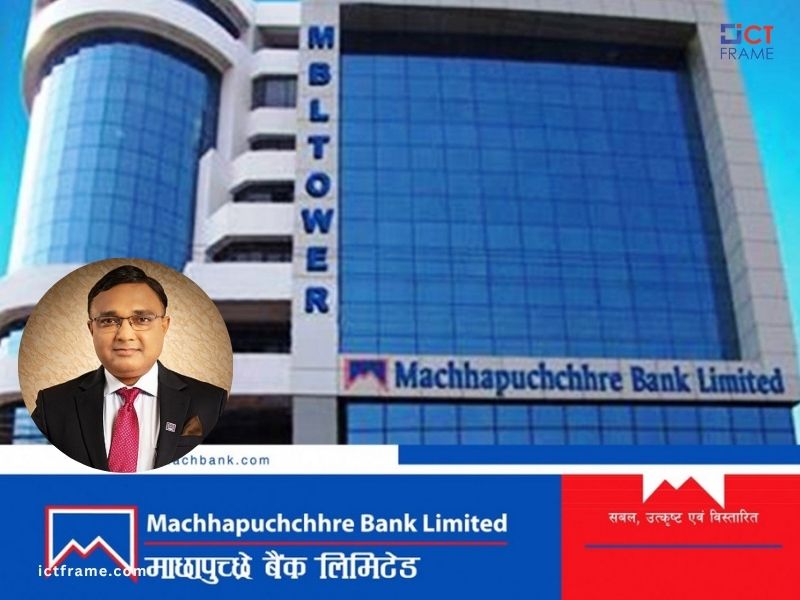
Machhapuchhre Bank Profit Growth in Q2 FY 2082/83

25th January 2026, Kathmandu
Machhapuchchhre Bank Limited has officially released its second-quarter financial report for the fiscal year 2082/83, showcasing a notable recovery and growth in its bottom line. The bank reported a 25.24 percent year-on-year increase in net profit, fueled primarily by enhanced asset quality and steady growth in core operating income. For the period ending in Poush 2082 (mid-January 2026), the bank’s net profit crossed the billion-rupee mark, reflecting a resilient performance in a competitive banking landscape.
Machhapuchhre Bank Profit Growth
According to the un-audited financial disclosure, Machhapuchchhre Bank earned a net profit of 1.01 billion rupees during the first six months of the current fiscal year. This is a significant jump from the 807.3 million rupees recorded during the same period in the previous fiscal year, 2081/82. This financial uptick is being closely watched by investors on the Nepal Stock Exchange (NEPSE), as it signals a successful turnaround for the institution after a period of higher impairment charges in earlier quarters.

Improving Asset Quality: The NPL Factor
A central factor contributing to the rise in Machhapuchchhre Bank’s profit is the successful management of its loan portfolio. The bank managed to bring down its non-performing loan (NPL) ratio from 4.54 percent to 4.25 percent by the end of the second quarter. In the banking sector, a decreasing NPL ratio is a strong indicator of healthier credit recovery and improved appraisal systems.
The reduction in bad loans has a multi-fold impact on the bank’s financial health. Most importantly, it lowers the provisioning requirement—the amount of money a bank must set aside to cover potential loan defaults. With less capital tied up in provisions, more of the bank’s earnings flow directly into the net profit column, effectively boosting its financial stability and capacity for future lending.
Growth in Core Banking Income
The bank’s core income streams also showed positive movement during the review period. Net interest income, which represents the difference between interest earned from loans and interest paid on deposits, grew by 6.43 percent to reach 2.94 billion rupees. This growth indicates that despite the fluctuating interest rate environment in Nepal, the bank has maintained a healthy spread and efficient loan deployment.
Furthermore, the bank reported a sharp increase in non-interest income. Net fee and commission income rose by 22.12 percent, reaching 820.7 million rupees. This increase is likely driven by higher volumes in digital banking services, remittance, and trade-related fees. Consequently, the total operating income of the bank for the first half of the year reached 4.02 billion rupees, an 8.83 percent increase from the 3.69 billion rupees recorded in the previous year.
Understanding the Distributable Profit and Dividends
For shareholders, the most critical highlight of the Q2 report is the sharp rise in distributable profit. This is the amount of profit actually available for dividend distribution after adjusting for mandatory regulatory reserves required by Nepal Rastra Bank.
By the end of Poush 2082, Machhapuchchhre Bank reported a distributable profit of 436.3 million rupees. This is a massive leap from the 166.2 million rupees reported in the same period last year. Based on these figures, the bank’s current dividend capacity is calculated at 7.22 percent. This increase suggests that shareholders may look forward to a better return on their investment compared to the previous fiscal year.
Advertisement

Key Financial Indicators and Shareholder Value
The strong performance in the first half of the year has also pushed up the bank’s key value indicators. Earnings per share (EPS) surged from 13.36 rupees to 16.73 rupees, a clear indicator of improved profitability on a per-share basis. Additionally, the net worth per share was recorded at 161.6 rupees.
On the balance sheet side, the bank showed steady growth in its core business:
Paid-up Capital: Increased by 4 percent to 12.08 billion rupees.
Reserve Fund: Currently stands at 6.98 billion rupees.
Deposit Collection: Rose by 10.78 percent to reach 204.71 billion rupees.
Loan and Advances: Grew by 8.88 percent to reach 154.95 billion rupees.
Other regulatory ratios remain well within the limits set by the central bank. The bank’s base rate is reported at 5.48 percent, and the credit-to-deposit (CD) ratio stands at 77.99 percent. This indicates that the bank has ample liquidity to continue expanding its loan portfolio in the coming months without breaching the 90 percent regulatory ceiling.
Conclusion: A Resilient Outlook
The second-quarter results of Machhapuchchhre Bank reflect a strategic shift toward quality over quantity. By successfully reducing its NPL ratio and focusing on fee-based income alongside interest earnings, the bank has significantly bolstered its profitability and dividend potential. As the fiscal year 2082/83 progresses, the bank appears well-positioned to sustain this momentum, provided it continues to maintain a tight grip on its operating expenses and credit risk management.
For More: Machhapuchhre Bank Profit Growth