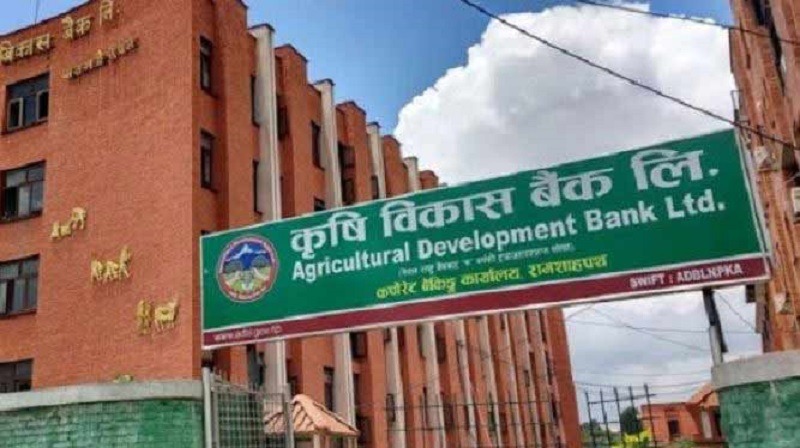
Agricultural Development Bank Financial Results After Q2

29th January 2026, Kathmandu
The agricultural sector remains the backbone of the Nepalese economy and the financial results of the Agricultural Development Bank Limited for the second quarter of the fiscal year 2082/83 reflect a bank that is successfully aligning its commercial goals with its developmental mandate. According to the unaudited financial statements for the period ending in Poush 2082 the bank has reported a net profit of 707.43 million rupees.
Agricultural Development Bank Financial Results
This performance indicates a stable recovery path as the bank navigates a complex regulatory environment and shifting interest rate dynamics. The results showcase a significant improvement in operating fundamentals compared to the previous quarters highlighting the banks resilience in a competitive banking landscape.

Revenue Growth and Operating Income
The primary driver of the Agricultural Development Bank Financial success this quarter has been the robust growth in its total operating income. For the first six months of the fiscal year the cumulative operating income reached 5.22 billion rupees with 2.60 billion rupees generated in the second quarter alone. This growth was supported by a healthy net interest income of 4.52 billion rupees year to date. Despite the downward pressure on lending rates across the industry the bank managed to earn 10.46 billion rupees in gross interest income while keeping its interest expenses capped at 5.94 billion rupees for the half year period.
In addition to traditional interest based earnings the bank saw a notable rise in its service based revenue. Net fee and commission income reached 733.58 million rupees by the end of Poush 2082 which is a clear indicator of increased transaction volumes and a wider adoption of the banks digital banking services. By diversifying its income streams the Agricultural Development Bank is reducing its sensitivity to interest rate fluctuations and building a more sustainable profit model for the future.
Asset Quality and Risk Management
Managing credit risk remains a top priority for the bank especially given its extensive lending to the agricultural and priority sectors. The non performing loan ratio for the period was reported at 11.18 percent. While this figure is higher than the industry average for commercial banks it is a reflection of the unique risks associated with seasonal agricultural lending and the ongoing economic adjustments in rural Nepal. To mitigate this risk the bank has maintained a very conservative provisioning policy with its total loan loss provision to total non performing loan ratio exceeding 100 percent. Impairment charges for the second quarter were recorded at 165.82 million rupees demonstrating a proactive approach to potential credit stress.
Advertisement

Operating Efficiency and Expenses
The bank has also made strides in controlling its internal costs. Operating expenses for the quarter stood at 1.03 billion rupees bringing the year to date total to 2.08 billion rupees. Personnel expenses continue to be the largest component of the banks cost structure reflecting its massive nationwide workforce of over 3000 employees. Despite these costs the bank achieved an operating profit of 2.01 billion rupees for the first half of the year. This ability to generate over 2 billion rupees in operating profit before impairment and taxes is a strong sign of the banks core earning power and operational efficiency.
Balance Sheet and Capital Strength
The total assets of Agricultural Development Bank have reached 392.48 billion rupees as of mid January 2026. The bank has successfully mobilized 323.44 billion rupees in customer deposits which is a testament to the deep seated trust the public has in this state influenced institution. On the lending side the bank has extended 218.27 billion rupees in loans and advances with a significant portion directed toward small scale farmers and agricultural enterprises.
The banks capital position remains exceptionally strong with a paid up capital of 19.74 billion rupees and a reserve fund of 17.26 billion rupees. The total equity attributable to holders is 37.76 billion rupees providing one of the largest capital buffers in the Nepalese banking sector. This financial strength ensures that the bank can continue to support the governments agricultural mandates while meeting the stringent capital adequacy requirements set by Nepal Rastra Bank.
Shareholder Value and Key Ratios
For investors the bank reported an annualized earnings per share of 19.62 rupees for the period. The net worth per share remains high at over 235 rupees and the distributable profit as of the end of Poush 2082 stands at 719.88 million rupees. With a credit to deposit ratio of 64.33 percent the bank has significant liquidity to deploy into new lending opportunities in the coming months. The base rate for the month of Poush 2082 was recorded at 5.02 percent making the bank highly competitive for borrowers seeking affordable credit.
In conclusion the second quarter report for 2082 2083 paints a positive picture for the Agricultural Development Bank Limited. By focusing on operating income growth and maintaining a massive capital reserve the bank is well positioned to handle any future market volatility. While the non performing loan ratio requires continued vigilance the banks overall financial health is improving. As it enters the second half of the fiscal year the institution remains a vital pillar of Nepals financial system and a key driver of rural prosperity.