
Nepal India Border Closure During Election

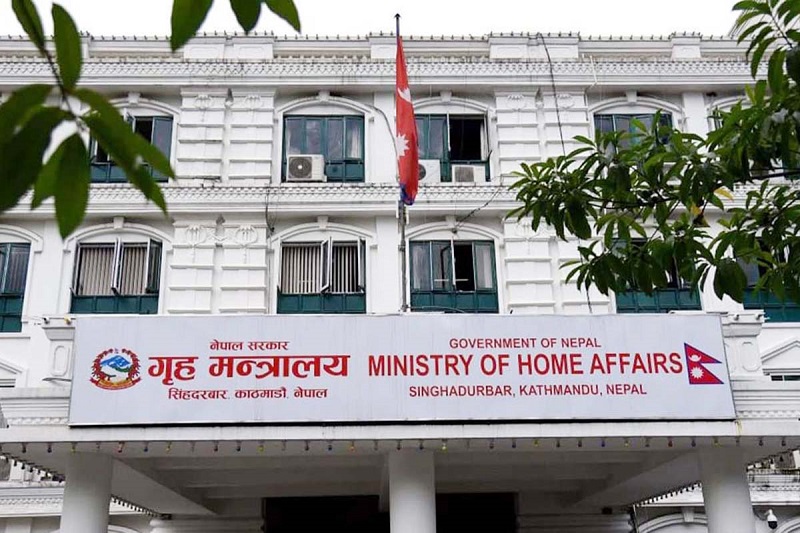
This image shows the building of the Ministry of Home Affairs in Singha Durbar, Kathmandu, on Wednesday, July 13, 2022. Photo: RSS
26th February 2026, Kathmandu
The strategic administration of international boundaries has taken center stage in Sarlahi district as the local government officially announced the Nepal India Border Closure for a period of 72 hours. This critical security measure is being implemented to ensure the integrity and safety of the upcoming House of Representatives election scheduled for March 5, 2026 (Falgun 21, 2082). Following a high-level meeting of the District Security Committee, authorities have resolved to seal all entry and exit points along the 51 kilometer open border that Sarlahi shares with the Indian state of Bihar. This proactive step is part of a broader national strategy to prevent cross-border disturbances, unauthorized movement of anti-social elements, and any potential interference that could undermine the democratic process in the Madhesh Province. In the year 2082, as political competition intensifies, maintaining a sanitized electoral environment in the sensitive border regions has become a top priority for both the Election Commission and the Ministry of Home Affairs.
Nepal India Border Closure
The timeline for the Nepal India Border Closure is strictly defined to cover the most sensitive period of the polling cycle. According to the notice issued by the District Administration Office in Malangwa, the complete suspension of cross-border movement will begin at midnight on March 2, 2026 (Falgun 18, 2082) and will remain in effect until the conclusion of polling at midnight on March 5, 2026 (Falgun 21, 2082). During these three days, all formal and informal crossings will be under 24-hour surveillance by the Armed Police Force (APF) and the Nepal Police, in close coordination with the Indian Sashastra Seema Bal (SSB). This 72-hour window is globally recognized as the standard period for border sealing during major national elections to ensure that the silent period—the time when active campaigning stops—is not used for illegal cross-border mobilization or the transport of prohibited items.
The primary objective behind the Nepal India Border Closure in Sarlahi is to mitigate the unique security risks posed by an open and porous international boundary. Chief District Officer Ramu Raj Kadariya, who chairs the District Security Committee, emphasized that the measure is intended to curb the movement of unauthorized individuals who might attempt to influence local voters or cause communal tensions. Border districts in the Tarai region often face challenges such as the illegal influx of small arms, the movement of muscle power across the border, and the potential for political actors to seek refuge in neighboring territory after committing electoral offenses. By sealing the border, the administration creates a controlled environment where security forces can focus their internal resources on monitoring polling stations and protecting voters, rather than managing a constant flow of international transit.
In addition to human movement, the Nepal India Border Closure also involves a complete ban on the operation of vehicles with foreign number plates. A supplementary notice issued by the Sarlahi Customs Office confirms that from February 27 to March 6, 2026, the entry and operation of Indian registered two-wheelers and four-wheelers will be strictly prohibited across the district. This is a critical tactical decision because foreign vehicles are often used to bypass local checkpoints or to transport large groups of people for political rallies. By suspending the temporary entry and pass facilities usually granted at the customs points, the authorities are effectively neutralizing a significant logistical variable. Security personnel have been instructed to seize any such vehicle found in operation during this restricted period, reinforcing the message that the election code of conduct will be enforced with zero tolerance.
Advertisement

Despite the strictness of the closure, the administration has made provisions for essential services to ensure that the humanitarian needs of the local population are not compromised. Movement related to ambulances, fire engines, and vehicles carrying essential medical supplies may be allowed after thorough security verification and coordination with the district command center. Furthermore, the Election Commission has clarified that the movement of international observers and security agencies on duty will be facilitated through designated channels. This nuanced approach ensures that while the general public is restricted from crossing, the vital life-support systems of the border communities remain functional. Residents who frequently cross the border for work, health checkups, or social visits have been urged to complete their necessary travels before the midnight deadline of Falgun 18.
The success of the Nepal India Border Closure depends heavily on the bilateral coordination between the district officials of Nepal and their counterparts in Bihar, India. Regular coordination meetings between the District Magistrate of Sitamarhi and the Chief District Officer of Sarlahi are held to share intelligence and synchronize patrol schedules. This international cooperation is a hallmark of the friendship between the two nations and demonstrates a mutual commitment to regional stability. During the closure, the Indian side typically increases its own vigilance to prevent any criminal elements from using Indian soil to plan or execute activities that could disrupt the peace in Nepal. This joint security umbrella is what allows the residents of Sarlahi to cast their votes with a sense of safety and confidence.
From a governance perspective, the border sealing is an exercise in administrative precision and transparency. The public notice, distributed in both Nepali and English, clearly outlines the legal authority and the specific scope of the restrictions. This ensures that the local population, as well as the business and diplomatic communities, are well-informed in advance. By formalizing these controls, the government of Nepal is fulfilling its constitutional duty to conduct elections that are free from external coercion. In the year 2082, as Nepal continues to refine its federal democratic structure, the ability to manage sensitive border dynamics effectively is a sign of increasing institutional maturity. The closure is not viewed as a restriction of rights but as a temporary and necessary safeguard for the most fundamental right of all: the right to a fair and peaceful vote.
In conclusion, the Nepal India Border Closure in Sarlahi for the 2082 House of Representatives election is a calculated and strategic measure designed to protect the sanctity of the ballot. By sealing the border for 72 hours and restricting the movement of foreign vehicles for an even longer period, the District Security Committee is creating a secure environment for democratic participation. Under the leadership of CDO Ramu Raj Kadariya, the coordinated efforts of the Nepal Police, the Armed Police Force, and Indian authorities will ensure that the voters of Sarlahi can exercise their franchise without fear or external interference. As the nation prepares for the polling day on Falgun 21, these border controls stand as a vital line of defense for the democratic values of the country. The successful execution of this security plan will contribute to the overall credibility of the election results and strengthen the foundations of the federal republic for years to come.
For More: Nepal India Border Closure


