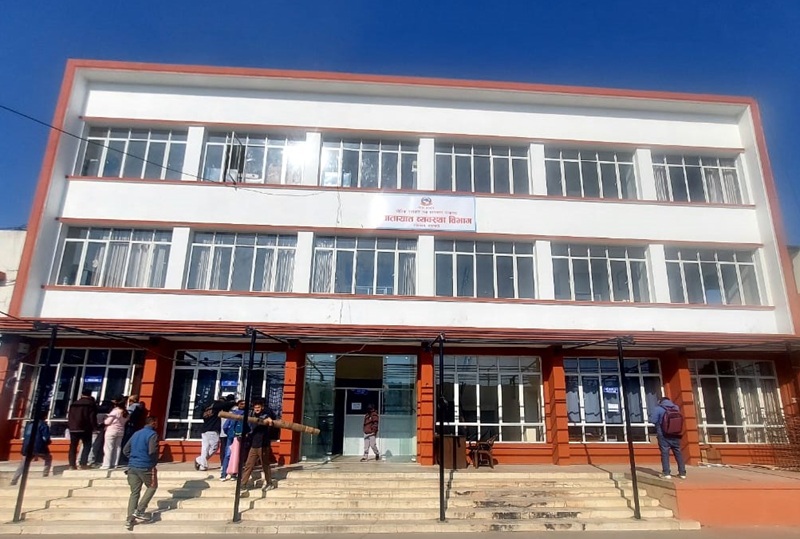
Government cheque payment rules by Nepal Rastra Bank

27th February 2026, Kathmandu
The landscape of public financial management in Nepal has undergone a major transformation as Nepal Rastra Bank (NRB) officially enforced new government cheque payment rules. These regulations, which serve as an amendment to the Government Transactions Directive 2076 (Second Amendment 2081), are designed to introduce unprecedented levels of transparency, security, and accountability into how the state handles its expenditures. In the year 2082, as the government moves toward a more digital and traceable economy, the central bank has mandated that all payments from government accounts must be processed either through electronic financial payment systems or via account payee cheques. This directive is a strategic intervention aimed at eliminating the systemic risks of manual fund handling, reducing the potential for financial irregularities, and ensuring that taxpayer money reaches its intended beneficiaries without interference or delay
Government cheque payment rules
The primary pillar of the new government cheque payment rules is the transition toward a cashless or restricted cash environment for state transactions. Under Chapter 5, Section 5.16.1 of the revised directive, it is now strictly prohibited for government entities to issue bearer cheques for significant amounts. By mandating the use of account payee cheques, the central bank ensures that funds are directly deposited into the bank account of the specific individual, firm, or institution named on the instrument. This traceability is essential for auditing purposes and serves as a powerful tool for the Office of the Auditor General to verify that government spending aligns with authorized budget headings. This shift not only modernizes the payment infrastructure but also aligns Nepal’s public finance standards with international norms governing anti money laundering and the prevention of the financing of terrorism.
Physical security and the prevention of forgery are also at the heart of the new government cheque payment rules. To combat the rising threat of financial fraud and the alteration of payment amounts, Nepal Rastra Bank has introduced mandatory security features for all government cheques. All cheques drawn by the NRB or its authorized commercial bank partners must now feature mechanical security markings. This includes the application of a cheque writer, cheque checker, or a ribbon writer in the blank upper space on the front side of the cheque. These mechanical impressions make it virtually impossible for unauthorized persons to change the digits or the name of the payee once the cheque has been issued. This layer of mechanical protection, combined with modern digital signatures, provides a robust defense against the tampering of state financial instruments in the year 2082.
The directive also clarifies the procedural requirements for depositing government cheques. To maintain a strict audit trail, the new rules specify that if a cheque is issued to a government office and deposited by that same office, it must bear an official and clearly identifiable office stamp on the back. However, to facilitate business ease and reduce administrative bottlenecks, the central bank has allowed an exception: if a private individual, firm, or company deposits a government cheque on behalf of an office, the office stamp is not mandatory on the back of the cheque. This distinction provides the necessary flexibility for contractors and suppliers while ensuring that the primary responsibility for documentation remains with the government entities. Such clarity in the deposit process reduces the likelihood of cheques being rejected at the counter due to minor administrative oversights.
Advertisement

The role of commercial banks and financial institutions in implementing these government cheque payment rules is fundamental. Nepal Rastra Bank has directed all licensed institutions to update their internal software and training protocols to recognize and enforce these new standards. Banks are now required to strictly verify that any cheque received through the clearing process is deposited only into the account of the person or entity specifically named on the cheque. This eliminates the risk of third party deposits, which were historically used to bypass tax obligations or to hide the final destination of government funds. By placing the onus of verification on the banking sector, the central bank is creating a multi layered defense system that protects the integrity of the national treasury.
From a broader governance perspective, these reforms are a response to the growing complexities of federalism in Nepal. With funds now flowing from the center to seven provinces and 753 local levels, the need for a standardized and secure payment system has never been more urgent. The new rules ensure that whether a payment is being made for a large scale hydropower project in the mountains or a small social security allowance in the plains, the level of security and transparency remains uniform. This consistency is vital for building trust between the state and its citizens. Furthermore, the push toward electronic payment systems reduces the administrative cost of government, as digital transactions are cheaper, faster, and less prone to error than their paper based counterparts.
The central bank has also signaled that these government cheque payment rules are part of a dynamic regulatory environment. As technology evolves and new threats emerge, Nepal Rastra Bank reserves the right to issue further amendments and instructions. This adaptive approach ensures that the legal framework for public finance remains resilient against future challenges, such as cyber threats to the electronic payment gateway. In the year 2082, the focus is increasingly on building a smart and secure financial ecosystem where every rupee is accounted for. For the general public and businesses dealing with the government, these changes mean more predictable and secure payment cycles, reducing the uncertainty that often plagues public sector contracts.
In conclusion, the updated government cheque payment rules introduced by Nepal Rastra Bank mark a significant leap forward in Nepal’s journey toward fiscal transparency and modernization. By mandating account payee cheques, enforcing mechanical security features, and streamlining deposit guidelines, the central bank is effectively closing the loopholes that allowed for financial mismanagement in the past. These reforms, backed by the Government Transactions Directive 2076, provide a solid foundation for a more accountable and efficient public sector. As all banks and government offices move toward full compliance in the year 2082, the resulting increase in financial integrity will undoubtedly contribute to the overall economic stability and development of the country. The era of secure and traceable government payments has officially arrived, paving the way for a more prosperous and transparent Federal Democratic Republic of Nepal.
For More: Government cheque payment rules