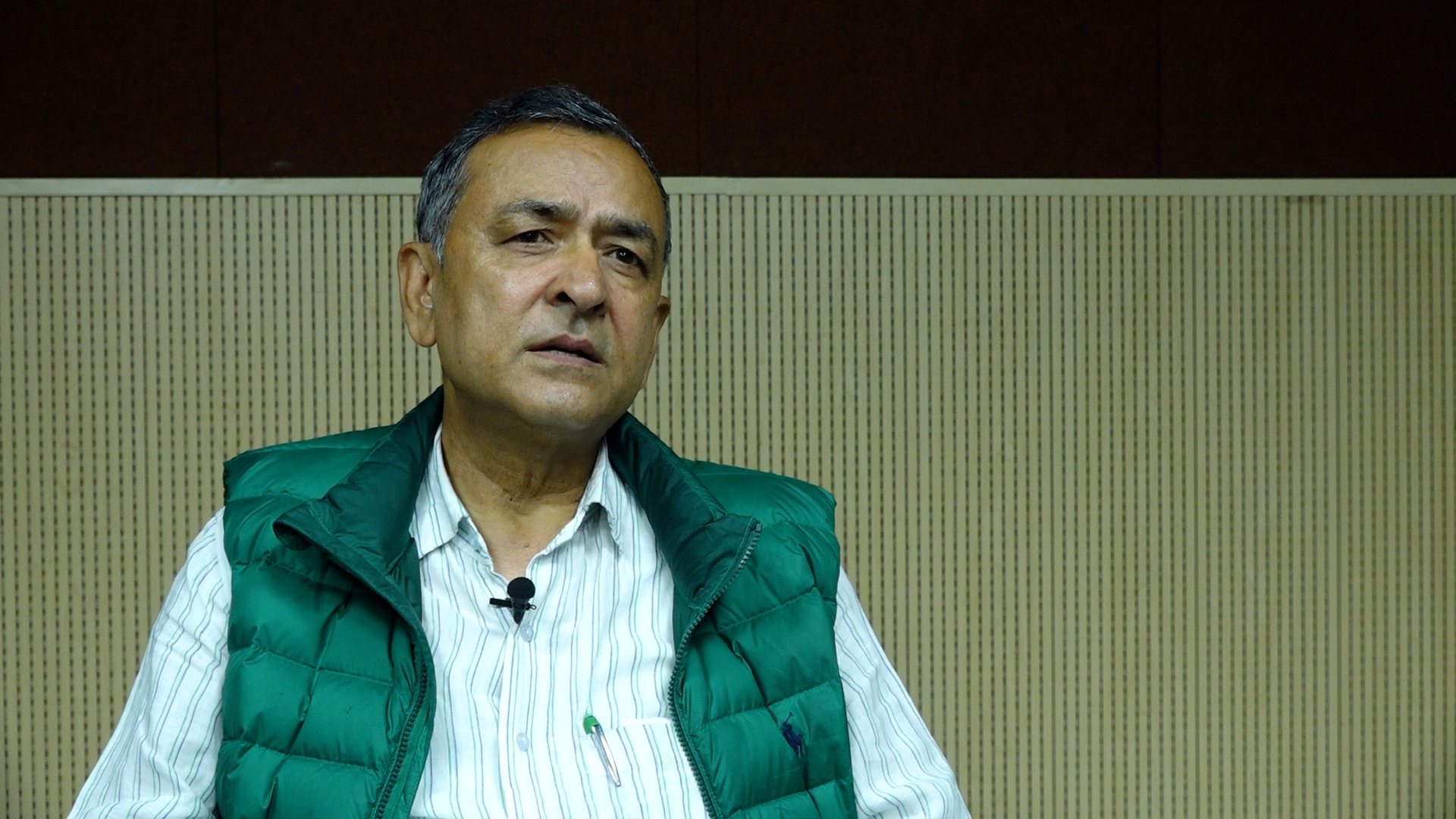
LP Gas Industry Association President Diwan Chand: Market Scarcity is “Artificial,” Not a Supply Crisis

17th March 2026, Kathmandu
Amidst growing concerns over a cooking gas shortage in Nepal, LP Gas Industry Association President Diwan Chand has clarified that the current market instability is driven by panic hoarding and psychological fears rather than a genuine supply cut from India.
LP Gas Industry Association President Diwan Chand
As consumers across the Kathmandu Valley face long queues at depots, Chand reassures that the Nepal Oil Corporation (NOC) and private industries have imported more gas than the national requirement for the month of March 2026.

The Reality of LP Gas Supply in Nepal
According to Diwan Chand, Nepal’s average monthly consumption of LP gas stands at approximately 45,000 metric tons. However, recent data reveal a surprising surplus in supply:
Imports in Magh: Approx. 50,000 metric tons.
Imports in Falgun: Approx. 48,000–49,000 metric tons.
Current Status: India has not reduced its quota; daily imports range from 110 to 130 bullets, up from the usual 80–90 bullets.
Why is there a Shortage? The “Artificial Demand” Factor
President Diwan Chand attributes the “shortage-like situation” to a massive spike in artificial demand.
Advertisement

“The West Asian conflict and rumors of supply cuts in Indian media have triggered a psychological panic,” says Chand. “Consumers are filling every spare cylinder they own, effectively removing millions of cylinders from the regular distribution cycle.”
Of the 15 million cylinders currently in the market, Chand notes that nearly 5 million are currently sitting idle in households or commercial backrooms, creating a bottleneck that the industry is struggling to clear.
Rationing Strategy: The “Half-Cylinder” Policy
To manage the current crisis, the LP Gas Industry Association, in coordination with the government, has implemented a temporary half-filled cylinder (7.1 kg) distribution policy.
Equitable Distribution: Filling half-tanks allows industries to serve twice as many households with the same volume of gas.
Price Control: The 7.1 kg cylinders are being sold at half the regular rate to prevent financial strain on consumers.
Warning against Black Marketing: Chand warned that selling full 14.2 kg cylinders during this rationing period is strictly prohibited and will be treated as black marketing.