
Lumbini Province Government Bank Launch Preparations Begin

19th March 2026, Kathmandu
The Lumbini Province Government has taken a major step toward structural economic planning with the approval of the Provincial Project Bank (Operation and Management) Directive, 2082.
Lumbini Province Government Bank
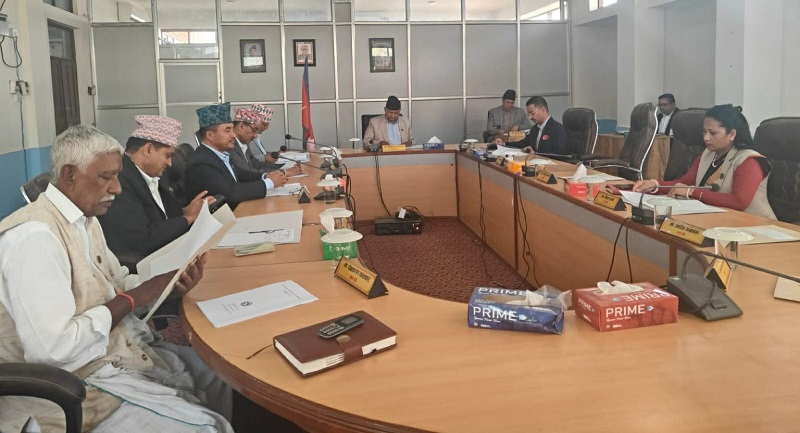
During a cabinet meeting held on Wednesday, Chaitra 4, 2082 (March 18, 2026), the provincial administration finalized the legal and operational framework for this new entity. Unlike a traditional commercial bank, this “Project Bank” is designed as a specialized administrative and financial mechanism to centralize the selection, evaluation, and funding of the province’s high-priority developmental initiatives.

Objectives of the Provincial Project Bank
The establishment of the Project Bank marks a shift toward evidence-based governance in Lumbini. By creating a centralized repository for projects, the government aims to eliminate haphazard budget allocation and ensure that every rupee spent contributes to long-term provincial goals.
Systematic Selection: The bank will serve as a filter to identify projects that align with the provincial vision of prosperity and self-reliance.
Management & Implementation: According to Health Minister Khem Bahadur Saru, the directive provides a clear roadmap for managing projects from the initial concept phase through to final execution.
Evidence-Based Decisions: The bank will use data and feasibility studies to prioritize infrastructure, tourism, and industrial projects, moving away from politically motivated spending.
Resource Optimization: Dr. Dilliraj Aryal, Vice-Chair of the Lumbini Provincial Planning Commission, emphasized that the bank is crucial for maximizing the impact of the province’s limited financial resources.
Strategic Impact on Provincial Governance
The cabinet meeting, chaired by Chief Minister Chet Narain Acharya, utilized the approval of the directive to also streamline the broader administrative machinery.
Administrative Realignment: Alongside the Project Bank directive, the cabinet decided on the placement of recently promoted employees across various levels.
Secretarial Reshuffling: Responsibilities for several provincial secretaries were reshuffled to better align departmental leadership with the new project-focused governance model.
Advertisement

Transparency and Results: The Project Bank aims to make the development administration more predictable and result-oriented, ensuring that “essential” projects do not get sidelined during the annual budget cycle.
Key Stakeholder Perspectives
The initiative has received broad support from the provincial planning and industry sectors. Project experts, such as Dr. Nahakul KC, have noted that the Project Bank will serve as an “integrated platform,” making the entire project lifecycle more transparent for both the government and the public.
Furthermore, industry officials like Ganesh Ghimire have suggested that the bank should immediately prioritize options identified in recent studies to boost tourism—a vital sector for Lumbini’s economy. By integrating these suggestions into the Project Bank, the province can ensure that its most lucrative sectors receive the investment they need to scale.
Future Outlook and Implementation
With the Lumbini Province Project Bank Directive now officially approved, the government will begin the technical process of populating the bank with vetted projects for the upcoming fiscal year. This initiative sets a precedent for other provinces in Nepal, demonstrating how a specialized “bank” can act as a bridge between high-level planning and ground-level execution.
The implementation phase will involve:
Finalizing the digital database for project tracking.
Integrating the Project Bank with the Provincial Planning Commission’s evaluation standards.
Ensuring that all new project proposals for the next budget year are routed through the bank’s rigorous screening process.
Conclusion
The launch preparations for the Lumbini Province Project Bank signify a more disciplined approach to regional development. By focusing on prioritization and administrative efficiency, the provincial government is moving toward a model where development is driven by quality and results rather than quantity.
For More: Lumbini Province Government Bank


