
From Chongqing to Kathmandu: How AI Automation Could Transform Manufacturing in Nepal

10th April 2026, Kathmandu
China is rapidly transforming its manufacturing sector using artificial intelligence (AI), and one strong example is Seres, an automotive company based in Chongqing.
From Chongqing to Kathmandu
This city, now one of China’s biggest automotive hubs, produced around 2.5 million vehicles between January and November 2025 alone, showing how quickly industrial growth is happening.
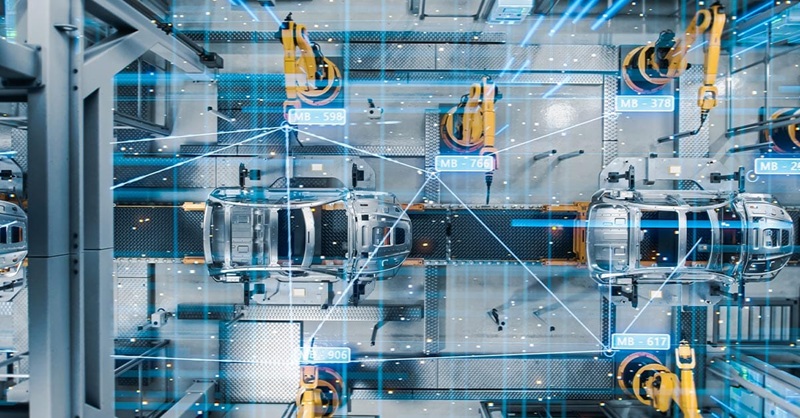
At the center of this transformation is the “AI super factory” built by Seres in Chongqing. The company, which began as a small manufacturer in 1986, now works closely with Huawei to produce smart electric vehicles under the Aito brand. In this partnership, Seres focuses on building the cars, while Huawei provides advanced digital systems like intelligent dashboards and driver assistance technologies.
What makes this factory special is how deeply AI is used. Huawei has developed a system called the “Industrial Brain,” which controls the entire production process. Large screens and digital simulations help monitor everything in real time. Over 3,000 robots handle tasks like welding and painting, making these processes fully automated.
Advertisement

AI is also used to improve quality. For example, cameras check important parts like bolts under the car and send images to AI systems. These systems quickly detect any errors with up to 99.9% accuracy. Tasks that once took workers several minutes are now completed in seconds. Even complex components like wiring are inspected using AI through simple smartphone images.
Another important feature is the strong connection between the factory and its suppliers. Key suppliers work directly inside the factory, while many others are digitally connected through AI systems. This creates a smooth and efficient production ecosystem.
For Nepal, this model offers valuable lessons. While Nepal’s manufacturing sector is still developing, adopting AI in small steps, such as using automation for quality checks or improving supply chain coordination, can increase productivity and reduce costs. Government support, similar to what Chongqing provides through innovation labs and AI platforms, could also help local industries grow.
As Nepal looks to strengthen its industrial base, the example of Seres shows that combining technology, partnerships, and smart planning can lead to faster and more efficient production in the future.
For more: From Chongqing to Kathmandu