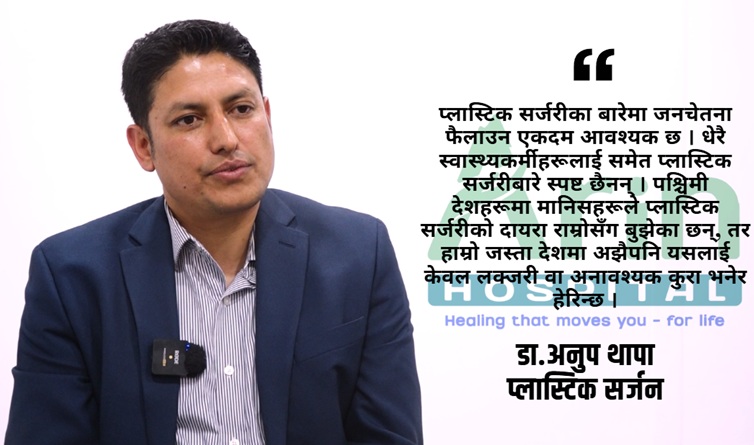
Dr. Anup Thapa: Redefining Plastic Surgery in Nepal Beyond Aesthetics

3rd May 2026, Kathmandu
In Nepal, the term “Plastic Surgery” often conjures images of celebrity transformations or luxury cosmetic enhancements. However, according to Dr. Anup Thapa, a prominent Plastic Surgeon currently serving at Arin Hospital, this perception only scratches the surface of a deeply vital medical specialty.
Redefining Plastic Surgery Nepal
For Dr. Anup Thapa, plastic surgery is not just about vanity; it is a critical branch of medicine focused on reconstruction, restoration, and returning dignity to patients.

Understanding the Scope: Reconstructive vs. Cosmetic
Dr. Anup Thapa emphasizes that plastic surgery can be broadly categorized into two essential pillars:
1. Reconstructive Surgery
This is the “life-saving and life-altering” side of the profession. In a country like Nepal, where cases of burns, road accidents, and congenital disabilities are frequent, reconstructive surgery is a necessity. It includes:
Post-Trauma Reconstruction: Repairing body parts damaged in accidents.
Congenital Correction: Treating conditions like cleft lips, absent ears, or nasal abnormalities.
Post-Cancer Reconstruction: Restoring organs or tissues removed during cancer surgery.
Burn Care: Essential treatment for victims of fire-related injuries.
2. Cosmetic (Aesthetic) Surgery
While cosmetic surgery focuses on enhancing appearance—such as body contouring, rhinoplasty, or scar removal Dr. Anup Thapa argues it shouldn’t be dismissed as “luxury.”
“Cosmetic surgery can completely transform an individual’s self-confidence,” says Dr. Anup Thapa. “A small scar or facial deformity can have severe psychological impacts. Correcting these issues improves a person’s social life and mental well-being.”
The Challenges: Low Awareness and Manpower Shortage
One of the biggest hurdles facing the field is the lack of awareness. Dr. Anup Thapa points out that even some healthcare professionals lack a clear understanding of the full scope of plastic surgery. Many still view it through the lens of cinema—as a “magic” way to swap faces or perform “scarless” miracles.
Advertisement

Furthermore, the scarcity of specialized surgeons is a growing concern.
Specialized Principles: Plastic surgery doesn’t focus on a single organ; it applies specific principles to the entire body, from head to toe.
Workforce Gap: The number of plastic surgeons in Nepal is alarmingly low compared to the population’s needs, particularly for trauma and burn rehabilitation.
Nepal: A Growing Hub for Affordable Plastic Surgery
Despite the challenges, Nepal is becoming an attractive destination for these procedures. Dr. Anup Thapa notes that compared to Western countries, plastic surgery in Nepal is significantly more affordable.
This price gap has encouraged Nepalese living abroad and even foreign nationals to seek treatment within the country. While the surgery requires immense precision and can sometimes last 14–15 hours, the cost remains a fraction of what is charged globally.
Pre-Surgery and Recovery: Expert Advice from Dr. Anup Thapa
Success in plastic surgery depends heavily on the patient’s lifestyle and the body’s healing capacity. Dr. Anup Thapa advises patients to:
Quit Smoking: Ideally months before surgery, as smoking severely hinders the healing process.
Manage Health Conditions: Chronic issues like diabetes and high blood pressure must be under control to prevent infection and ensure proper tissue recovery.
Prioritize Nutrition: A healthy diet and adequate sleep are crucial for optimal results.
Conclusion
As a dedicated Plastic Surgeon, Dr. Anup Thapa continues to advocate for a more informed society where plastic surgery is recognized as a blend of art and essential science. Whether it is reconstructive work following a tragic accident or a cosmetic procedure to boost self-esteem, the goal remains the same: improving the quality of human life.
For those seeking expert care, Dr. Anup Thapa provides comprehensive services at Arin Hospital, ensuring international standards of safety and surgical excellence.
For more: Redefining Plastic Surgery Nepal