World Brain Tumor Day 2026: Grande International Hospital Organizes Awareness Program

8th June 2026, Kathmandu
To mark World Brain Tumor Day, Grande International Hospital organized an impactful public awareness program on Monday.
World Brain Tumor Day 2026
Aligning with this year’s global theme, “Raising Awareness for Early Detection and Minimizing the Diagnosis Gap,” the event brought together leading medical experts to discuss early symptoms, advanced treatment methodologies, and the growing prevalence of brain tumors in Nepal.

The Critical Importance of Early Detection
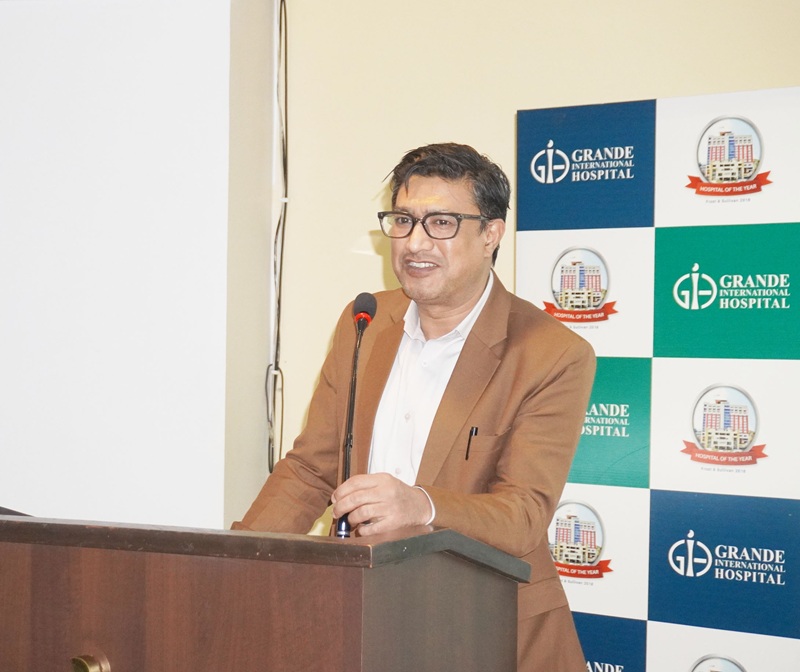
Speaking at the event, Dr. Binod Bijukchhe, Medical Director of Grande International Hospital, emphasized that timely identification and community-wide awareness are critical to saving lives.
Because brain tumor symptoms can often be subtle, they are frequently dismissed or misdiagnosed in their initial stages.
“Brain tumor symptoms do not always appear severe at first; they can mimic everyday issues,” Dr. Bijukchhe explained. “Sometimes, a patient laughing without reason or experiencing minor difficulties while walking can be an early sign of a brain tumor. Since the brain acts as the body’s command center, even the smallest neurological changes must be taken seriously.”
Dr. Bijukchhe noted that while treating brain tumors remains highly complex and delicate, advancements in medical technology have significantly improved patient outcomes. Today, a combination of precise surgery, medical oncology, and advanced radiation therapy is successfully extending and improving the quality of patient lives.
Common Brain Tumor Symptoms You Shouldn’t Ignore
Dr. Raju Paudel, Senior Neurology Consultant at Grande International Hospital, highlighted that the number of brain tumor cases in Nepal is steadily rising. He stressed that recognizing early warning signs can make a life-saving difference.

According to Dr. Paudel, individuals should seek immediate medical evaluation if they experience:
-
Persistent or worsening headaches (especially in the morning)
-
Unexplained vomiting right after waking up
-
Sudden hearing loss or ringing in the ears
-
Seizures (epilepsy) or sudden convulsions
Advertisement

-
Gradual paralysis or numbness in parts of the body
A Multidisciplinary Approach to Treatment
Modern brain tumor care requires a collaborative, multi-specialty approach. Dr. Aawis Adhikari, Radiation Oncologist at the Kathmandu Cancer Center, explained that a patient’s treatment journey heavily relies on the synergy between three key specialists:
-
Surgical Oncologists
-
Medical Oncologists
-
Radiation Oncologists
Dr. Adhikari reiterated that catching the tumor early allows this multidisciplinary team to design highly effective treatment plans that prolong patient survival.
Evolution in Surgical Technology: From Open Surgery to Keyhole Methods
Medical Oncologist Dr. Rajiv Kumar Dev and Grande Hospital’s Consultant Neurologist Dr. Rupendra Bahadur Adhikari shed light on how symptoms vary depending entirely on which part of the brain the tumor is located.
They discussed how modern neurosurgery has evolved to prioritize patient safety and post-operative quality of life.
The Primary Goal: To safely excise (remove) the tumor without causing additional damage to the patient’s neurological and bodily functions.
The Modern Paradigm Shift: The medical field has largely transitioned away from traditional open surgeries that required large incisions. Today, neurosurgeons frequently utilize endoscopic methods and minimally invasive “keyhole” surgeries, operating through small incisions or even through the nasal passage. This results in faster recovery times and reduced surgical risks.
Key Takeaway
The consensus among Nepal’s leading neurologists and oncologists is clear: A brain tumor is no longer an immediate death sentence.
With the arrival of cutting-edge diagnostic tools and minimally invasive surgical technologies in Nepal, early detection remains the single most powerful tool to ensure a successful recovery.
For more: World Brain Tumor Day 2026