
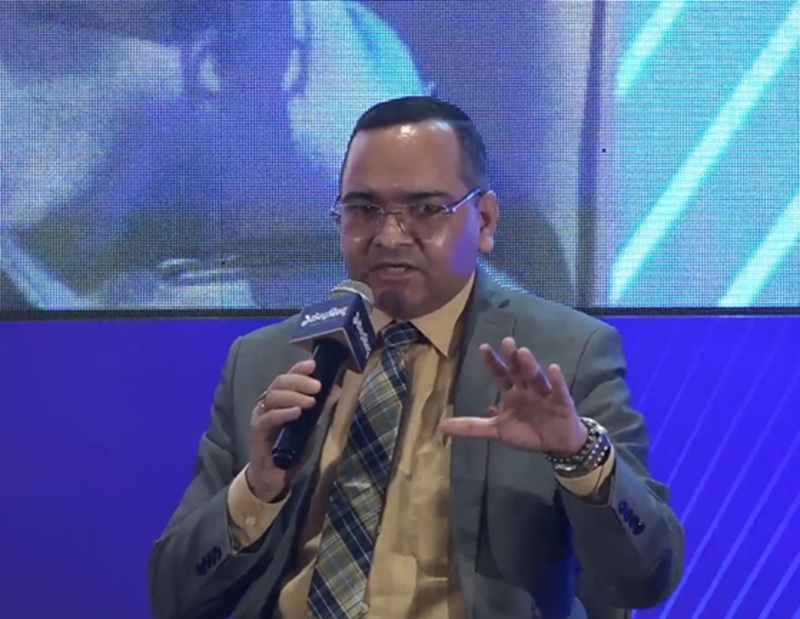
Policy Deficit Limits Education Investment, Warns Nabil Bank CEO

17th June 2026, Kathmandu
The Nepalese banking sector faces a significant hurdle when investing in education due to a lack of legal clarity and inconsistent government policies.
Policy Deficit Limits Education Investment
Speaking at a panel discussion titled “Private Sector Investment in Education,” held during the 4th Kendrabindu Education Excellence Award 2026 in Lalitpur, Manoj Gyawali, Chief Executive Officer (CEO) of Nabil Bank, emphasized that banks cannot confidently scale up investments without a stable regulatory framework.

The Core Issue: Policy Instability and “Vague Philanthropy”
CEO Gyawali criticized the state’s ambiguous approach toward the education sector. He noted that the government often labels education simply as a “social service” without defining clear, commercially viable guidelines.
“If the government keeps talking vaguely about education being purely a ‘service’ without binding it to a clear policy, banks will not invest in this sector,” Gyawali warned. “Banks handle public deposits and cannot afford to invest people’s money so lightly.”
He further pointed out that education policies in Nepal frequently shift with changing government leadership, which has left the private sector deeply discouraged. Because banks operate as profit-making entities, they naturally seek financial security and a guaranteed return on investment (ROI).
Advertisement

Current Landscape of Nepalese Banking Investment in Education
Despite the policy roadblocks, commercial banks maintain a foundational stake in education. Gyawali shared key data outlining where the money currently goes:
Total Sector Allocation: Approximately 3% of the total banking investment in Nepal is directed toward education.
Primary Targets: This investment is heavily concentrated in medical colleges, management institutions, and a massive portion goes toward educational loans for Nepalese students studying abroad.
Nabil Bank’s Footprint: Highlighting his own institution’s massive commitment, Gyawali revealed that Nabil Bank alone has invested NPR 22 billion in the education sector.
Quick Overview: Key Takeaways
| Metric / Issue | Details |
| Speaker | Manoj Gyawali, CEO of Nabil Bank |
| Event | 4th Kendrabindu Education Excellence Award (Lalitpur) |
| Current Education Share | 3% of the total Nepalese banking credit |
| Nabil Bank’s Exposure | NPR 22 Billion |
| Primary Challenge | Policy shifts with changing governments, vague legal definitions of education as “service only” |
| Bank Demand | Long-term policy stability and investment security |
Conclusion: The Path Forward
For Nepal to develop a world-class domestic education infrastructure, the government must bridge the gap between social responsibility and investment security. Until the state introduces a robust, legally sound, and long-term education policy that outlasts political transitions, banking institutions will likely remain hesitant to expand their financial footprint in the sector.


