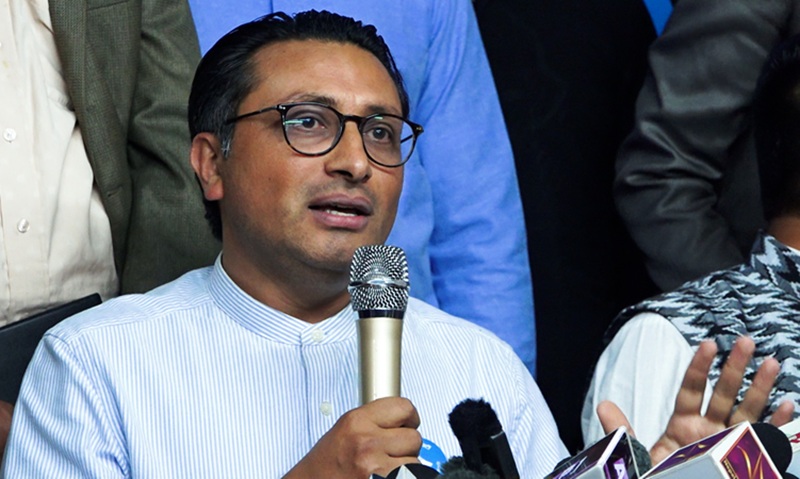
MP Vidushi Rana Leads Footwear Industry Relief Effort With PM

18th July 2026, Kathmandu
In a significant move to strengthen domestic manufacturing, Prime Minister Balen Shah has announced that the Government of Nepal will provide robust policy intervention to revitalize the Nepali footwear industry.
MP Vidushi Leads Footwear Industry
Speaking at a high-level meeting with a delegation from the Footwear Manufacturers Association of Nepal (FMAN) at Singha Durbar, PM Shah emphasized the state’s commitment to transforming the sector into a cornerstone of economic self-reliance.
The administration’s strategy centers on a comprehensive approach to scale local manufacturing, aggressively substitute imports, generate youth employment, and drive export expansion.

A Three-Tier Governance Model for Skill Development
A central pillar of the newly proposed PM Balen Shah economic policy for the industrial sector is structural coordination. The federal government plans to collaborate with provincial and local authorities to create a synchronized ecosystem for the trade:
Targeted Skill Training: Launching specialized training modules to bridge technical skill gaps in modern shoemaking.
Coordinated Marketing: Actively funding the promotion of “Made in Nepal” footwear both locally and internationally.
Raw Material Tracking: Implementing strict tracking of raw material imports based on the verified production capacities of individual factories to eliminate market anomalies.
Strict Quality Control and Border Measures
During the discussions, FMAN leadership presented a clear roadmap of enforcement mechanisms required to protect local investments. The association urged the government to crack down on the grey market by stopping illegal cross-border smuggling and bringing untaxed footwear into the formal tax bracket.
Industry Demand: FMAN has called for mandatory, rigorous quality testing on all imported shoes and slippers to stop low-quality, sub-standard products from flooding the domestic market.
Industrialists maintain that if the government delivers on these market protection regulations, the domestic manufacturing ecosystem for footwear in Nepal is fully prepared to scale up to maximum production capacity.
Business & Policy Analysis
Can Policy Reform Lead the Nepali Footwear Sector to Full Capacity?
Target Keyword: Domestic shoe manufacturers in Nepal
Secondary Keywords: Government of Nepal trade policy, FMAN border control, replace footwear imports, export promotion Nepal
Nepal’s local footwear sector stands at a critical turning point. While domestic shoe manufacturers in Nepal have built a massive infrastructure capable of meeting a substantial portion of national demand, the market remains heavily disrupted by unauthorized imports and weak quality guardrails.
However, a recent breakthrough meeting between the Footwear Manufacturers Association of Nepal (FMAN) and Prime Minister Balen Shah indicates that crucial market protections may finally be on the horizon.
Balancing the Trade Ledger: Import Substitution to Export Promotion
The Prime Minister’s latest directive targets the core challenges limiting local factories. By prioritizing systemic tracking of raw material imports, the Government of Nepal’s trade policy aims to create a transparent, capacity-based quota system that rewards legitimate local producers.
       GOVERNMENT STRATEGY FOR NEPALI FOOTWEAR

       ┌─────────────────────────────────────┐
       │     Capacity-Based Raw Material     │
       │         Tracking & Archives         │
       └──────────────────┬──────────────────┘
                          ▼
       ┌─────────────────────────────────────┐
       │   Import Substitution Mechanism     │
       └──────────────────┬──────────────────┘
                          ▼
       ┌─────────────────────────────────────┐
       │     Job Creation & Scale Expansion  │
       └──────────────────┬──────────────────┘
                          ▼
       ┌─────────────────────────────────────┐
       │    Global Export Market Readiness   │
       └─────────────────────────────────────┘
This structural framework is engineered to trigger systemic growth:
Capacity Optimization: Allowing plants to safely scale toward 100% capacity without being undercut by the grey market.
Job Architecture: Creating local technical positions to absorb the rising demand for domestic employment.
Export Acceleration: Setting the ground rules for high-quality export promotion Nepal can rely on to boost foreign exchange reserves.
Combating Grey Market Influx: The FMAN Action Plan
The success of these initiatives hinges directly on border enforcement. FMAN representatives highlighted that controlling the unregulated flow of cheap, low-grade footwear is non-negotiable. The association’s proposed framework demands immediate government intervention on four fronts:
Advertisement

| Area of Intervention | Proposed Action Required | Expected Industry Impact |
| Border Regulation | Stop illegal smuggling via key border outposts | Restores fair competition for legal businesses |
| Tax Net Expansion | Force untaxed products into legal reporting | Increases internal state revenue collection |
| Quality Mandate | Institute compulsory testing for imported shoes | Filters out sub-standard alternative goods |
| Skill Upgradation | Three-tier local government technical training | Builds a highly adept technical workforce |
With a firm commitment from the executive office to enforce stricter quality testing and track manufacturing benchmarks, Nepal’s shoe manufacturers are positioned to move from basic survival to dominant market expansion.
In a swift and decisive response to protecting domestic manufacturing, Prime Minister Balen Shah has ordered the immediate formation of a high-level joint task force to crack down on illegal trade, paralyzing the Nepalese footwear industry.
The directive follows a critical high-level intervention coordinated by Member of Parliament (MP) Vidushi Rana, who brought representatives from the Footwear Manufacturers Association of Nepal (FMAN) face-to-face with the Prime Minister to address the severe economic hurdles threatening local production.
15 Days to Deliver: The Joint Task Force Mandate
Responding directly to the evidence presented by industry leaders, Prime Minister Shah bypassed bureaucratic delays, assembling a high-profile enforcement squad. The newly formed PM Balen Shah joint task force unites top leadership from the nation’s key security and regulatory bodies, including:
-
The Inspector General of the Armed Police Force (APF)
-
Senior officials from the Department of Customs
-
The Inland Revenue Department (IRD)
-
Nepal Police
-
The Department of Commerce
                 PM BALEN SHAH'S ANTI-SMUGGLING TASK FORCE
              ┌──────────────────────────────────────────────┐
              │  Enforcement Windows: Strict 15-Day Timeline │
              └──────────────────────┬───────────────────────┘
                                     ▼
        ┌────────────────────────────┴────────────────────────────┐
        │                                                         │
        ▼                                                         ▼
  [ BORDER LEVEL ]                                         [ MARKET LEVEL ]
  • Strengthen Border Monitoring                           • Surprise Market Inspections
  • Halt Cross-Border Smuggling                            • Stock & Billing Verification
        │                                                         │
        └────────────────────────────┬────────────────────────────┘
                                     ▼
                      ┌─────────────────────────────┐
                      │ Legal Actions & Policy Fix  │
                      └─────────────────────────────┘
The task force has been handed a strict 15-day ultimatum to investigate illicit trade networks, fortify FMAN border control recommendations, execute sudden market inspections, and verify billing and stock records to weed out tax evasion.
A Crisis of Unfair Competition for Domestic Manufacturers
During the briefing, FMAN representatives laid bare the staggering scale of the domestic sector and how close it is to the brink. Nepal’s domestic footwear manufacturers have grown into a vital economic pillar, yet they face an unequal playing field.
Industry at a Glance:
Active Units: 1,000 to 1,200 functional footwear factories across Nepal.
Employment Impact: Provides direct livelihoods to more than 50,000 citizens.
Core Threats: Massive undervaluation of goods, widespread counterfeit products, tax evasion, and unchecked cross-border smuggling Nepal faces.
Industry leaders emphasized that while they possess the capacity to supply the nation, they cannot compete with under-invoiced, untaxed goods entering the country illegally.
Parliamentary Bridge: The Strategic Role of MP Vidushi Rana
The breakthrough meeting underscores the growing influence of Vidushi Rana MP as a crucial link between the private sector and legislative action. After aggressively championing local entrepreneurs’ concerns on the floor of Parliament, Rana has systematically orchestrated sector-wise meetings with the executive office.
Her ongoing coordination ensures that critical industrial pain points receive immediate, practical problem-solving rather than long-term policy stalling.
| Focus Area | Government Pledged Action | Expected Long-Term Benefit |
| Market Integrity | Strict joint task force inspections within 15 days | Eradicates counterfeit and untaxed stock |
| Supply Chain | Systemic raw material and import tracking | Rewards compliant domestic manufacturers |
| Capacity Building | Three-tier government skill development programs | Elevates technical expertise for 50,000+ workers |
| Brand Visibility | Structured state backing for domestic branding | Positions Nepali footwear for regional export |
Reaffirming the government’s long-term vision, Prime Minister Shah assured the delegation that temporary crackdowns will be backed by permanent structural support, with a focus on capacity-based import tracking, brand promotion, and aggressive market expansion to safeguard local investments.
For more: MP Vidushi Leads Footwear Industry