AI in Vehicles, Challenges on Roads: Where Does Nepal Stand in Tech?

15th August 2026, Kathmandu
As Nepal’s automobile sector rapidly shifts toward electric and digital technologies, stakeholders warn that the country still lags in necessary infrastructure, data management, research, cybersecurity, and skilled human resources.
Experts emphasize that with the growing integration of Artificial Intelligence (AI) in automobiles, Nepal must move beyond viewing vehicles merely as imported commodities for sale. Instead, vehicles should be developed as domains of data, technology, research, and innovation.
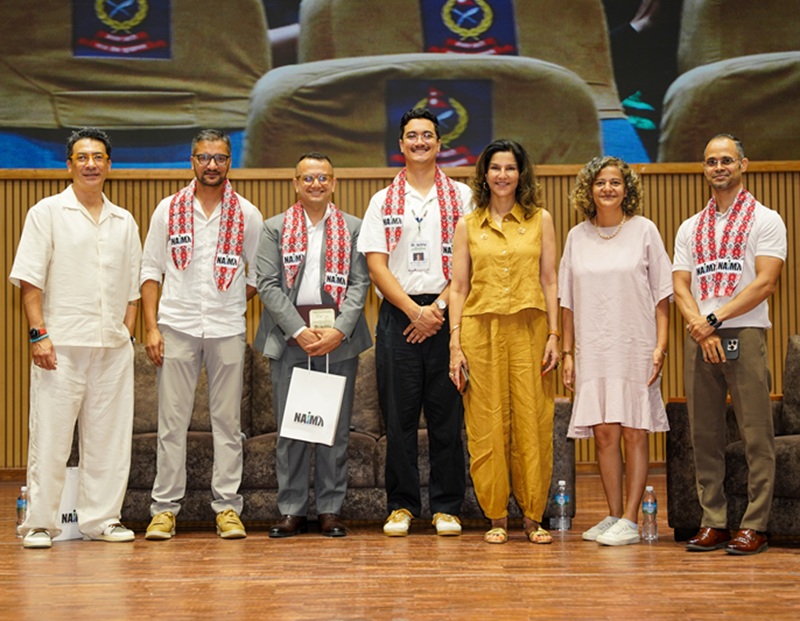
These insights emerged from a discussion titled “AI and Automotive Technology: Driving the Future of Mobility,” organized by the Nepal Automobiles Importers and Manufacturers Association (NAIMA). Industry leaders, government officials, researchers, and academics gathered to discuss the potential of AI in automobiles, alongside the necessary policies, infrastructure, and workforce.
Key Takeaways from the NAIMA Dialogue

1. Transforming Mobility and Traffic Management
Suryansh Vaidya, CEO of Vaidya Energy, noted that AI applications extend far beyond the vehicle itself, reaching traffic management, vehicle safety, and business operations. By analyzing data collected from vehicle sensors and devices, users can receive safer, smoother, and more efficient services.
Smart Routing & Battery Management: AI can optimize route planning and suggest the nearest charging stations before a battery depletes.
Adaptive Safety: Integrating weather and rainfall data with vehicle systems allows automatic adjustments to traction control based on road conditions.
Limitations of Autonomous Driving: Vaidya pointed out that autonomous driving is not yet viable in Nepal. Training data for such technologies typically originates from regions with well-paved roads, clear lane markings, and organized traffic. Nepal requires localized data and research tailored to its unique roads and traffic conditions.
Data Sharing for Infrastructure: Sharing vehicle-collected data with relevant government agencies can help identify road conditions, potholes, and infrastructure bottlenecks. The ultimate goal of future mobility should not just be selling new vehicles, but building a system that transports people safely and efficiently.
2. Government Regulation, Data Security, and Policy
Sanjay Paudel, Chief Advisor to the Ministry of Science, Technology and Innovation, stressed the need for robust data management and government regulation in the modern automotive sector. As tech-driven and electric vehicles grow in popularity, the government must enhance its role in regulating vehicle-generated data, quality testing, cybersecurity, and technology standards.
Data Governance: Clear systems are needed for data collection, quality measurement, and utilization both before and after vehicle importation.
Cybersecurity & Local Hosting: Policy-level studies are required regarding cybersecurity, the feasibility of keeping data within Nepal, and associated costs. As software, connectivity, and sensors increase, vehicle data becomes deeply intertwined with national cybersecurity.
Strategic Priorities: Rather than investing in all technologies simultaneously, the government must establish priorities and set up innovation labs based on Nepal’s specific needs and economic potential.
3. Bridging the Skills Gap in Education
Dr. Suman Thapliya highlighted that Nepal falls short in producing a workforce suited for modern technological shifts.
Outdated Curricula: Most colleges and universities still focus on traditional subjects like programming, web development, databases, and networking. Education must shift toward sensors, automation, AI, embedded systems, robotics, edge computing, automotive software, and digital forensics.
Advertisement

Proposed Curriculum Balance: Dr. Thapliya suggested a modern educational framework consisting of:
-
-
60% Core Academics
-
20% Emerging Technologies
-
20% Industry Applications
-
4. Shifting Perspectives on AI and Research Ecosystems
Sandhya Sitoula, Executive Director of the Nepal Applied Mathematics and Informatics Institute for Research (NAIMIR), urged that AI should not be viewed solely as a job-stealing threat, but as a tool to enhance work styles, analysis, and research.
Long-Term Investment: Building a research ecosystem requires long-term investment rather than expecting immediate results overnight.
Data Security & Collaboration: As data security becomes critical, Nepal must transition from a mere consumer role to a contributor in technology and research. Government, private sectors, and research institutions must collaborate to apply localized data to solve domestic challenges.
The Road Ahead for Nepal
The NAIMA dialogue highlights that Nepal’s automobile sector is no longer confined to vehicle imports, sales, and operations. As AI, sensors, software, connectivity, and automation reshape vehicles, Nepal must adapt its policies, education system, research frameworks, and infrastructure accordingly.
To keep pace with global mobility trends, Nepal must prioritize:
-
Secure and functional data-sharing mechanisms between industries and the government.
-
Localized research addressing domestic road and traffic conditions.
-
Modern cybersecurity measures and quality-testing equipment.
-
Infrastructure for AI and the development of a tech-savvy workforce.
For more: AI in Vehicles Challenges