Nepal Seeks India’s Aid For Bhote Koshi Flood Reconstruction | Finance Minister Wagle’s Delhi Visit

20th September 2026, Kathmandu
Nepalese Finance Minister Dr. Swarnim Wagle visits New Delhi to rally support for post-flood reconstruction following the devastating Bhote Koshi floods. Discover the roadmap for bilateral economic cooperation and climate resilience.
Nepal Seeks India’s Aid For Bhote Koshi Flood Reconstruction

A New Paradigm for Nepal-India Economic Cooperation
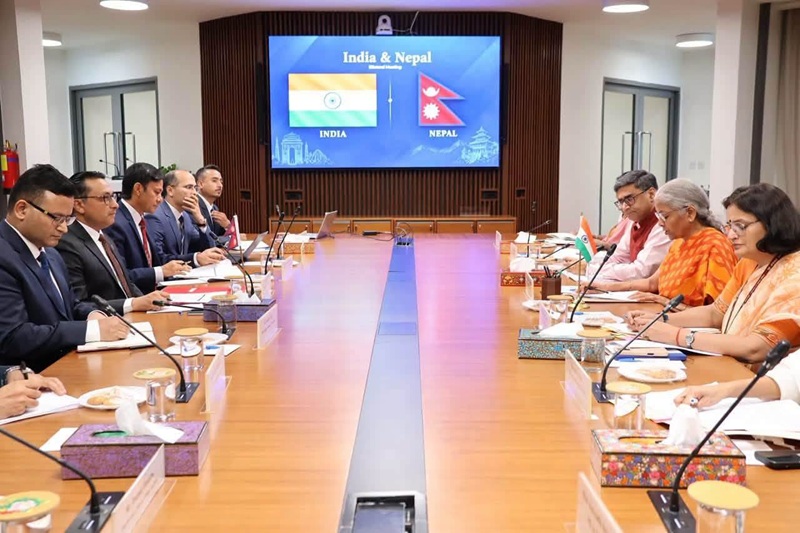
Following the devastating flash floods along the Bhote Koshi River corridor, Nepalese Finance Minister Dr. Swarnim Wagle traveled to New Delhi on his first official foreign visit. The core objective of this high-profile diplomatic mission is securing robust international and regional support for post-disaster reconstruction and economic resilience.
While India has reiterated its position as a reliable first responder—providing immediate relief and rescue support—New Delhi has indicated that long-term financial commitments will follow a comprehensive Post-Disaster Needs Assessment (PDNA). This shift highlights a crucial transition in regional economic diplomacy: moving from ad-hoc emergency relief to strategic, project-based recovery planning.
Key Highlights: Finance Minister Wagle’s Delhi Visit
Focus on Reconstruction: Discussions between Minister Wagle and Indian Finance Minister Nirmala Sitharaman centered heavily on rebuilding climate-resilient infrastructure.
No Fixed Financial Figures Yet: Kathmandu has opted not to table an arbitrary funding request, choosing instead to align bilateral support with a detailed, data-backed damage report.
Leveraging Past Line of Credit: Both nations reviewed progress on utilizing and restructuring existing lines of credit—including unutilized portions from post-2015 earthquake packages—to target critical energy and infrastructure sectors.
Climate Change Framing: The devastating floods are being positioned globally not merely as local natural disasters, but as systemic climate-induced crises impacting the wider South Asian ecosystem.
Shifting from Relief to Resilient Infrastructure
The massive scale of destruction caused by the Bhote Koshi floods has forced Kathmandu to overhaul its initial financial strategies. Preliminary assessments conducted by the National Planning Commission and the National Disaster Risk Reduction and Management Authority (NDRRMA)—vetted alongside international partners like the World Bank—estimate overall physical damage and economic losses in the billions of dollars.
Advertisement

Key sectors requiring urgent capital injection include:
Energy and Grid Systems: Major disruptions to hydropower and solar assets require immediate capital restructuring.
Transportation & Connectivity: Rebuilding strategic cross-border roads and bridges to restore supply chains.
Climate-Resilient Engineering: Upgrading infrastructure along river corridors to withstand future extreme weather events driven by global warming.
Strategic Economic Diplomacy: What Lies Ahead?
As expert analysts note, securing multi-billion-dollar international assistance requires more than damage estimates; it demands meticulous project preparation, clear sector-wise prioritization, and unified economic diplomacy.
Minister Wagle’s diplomatic outreach is not restricted to New Delhi. Following his engagements in India, his itinerary includes international financial capitals to engage with multilateral banks and global organizations, aiming to build a broad coalition of support through innovative financial frameworks like debt-for-recovery swaps and concessional partnerships.
Ultimately, the success of Nepal’s latest diplomatic initiative depends on transforming preliminary damage figures into bankable, transparent infrastructure projects that development partners can trust and back.
For more: Nepal Seeks India’s Aid For Bhote Koshi Flood Reconstruction