
SEBON Paves the Way For Intraday Trading in Nepal: A New Era for the Capital Market

24th September 2026, Kathmandu
SEBON paves the way for intraday trading in Nepal’s capital market. Explore eligibility criteria, phased rollout plans, and stakeholder guidelines.
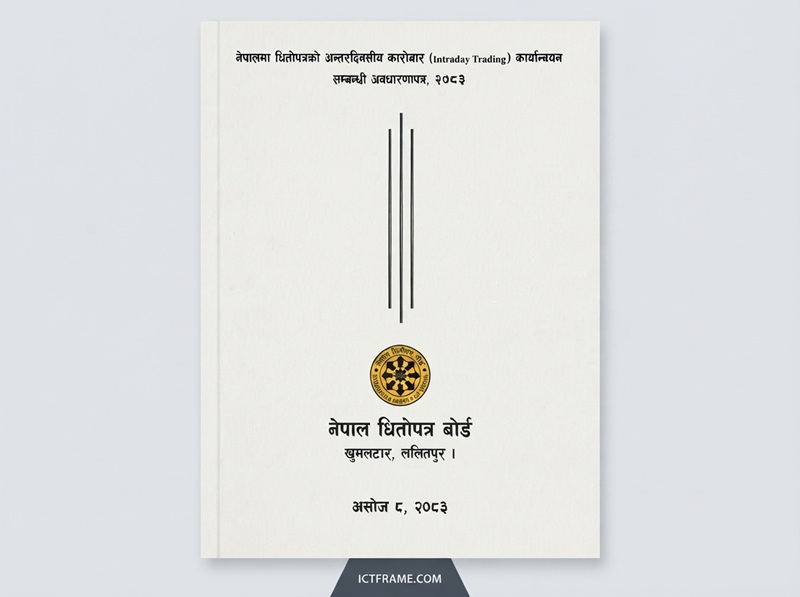
The Securities Board of Nepal (SEBON) has taken a monumental step toward modernizing the country’s financial landscape. In a recent move, SEBON published the “Concept Paper on Implementation of Intraday Trading of Securities in Nepal, 2083”, officially opening the door for intraday trading and inviting crucial feedback from stakeholders.
This milestone initiative stems from the government’s Capital Market Strengthening and Revival Action Plan, 2083, issued by the Ministry of Finance, aligning with SEBON’s core policies for the fiscal year.
Key Highlights of SEBON’s Intraday Trading Proposal
To ensure a smooth transition and safeguard market integrity, SEBON plans to roll out the framework in careful phases. Here is what investors and market participants need to know:
The “Buy First, Sell Later” Model: In this initial phase, the framework strictly permits a Buy First, Sell Later approach, allowing investors to purchase shares and liquidate them within the exact same trading day.
Targeted Initial Rollout: Instead of opening intraday trading market-wide immediately, SEBON proposes starting with a select group of highly liquid securities that experience regular trading activity and present lower risks of market manipulation.
Future Expansion: The “Sell First, Buy Later” (short-selling) model will only be evaluated once robust securities lending, borrowing, and covered short-selling infrastructures are fully established.
Comprehensive Safeguards: The concept paper outlines strict criteria for eligible securities, qualified investors, broker requirements, risk disclosures, robust margin management, and advanced real-time market monitoring.
Advertisement


Why Intraday Trading Matters for Nepal’s Financial Market
The introduction of day trading is designed to address several long-standing limitations within Nepal’s secondary market. The primary objectives include:
Boost Market Liquidity: Active same-day trading significantly increases daily transaction volumes and cash flow.
Enhance Price Discovery: Faster transactions and responsive trading help securities reflect their true market value more efficiently.
Modernize Infrastructure: Pushes NEPSE, brokers, and clearing houses to adopt world-class real-time technology and automated risk-management systems.
What’s Next?
Before full implementation, SEBON plans to execute rigorous testing phases and pilot programs to evaluate system readiness. Throughout the process, the regulator emphasizes that investor protection, transparent operations, and risk-based regulation remain top priorities.
SEBON has officially requested feedback from all market stakeholders to refine the framework before final execution.
Are you a Nepalese investor looking to prepare your portfolio for intraday trading, or would you like a breakdown of how risk-management systems will affect day-to-day orders?
For more: SEBON Paves the Way For Intraday Trading


