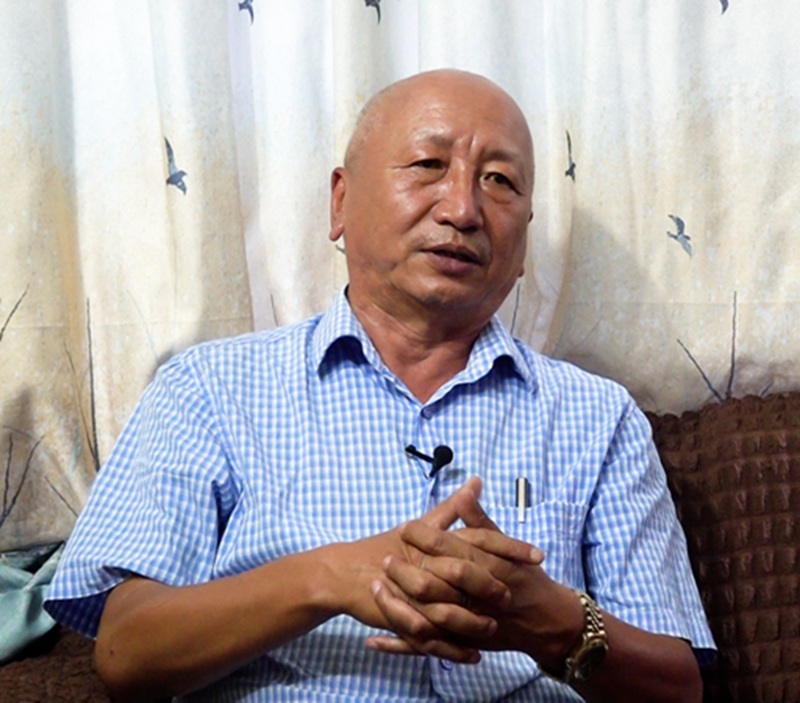

Dashain Shifting Toward Consumerism: Preserving Cultural Roots is Essential, Says Abhinash Shrestha

21st October 2026, Kathmandu
For Abhinash Shrestha, Vice-Chancellor of the Nepal Academy, the true essence of Dashain is deeply tied to age, family, and relationships. Reflecting on the evolution of Nepal’s most celebrated festival, Shrestha highlights a stark contrast between the childhood joy of traditional celebrations and today’s shifting socio-cultural dynamics.
As age advances, enthusiasm for festivals often diminishes, but the authentic joy of Dashain remains grounded in family togetherness. “The primary purpose of celebrating Dashain is to gather with family and relatives,” says Shrestha. “The joy that comes from togetherness cannot be replicated in solitude.”
The Emotional Toll of Migration on Traditional Festivities
Like many Nepalese households, Shrestha’s family experiences the reality of global migration. With his children living in the UK and Australia, celebrating Dashain at home with only his wife lacks the vibrant energy of earlier years.
This experience is shared across the country. Parents in Nepal yearn for their children abroad, while Nepalese overseas long for family back home during festival seasons.
“Children are overseas, while parents here are yearning for their presence,” Shrestha shares. “Dashain is meant to be celebrated by bringing generations together. The joy of the festival is truly divided and shared in that togetherness.”

Childhood Memories: Swing, Tika, Jamara, and Simple Delights
Recalling his childhood Dashain in his village, Shrestha warmly remembers the traditional wooden swings (Rote Ping and Linge Ping), receiving Tika and Jamara, getting new clothes, and enjoying festive meals.
In earlier times, eating meat was a rare privilege reserved mainly for Dashain, unlike today’s constant urban availability. Selecting new clothes and shoes was another cherished tradition where children persistently requested their preferred choices without realizing financial constraints.
Advertisement

From Blessing-Centric Tradition to Modern Consumerism
Over the past six to seven decades, Nepalese society has undergone profound transformations that have reshaped how festivals are experienced.
In the past, people found genuine contentment in simple traditional offerings—flowers, rice grains (Akshata), barley grass (Jamara), and elders’ blessings. Today, Dashain has increasingly turned into a high-consumption commercial event marked by purchases of expensive vehicles, electronics, furniture, and home decor.
“Dashain has shifted toward luxury,” notes Shrestha. “In our childhood, we found joy in Tika and Jamara. The blessings of elders meant far more than monetary gifts.”
He also points out a shift in attitudes toward festival allowances (Dakshina). While children in the past counted modest gifts with excitement, today’s younger generation often remains unsatisfied even with substantial sums, reflecting broader changes in societal expectations and contentment.
The Role of Literature in Preserving Cultural Heritage
Addressing the representation of Dashain in Nepalese literature, Shrestha emphasizes that creative works serve as vital archives for collective memory and tradition.
Writers and poets document festivals like Dashain, Tihar, and Deusi-Bhailo to protect cultural practices from disappearing under modern influences. Through storytelling, poetry, and art, creators express the social and cultural significance of folk life while bearing a responsibility to uphold these traditions thoughtfully.
Rediscovering the True Meaning of Dashain
Extending festival greetings to Nepalese living across Nepal and abroad, Shrestha reiterates that genuine festive happiness lies not in material goods or luxurious displays, but in the warmth of human connection, shared heritage, and emotional bond with loved ones.
For more: Dashain Shifting Toward Consumerism