
Pokhara’s Young Developers Build Live Apps in 5 Days at AI-Assisted Software Engineering Training


29th November 2026, Kathmandu
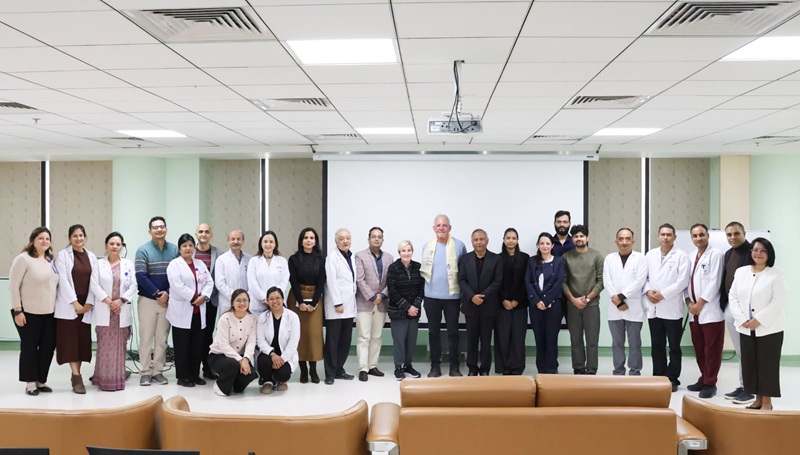
AI-Assisted Software Engineering Training, Pokhara: Five Days, 28 Builders, One Stage: Pokhara’s Young Developers Put AI to Work
From a blank page to working software, pitched to the Mayor on Demo Day
Discover how 28 young developers from Gandaki Province went from a blank page to live software products in just five days during the AI-Assisted Software Engineering Training in Pokhara. Organized by Leapfrog Connect under the EU-funded CODE project with support from Swisscontact, Restless Development, and RAN, participants used AI across the entire software lifecycle to build local solutions in healthcare, SME SaaS, EdTech, and hyperlocal tourism, culminating in a live Demo Day pitch to Pokhara Mayor Dhana Raj Acharya.
Pokhara is better known for Phewa Lake and the Annapurna skyline than for software sprints. This week, 28 young people from across Gandaki Province added something new to that picture. In five days, they took a real local problem to a working product, then pitched it to the Mayor of Pokhara.
The occasion was the second edition of the “AI Assisted Software Engineering Training”, run by Leapfrog Connect under the CODE (Creating Opportunities for Youth in Digital Economy) project. CODE is funded by the European Union and supported by Swisscontact, Restless Development and the Robotics Association of Nepal (RAN).
Participants: 28 young people, up from the 20 places planned, selected from more than 100 applicants, with balanced participation of women and youth from marginalized communities
Format: five days of hands-on training, followed by Demo Day (22–27 November 2026)
Venue partner: La Grandee International College
Local partners: Pokhara Metropolitan City and the Business Promotion Centre (BPC), Pokhara
Demo Day: BPC Hall, Sabhagriha, Pokhara
A product cycle squeezed into a week
Each day of the training was a stage of the software life cycle, with AI as a working partner at every step. Participants used AI to research their problem and write a product requirements document (PRD), then designed the architecture, wrote and tested the code, ran quality checks, and set up CI/CD so their apps went live automatically. The week closed with a session on pitching and presentation, and online sessions with industry and technology experts ran alongside.
Leapfrog Connect lead trainers Ankur Sharma, Anupama Rai, Prashant Gayak and Rashik Koirala guided the cohort. Special sessions came from Nirdesh Dwa, serial entrepreneur, founder of Veda and the Karobar app, and a member of NYEF Kathmandu, and Kiran Kumar Regmi, Academic Director at Leapfrog Connect. They showed participants how to build their own products with AI, and how to grow a portfolio and a career in an AI-driven era.

Built for Pokhara
Teams chose problems they could see around them:
Advertisement

Healthcare: turning a photo of a handwritten prescription into daily medicine reminders and follow-up alerts
SME SaaS: replacing a shopkeeper’s Udharo (credit) notebooks with one place for sales, credit and stock
Service marketplaces: helping families find trusted household help, and newcomers find rooms and flatmates
Hyperlocal directory: bringing Pokhara’s adventure activities, prices and reviews into one place
EdTech: one platform where teachers post notes, timed quizzes and homework for their students
On Demo Day, each team pitched its live product to a panel of distinguished guests: Honorable Mayor Dhana Raj Acharya, Chief Administrative Officer Rajan Poudel and BPC Chief Executive Officer Nabaraj Adhikari.
Voices from Demo Day
“AI is opening a huge opportunity for our youth. They should invest in learning it, putting it to use, and exploring business and skill opportunities around the world,” said Honorable Mayor Dhana Raj Acharya.
“Young people in tech should also sharpen their social and business understanding, so they can build better products that go global from Pokhara. The Metropolitan City is committed to helping budding entrepreneurs.”
For Nirdesh Dwa, the shift is about speed and judgment. “AI has shortened the build cycle from months to days,” he said. “But real business knowledge is still practical: you learn it only by building and taking a product to market.
With focus and the right AI tools, starting a business has become easier, and Pokhara stands to gain from young talent building businesses with AI.”
The trainers saw the same speed in the room. “We were thoroughly impressed by the participants’ technical aptitude and the depth of work they reached in such a short time,” said trainers Prashant Gayak and Rashik Koirala, who have committed to helping the teams with technical issues after the training ends.
For trainee Anuja Lamichhane, the week was bigger than a course. “These six days were more than just a training program,” she said. “They were an opportunity to explore how AI is transforming software development, learn new approaches and tools, exchange ideas, and gain practical insights into building software with the assistance of AI.”
The Pokhara cohort follows the first edition of the training in Birgunj earlier this month.
For more: Pokhara’s Young Developers Build Live Apps