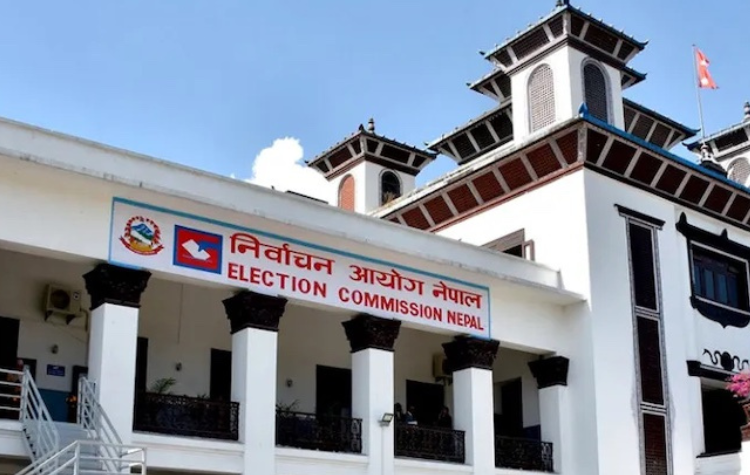
Election Bank Account Compliance Nepal Update

2nd March 2026, Kathmandu
The integrity of the electoral process in the Federal Democratic Republic of Nepal is currently facing a significant test as the deadline for Election Bank Account Compliance approaches. Despite the robust legal framework established under the House of Representatives Member Election Campaign Bank Account Operation and Management Procedure 2082, recent disclosures from the Election Commission of Nepal highlight a worrying trend of non compliance among both individual candidates and major political entities. As the nation prepares for the high stakes parliamentary elections on March 5, 2026 (Falgun 21, 2082), the enforcement of mandatory bank accounts has become a central point of contention between regulatory bodies and political stakeholders. This update explores the current state of financial transparency, the legal obligations of participants, and the systemic challenges that continue to hinder the institutionalization of campaign finance in Nepal.
Election Bank Account Compliance
The legal mandate for Election Bank Account Compliance is rooted in the quest for a more transparent and accountable democracy. According to the current regulations, every candidate contesting under both the first past the post (FPTP) and proportional representation (PR) systems must maintain a dedicated and exclusive bank account for all election related income and expenses. This rule is designed to bring an end to the era of opaque cash based campaigning, which has long been criticized for facilitating money laundering and the undue influence of corporate interests in politics. By channeling all funds through formal banking institutions, the Election Commission aims to create a verifiable paper trail that allows for real time monitoring of campaign spending limits and the identification of illegal funding sources.
However, the current compliance data suggests a significant gap between the law and its practical application. For the upcoming 2082 elections, the commission reported that out of 3,406 candidates registered under the direct electoral system, only 1,865 have successfully opened and registered their mandatory bank accounts. This represents a compliance rate of only 55 percent among individual candidates. The situation at the organizational level is even more staggering, with only 11 out of 65 participating political parties having fulfilled the requirement. While major parties like the Nepali Congress, the Nepal Communist Party, and the Janata Samajbadi Party appear on the list of compliant entities, the absence of more than 80 percent of the registered parties from the banking grid raises serious alarms about the transparency of party level expenditures during the final weeks of the campaign.
The strategic importance of Election Bank Account Compliance cannot be overstated in the context of Nepal’s evolving democratic framework. Without these accounts, the Election Commission is effectively blind to the financial activities of nearly half of the contestants. This lack of visibility makes it impossible to enforce the spending ceilings, which are intended to provide a level playing field for candidates who do not have access to vast personal or corporate wealth. Furthermore, the reliance on undocumented cash transactions during the peak of the campaign period increases the risk of voter bribery and the entry of dirty money into the political system. In the year 2082, where digital financial literacy is supposedly at an all time high, the failure of many candidates to open a simple bank account is viewed by many civil society observers as a deliberate attempt to bypass regulatory oversight.
Advertisement


Assistant spokesperson Sita Poudel has noted that the commission is actively following up with those who have yet to comply. The regulatory oversight mechanism involves more than just verifying the existence of an account; it requires candidates to disclose the names of individuals authorized to operate the account and to provide regular updates on significant deposits. The commission has also engaged with the Nepal Rastra Bank to ensure that commercial banks prioritize the opening of these specialized accounts and report any suspicious high volume transactions. Failure to comply with these directives can lead to severe consequences, including the disqualification of a candidate’s victory if it is later proven that the lack of a bank account was used to conceal expenditures beyond the legal limit.
The reasons for low compliance are varied and often reflect the logistical challenges of the Nepali landscape. In remote districts of Karnali and Sudurpashchim, the lack of physical bank branches and reliable internet connectivity can make it difficult for independent candidates to meet the stringent procedural requirements. However, this excuse carries less weight for major political parties and candidates in urban centers. Some analysts suggest that the complexity of the 2082 procedure, which requires detailed documentation and a specific recommendation from the returning officer, may be a deterrent for first time contestants. To address this, the Election Commission has simplified some aspects of the digital registration portal, yet the uptake remains slow as the polling day draws nearer.
From a broader perspective, Election Bank Account Compliance is a fundamental pillar of democratic integrity. When citizens can see how a campaign is funded, it builds trust in the eventual winners and the system as a whole. Conversely, when the financial foundations of a campaign are shrouded in secrecy, it breeds cynicism and undermines the legitimacy of the electoral outcome. The current struggle to enforce banking compliance is therefore a struggle for the very soul of the Nepali democratic experiment. In the year 2082, the transition to a modern, accountable, and digitally monitored campaign finance system is no longer a luxury but a necessity for national stability and international credibility.
In conclusion, the update on Election Bank Account Compliance in Nepal presents a mixed picture of progress and resistance. While over 1,800 candidates have taken the step toward financial accountability, the massive numbers of non compliant participants pose a significant threat to the fairness of the 2082 House of Representatives election. The Election Commission must now decide whether to move from persuasion to punitive action to ensure that the remaining candidates and parties fall in line. As the national spotlight intensifies, the coming days will determine whether Nepal can successfully implement these reforms or if campaign finance will remain an unregulated frontier. For the voters, the presence of a verified bank account remains a key indicator of a candidate’s commitment to the rule of law and the principles of transparent governance.
For More: Election Bank Account Compliance