Election Day Tourist Vehicles Permit Nepal

26th February 2026, Kathmandu
The regulatory framework for the upcoming House of Representatives election has introduced a critical administrative requirement known as the Election Day Tourist Vehicles Permit Nepal. Established under the newly issued Vehicle Permit Procedure 2082 by the Election Commission of Nepal, this provision creates a mandatory pre approval system for all vehicles intended to transport domestic and international tourists on the day of voting. The primary objective of this regulation is to maintain a delicate balance between two competing national interests: the need for absolute security and neutrality during the democratic voting process and the necessity of maintaining service continuity for Nepal vital tourism industry. In a country where tourism is a major pillar of the economy, a total shutdown of transportation could lead to significant distress for international visitors; therefore, the Commission has opted for a regulated movement model rather than a blanket prohibition.
Election Day Tourist Vehicles
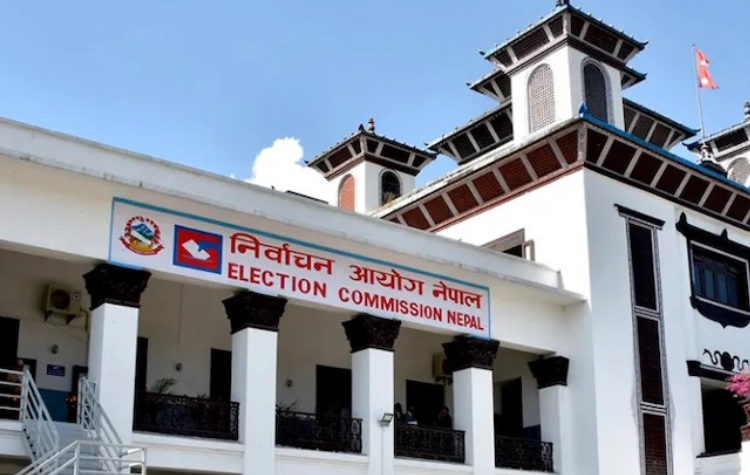
The legal and procedural requirements of the Election Day Tourist Vehicles Permit Nepal are strictly defined to prevent last minute logistical chaos. According to the Election Commission spokesperson Narayan Prasad Bhattarai, any tourism operator, hotel, or travel agency planning to move guests on election day must secure an official permit at least two days in advance. The jurisdiction for these permits is divided geographically to ensure efficient processing. For all tourist vehicle operations within the Kathmandu Valley, including movements between the international airport and city hotels, applications must be submitted directly to the Election Commission headquarters. Conversely, for vehicles operating in other districts or traveling across provincial borders, the authority lies with the respective District Administration Office (DAO) led by the Chief District Officer. This decentralized approach ensures that local security conditions are taken into account before any travel authorization is granted.
One of the most significant factors necessitating the Election Day Tourist Vehicles Permit Nepal system is the decision to keep national and international flight schedules uninterrupted. Unlike many previous election cycles where air travel was also curtailed, the 2082 elections will see a full schedule of arrivals and departures at Tribhuvan International Airport and the newly operational international airports in Pokhara and Bhairahawa. This creates a mandatory requirement for ground transportation to ferry passengers to and from these gateways. Without a structured permit system, the strict security cordons and vehicle restrictions typically imposed on election day would leave thousands of tourists stranded. The permit acts as a legal bridge, allowing recognized tourist vehicles with green number plates to navigate designated routes while ensuring they are not being misused for political mobilization or voter transportation.
The security rationale behind these movement controls is rooted in the history of Nepali elections, where restricted mobility is used to prevent voter intimidation, curb the influence of muscle power, and maintain a peaceful environment at polling stations. The Election Commission has emphasized that election day is a period of heightened sensitivity where every vehicle on the road is a potential security variable. By requiring a permit at least two days in advance, authorities can conduct background checks on the vehicles and drivers, document the intended travel routes, and issue a physical or digital permit that is easily verifiable by security personnel at checkpoints. This traceability is essential for distinguishing between legitimate essential travel and unauthorized movement that could undermine the integrity of the electoral process.
Advertisement


Beyond the tourism sector, the Vehicle Permit Procedure 2082 also categorizes other essential services that are granted operational continuity. Vehicles belonging to diplomatic missions, the National Human Rights Commission, ambulance services, and the press are typically allowed to move, though many still require specific identification or pre clearance. The Election Day Tourist Vehicles Permit Nepal specifically addresses the nuances of the highway movement, where long distance travelers might find themselves in transit when the polls open. The procedure dictates that highway bound tourist vehicles must strictly follow designated transit corridors and are not allowed to deviate into local roads where polling stations are located. This containment strategy ensures that the broad national transport arteries remain functional for tourists while the local electoral environment remains undisturbed.
For the tourism industry, the introduction of this pre approval system demands proactive planning and high levels of operational discipline. Travel agencies and trekking companies must now map out their guest movements weeks in advance to ensure they do not miss the 48 hour application deadline. This involves coordinating with hotels to identify check in and check out times and ensuring that all vehicle and driver documentation is up to date. From a governance perspective, this move signals a transition toward a more sophisticated and data driven administrative model. Instead of relying on crude total bans, the government is using targeted regulations to manage complex social and economic interactions during sensitive periods. This reflects a growing maturity in Nepal’s institutional capacity to handle simultaneous national priorities.
The broader implications for Nepal’s international image are also positive. By formalizing the movement of tourists on election day, the country is projecting itself as a destination that respects the needs of its visitors even during significant domestic events. It provides a level of predictability that allows international travel wholesalers to continue selling Nepal packages without fear of their clients being caught in a transport vacuum. The success of the Election Day Tourist Vehicles Permit Nepal system will be judged by the smoothness of the airport transfers and the absence of security incidents involving permitted vehicles. As the year 2082 marks another milestone in Nepal’s democratic journey, the effective management of these logistical challenges will be a testament to the coordination between the Election Commission, the security forces, and the private sector.
In conclusion, the Election Day Tourist Vehicles Permit Nepal provision is a calibrated and necessary intervention for the 2082 House of Representatives election. By mandating a two day prior approval process through the Election Commission and District Administration Offices, the government is ensuring that the democratic rights of the citizens and the service needs of the tourists are both protected. For tourism stakeholders, early compliance is the key to avoiding operational disruptions, while for the state, this system provides the oversight needed to prevent the misuse of transport assets. As Nepal continues to refine its electoral governance, such structured permit systems will likely become a standard feature of the national landscape, ensuring that the country remains open for business while it fulfills its constitutional obligations.
For More: Election Day Tourist Vehicles