Gagan Thapa Elected President of Nepali Congress via Special General Convention

15th January 2026, Kathmandu
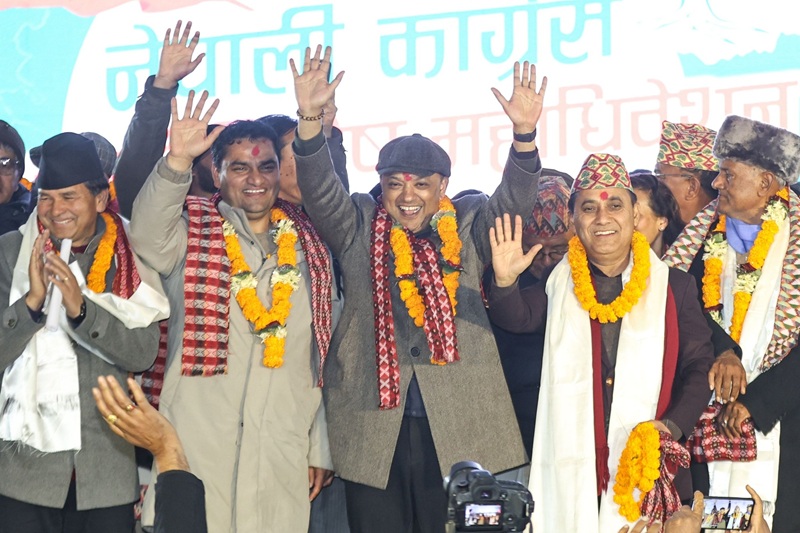
In a dramatic turn of events that has reshaped the landscape of Nepalese politics, Gagan Thapa has been elected the President of the Nepali Congress through a Special General Convention.
Gagan Thapa Elected President of Nepali Congress
This historic shift comes after months of internal friction, leading to a formal division within the country’s oldest and largest democratic party.
The Special General Convention: A Mandate for Change
The transition occurred after 54% of the party’s General Convention delegates submitted a formal petition to call for a Special General Convention, as permitted by the party’s constitution.
Led by the youth-centric Gagan Thapa-Vishwa Prakash Sharma faction, the convention successfully challenged the long-standing establishment.
Key Highlights of the Convention:
Unanimous Election: Gagan Thapa was elected President by the gathered delegates after the establishment faction, led by Sher Bahadur Deuba, refused to recognize the gathering.
Overturning Expulsions: Just hours before Thapa’s election, the Deuba-led central committee had reportedly “expelled” Thapa, Vishwa Prakash Sharma, and Farmullah Mansur. However, the convention floor immediately nullified these actions, declaring them unconstitutional.
The “Gen-Z” Influence: The movement for leadership transformation gained massive momentum following the youth-led “Gen-Z” protests, which demanded accountability and fresh faces in the political arena.
Gagan Thapa’s Political Journey: From Rebel to Leader
Gagan Thapa’s rise to the presidency is the culmination of a political career defined by defiance and a call for reform.
1. The Early Years (1990 Movement)
At just 14 years old, during the 1990 (2046 BS) People’s Movement, Thapa joined the struggle as a member of the “Bal Congress.” The restoration of multi-party democracy in Nepal provided the foundation for his future political trajectory.
Advertisement


2. The Student Leader and Republican Advocate
By 2002 (2059 BS), Thapa was the General Secretary of the Nepal Student Union (NSU). During King Gyanendra’s direct rule, Thapa became the face of the street protests. Most notably, he championed the Republican cause at a time when the Nepali Congress leadership was still hesitant to abandon the monarchy. His bold stance led to multiple arrests and treason charges.
3. Ministerial Tenure and Legislative Role
First elected as a Central Committee member in 2010 (12th General Convention), Thapa later served as the Minister for Health and Population in 2016. During his nine-month tenure, he was credited with creating the blueprint for Nepal’s federal health structure and initiating crucial systemic reforms.
The Path to the Presidency: Rebellion for Reform
Thapa’s path has never been a straight line. After being elected General Secretary in the 14th General Convention, he found himself in a constant power struggle with the establishment.
The Stance on Alliances: Thapa and Sharma consistently argued for the party to end pre-electoral alliances and return to its core ideological roots.
The Final Split: When the Deuba group refused to hold a convention before the March 2026 elections, citing time constraints, the Thapa faction moved forward with the “Special General Convention” to prevent the party from stagnating.
“I have chosen to drink poison to save the party,” Thapa famously remarked during the struggle, implying that the rebellion was a painful but necessary step to preserve the integrity of the Nepali Congress.
What Lies Ahead?
With Gagan Thapa now at the helm, the Nepalese political scene enters a new era. The challenge for Thapa will be to legitimize his leadership in the eyes of the Election Commission and lead a newly divided party into the upcoming general elections.
The election of a 49-year-old leader marks a generational shift that many hope will bring the “transformation” promised by the youth movements of the past year.