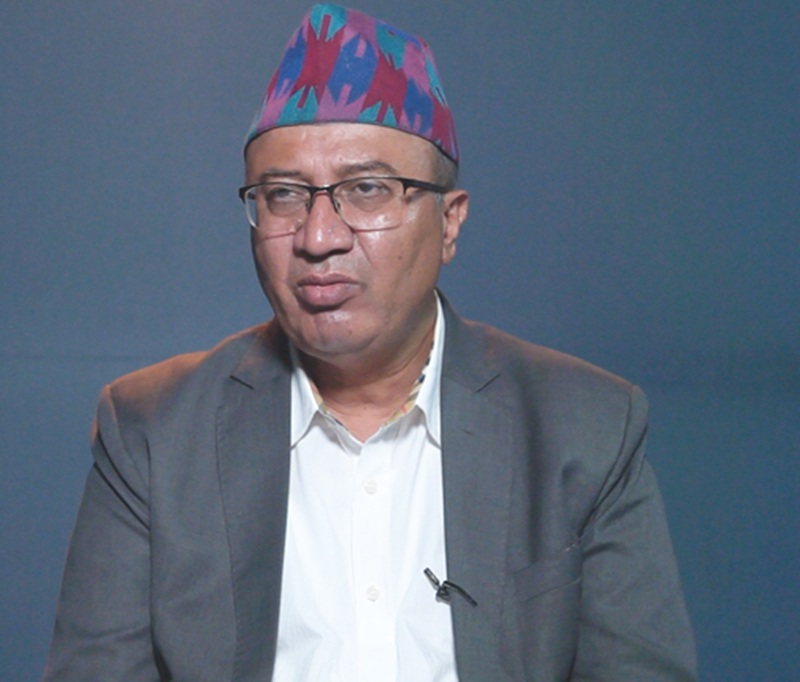

Gagan Thapa Sarlahi Election Contest Reshapes NC Strategy

21st January 2026, Kathmandu
The Gagan Thapa Sarlahi election contest has emerged as one of the most closely watched political developments ahead of the House of Representatives elections in Nepal.
In a move that surprised many, Nepali Congress President Gagan Kumar Thapa officially decided to contest from Sarlahi Constituency No. 4. This marks a strategic shift both for his personal political career and for the broader electoral strategy of the party in the Madhesh region.
Gagan Thapa Sarlahi Election
This decision represents the fourth electoral entry of Thapa into the Madhesh Province, a region that holds significant political weight but has increasingly slipped from the traditional grasp of the Nepali Congress over the past decade. By moving away from his long-held urban stronghold in the capital, Thapa is attempting to prove his mettle as a truly national leader capable of winning in diverse geographical and cultural landscapes.
From Kathmandu Stronghold to Madhesh Battleground
Gagan Thapa has been elected three consecutive times from Kathmandu-4, establishing himself as a dominant figure in urban politics. His decision to move away from a secure constituency to the more volatile Sarlahi-4 reflects a calculated risk. Party insiders and political analysts view this shift as an effort to reclaim a historically important Nepali Congress base that was lost during the political realignments following the 2008 Constituent Assembly elections.
Sarlahi-4 was long considered a stronghold for the grand old party. However, the seat was lost in 2008 when the Madheshi Janadhikar Forum secured victory, signaling the rise of identity-based regional politics in the plains. Since then, the constituency has remained highly competitive, with shifting alliances and strong local leaders dominating the landscape. Thapa’s entry is seen as an attempt to “re-nationalize” the politics of the region by bridging the gap between Kathmandu’s policy discourse and the grassroots concerns of the Madhesh.
Amresh Kumar Singh Emerges as the Primary Rival
The Gagan Thapa Sarlahi election contest is expected to be fiercely competitive due to the presence of Amresh Kumar Singh, a former Nepali Congress leader with deep roots in the constituency. Singh won the seat twice as a Congress candidate before breaking away from the party after being denied a ticket in the previous cycle.
In the 2022 House of Representatives election, Singh contested as a rebel independent candidate and won with 20,017 votes, defeating the official Nepali Congress candidate Nagendra Ray Yadav, who secured 18,252 votes. A third candidate, Madhumala Kumari Yadav, also made a strong showing with 14,622 votes, highlighting a highly fragmented voter base.
Now, Singh is contesting under the banner of the Rastriya Swatantra Party (RSP), which has added a new political dimension to the race. His alignment with the RSP—a party positioning itself as a modern alternative to traditional forces—has intensified the contest and drawn national attention to the 2082 battle in Sarlahi-4.
A Strategic Gamble for the Nepali Congress
Political analysts argue that the move of Gagan Thapa into Sarlahi is a deliberate attempt by the Nepali Congress to project confidence. By fielding its sitting party president in a difficult and historically contested constituency, the party aims to signal its seriousness about rebuilding its influence in the Terai belt.
Advertisement


However, the challenges are substantial:
Internal Divisions: Years of intra-party friction and resentment over past ticket distributions may hinder a unified campaign.
Identity Politics: The challenge of a “pahadi” (hilly origin) leader contesting in a region where identity-based voting remains a significant factor.
Local Resonance: Balancing national-level reformist rhetoric with local demands for infrastructure, irrigation, and agricultural support in Sarlahi.
Success for Thapa will depend heavily on intense grassroots mobilization and the ability of the party to unify its local organization behind his candidacy.
Madhesh Politics and National Implications
Sarlahi-4 is not just another constituency in this election cycle. It represents the broader political dynamics of the Madhesh Province, where issues of representation, development, and trust in national parties continue to shape voter behavior. The entry of Thapa has transformed the seat into a symbolic battleground between established national parties and emerging “alternative” political forces like the RSP.
If Thapa wins, it could significantly strengthen his leadership within the Nepali Congress and reinforce the claim of the party as a national force capable of regaining lost territory. It would also provide him with a mandate to lead the government as a Prime Ministerial candidate with cross-regional support. Conversely, a defeat would raise serious questions about the electoral strategy of the party and its ability to compete effectively outside its traditional urban bases.
High Stakes for the Future of Nepal
As the election on March 5 (Falgun 21) approaches, the Gagan Thapa Sarlahi election contest is expected to dominate the national political discourse. With strong rivals, a divided voter base, and high stakes for the future of the Nepali Congress, Sarlahi-4 is shaping up to be the most decisive constituency in the upcoming polls.
The outcome will not only determine the local representative for the people of Sarlahi but may also influence the future direction of the major political parties of Nepal and the potential for a new era of governance in the Madhesh.
For More: Gagan Thapa Sarlahi Election