Growing Gold Silver Prices: Record Hits New High Today

Web Post Zone (1920 x 1080 px) - 241
27th January 2026, Kathmandu
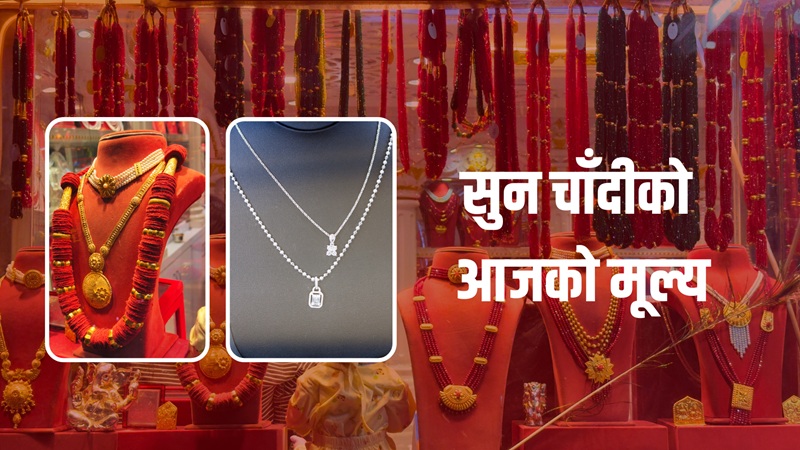
The Nepali precious metals market has entered an unprecedented era of valuation as the Federation of Nepal Gold and Silver Dealers’ Association (FENEGOSIDA) announced yet another record-breaking day. On Tuesday, January 27, 2026, the domestic bullion market witnessed gold and silver prices surging to their highest historical peaks. For the first time, hallmarked gold has surpassed the NPR 309,000 threshold, marking a staggering milestone that reflects both the global economic climate and the specific safe-haven demand within Nepal.
Growing Gold Silver Prices
This relentless climb comes during the peak of the winter wedding season, placing significant pressure on consumers while rewarding long-term investors.
Record-Breaking Gold Valuation
The price of fine gold (Chhapawal gold) saw an increase of NPR 300 per tola on Tuesday, bringing the rate to an all-time high of NPR 309,300 per tola. This follows a massive surge on Monday, where prices had already jumped by over NPR 5,000 to reach the previous record of NPR 309,000. For those measuring in metric units, the price for 10 grams of fine gold is now fixed at NPR 265,175. Tejabi gold has also seen a proportional rise, currently standing at NPR 308,600 per tola.
The speed at which these records are being broken is remarkable. Just a week ago, the market was reacting to gold crossing the NPR 300,000 mark for the first time. The current trajectory suggests that the “yellow metal” is experiencing its most volatile and bullish phase in modern Nepalese history.
Silver Joins the Bullish Momentum
Silver, often referred to as the “poor man’s gold,” is no longer a low-cost alternative. Following the trend of the primary metal, silver prices rose by NPR 105 per tola on Tuesday to reach a historic NPR 6,870 per tola. The rate for 10 grams of silver now stands at NPR 5,890. Market analysts note that silver is currently facing a “liquidity squeeze” in global markets, where supply tightness is meeting high investment demand, further pushing up prices in the domestic market.
Global and Domestic Drivers of the Surge
The primary catalyst for this historic surge remains the international market, where gold recently broke the USD 5,000 per ounce barrier for the first time. Several factors are converging to create this “perfect storm” for precious metals:
Geopolitical Instability: Ongoing conflicts in Europe and the Middle East, along with uncertainty surrounding global trade policies, have driven investors worldwide toward safe-haven assets.
Currency Devaluation: The weakening of the Nepali Rupee against the US Dollar has made imports significantly more expensive. Since Nepal relies entirely on imports for its gold and silver supply, any dip in the rupee’s value is immediately reflected at the jewelry counter.
Advertisement


Interest Rate Shifts: Moves by major central banks, including the US Federal Reserve, to adjust interest rates have made non-yielding assets like gold more attractive compared to traditional bonds or bank deposits.
Domestic Demand: Despite the high prices, the ongoing wedding season in Nepal has maintained a baseline demand. Additionally, many Nepali investors are withdrawing savings from cooperatives and low-interest bank accounts to invest in gold coins and rings (Beruwa Aunthi), which are viewed as more secure stores of value.
Economic Impact on Consumers and Traders
The social and economic implications of these prices are profound. For many middle-class Nepali families, gold is a traditional necessity for weddings and cultural ceremonies. With a single tola costing nearly NPR 310,000—excluding labor charges and taxes—the cost of a standard wedding jewelry set has effectively doubled compared to just a few years ago. This has led to a noticeable shift in consumer behavior, with many opting for lighter designs or trading in old jewelry to finance new purchases.
From a regulatory perspective, the Nepal Rastra Bank has been closely monitoring the situation. To address the supply gap, the central bank recently increased the daily gold import quota to 25 kg. However, even this increase has struggled to keep pace with the market demand, which traders estimate at approximately 30 to 40 kg per day during peak seasons.
The “New Normal” for Investors
While high prices deter buyers, they have been a boon for those who invested in gold years ago. Many investors are now treating gold as a primary asset class, moving away from the volatile Nepal Stock Exchange (NEPSE). The perception of gold as an “inflation hedge” is stronger than ever, with some analysts predicting that if global tensions do not ease, the price could realistically approach NPR 325,000 per tola by the end of the year.
Market Outlook and Advice
The Federation of Nepal Gold and Silver Dealers’ Association advises consumers and investors to stay informed by following daily rate updates, as prices are fluctuating by several thousand rupees within a single week. While technical corrections—short-term price drops—are possible, the long-term trend remains upward. For those needing gold for immediate cultural purposes, traders suggest looking into “Tejabi” gold or higher-purity silver ornaments as relatively more affordable alternatives.
Conclusion
The breaking of the Gold Silver Price Record on January 27, 2026, is a testament to the complex global economic landscape. As gold reaches NPR 309,300 and silver hits NPR 6,870, Nepal’s bullion market is operating at a level never seen before. Whether this surge is a temporary peak or the beginning of a new baseline remains to be seen, but for now, precious metals remain the undisputed kings of the Nepali investment world.
For More: Growing Gold Silver Prices