Kathmandu’s Ride-Sharing Crisis: Drivers Demand Fair Play and “Balen Govt” Intervention

1st April 2026, Kathmandu
The streets of Kathmandu are echoing with the sound of thousands of motorcycle horns, but not because of the usual traffic. The tension between ride-sharing drivers and platform giants like Pathao, inDrive, and Yango has reached a boiling point.
Kathmandu’s Ride-Sharing Crisis
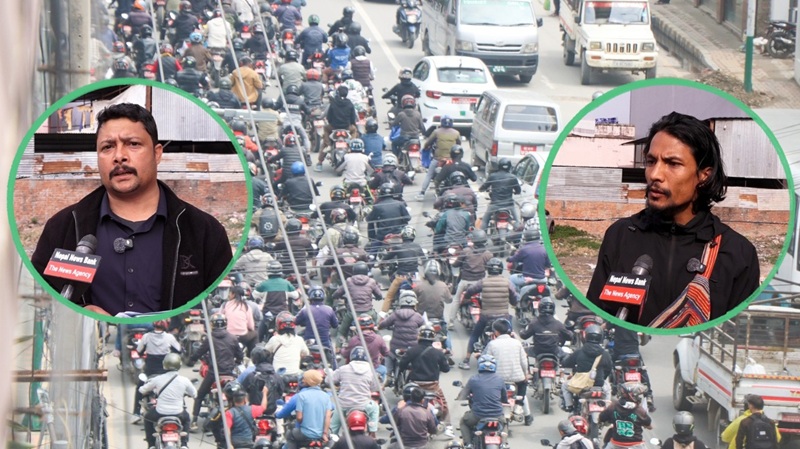
Organized by the Independent Drivers Foundation Nepal, a massive rally of scooters and motorcycles recently swept through the capital, signaling an escalation in the fight against what drivers call “extreme labor exploitation.“
The Core of the Conflict: Why Are Drivers Protesting?
The protest, which began at Maitighar Mandala and moved through Tripureshwar and Baneshwar, centers on a primary grievance: the struggle to survive. Despite the convenience ride-sharing offers the public, the people behind the handlebars claim they are being pushed into poverty.
1. The “Scientific Fare” Dilemma
A few years ago, drivers could expect to earn approximately Rs. 27–28 per kilometer. In 2026, due to aggressive market competition and platform policies, that rate has plummeted to a staggering Rs. 9–10 per kilometer.
The Problem: This rate is nearly identical to public bus fares, yet drivers must bear the costs of fuel, maintenance, and data.
The Demand: The Foundation is calling for a “Scientific Fare”—a regulated minimum of Rs. 30 per kilometer that adjusts based on fuel price hikes and inflation.
2. High Commissions vs. Rising Costs
While companies continue to report high revenues, drivers are feeling the squeeze.
Fuel & Maintenance: With global petroleum prices remaining volatile, the take-home pay for a full day of riding often barely covers the cost of refueling.
Commission Rates: Drivers are demanding a cap on the commission percentages taken by platforms, which currently eat away at their razor-thin margins.
3. Lack of Social Security and Insurance
A major point of contention is the status of drivers as “partners” rather than “employees.” This legal distinction leaves them without:
Social Security: No access to the Social Security Fund (SSF).
Advertisement


Insurance Gaps: While some platforms like Pathao have improved their insurance policies, protesters claim others provide “insurance in name only,” leaving families to crowdfund medical bills after accidents.
The Legal “Gray Area”: A 6-Year Regulatory Delay
The root of the instability lies in a massive regulatory gap. Although the Patan High Court ordered the government to regulate ride-sharing back in February 2020 (29 Magh 2076), federal legislation has remained stagnant.
| Key Legislation / Order | Status in 2026 |
| Motor Vehicle Act 1992 (2049) | Technically prohibits private vehicles from commercial use. |
| Patan High Court Order (2020) | Mandated the creation of ride-sharing laws (still largely ignored by the Federal Govt). |
| Industrial Enterprises Act | Amended in 2024 to recognize ride-sharing as a “service-oriented industry.” |
| Gandaki Province Regulations | Already implemented (2025); sets a model for other provinces. |
While Gandaki Province has successfully launched its own “Ride-Sharing Management Regulation 2025,” Bagmati Province (including Kathmandu) is still lagging, leaving thousands of Nepalese drivers in a state of legal limbo.
The “Balen Shah” Factor: Hope for a New Era
Protesters are pinning their hopes on the newly formed government and the leadership of Balendra (Balen) Shah. As a leader known for structural reforms and urban management, the drivers believe his administration is the only one capable of:
Enforcing Provincial Guidelines: Bringing Bagmati’s ride-sharing draft into law.
Ending “Account Blocking”: Regulating the arbitrary suspension of driver accounts without a fair hearing.
Mandatory ID Verification: Ensuring passenger identification is mandatory for the safety of the rider.
“Government support is vital. We want to work, but we cannot work for free. Ride-sharing is now a pillar of urban transport, and it’s time the law treated it as such.” Muktinath Phuyal, President of the Foundation.
What’s Next?
The Independent Drivers Foundation Nepal has warned that if their demands aren’t met, they will transition into a “strict protest phase,” which could include a complete shutdown of ride-sharing services in the Kathmandu Valley.
For a city that relies heavily on these apps for daily commutes, such a move would cause significant disruption.
Key Takeaway for Passengers: Expect potential service delays and fare fluctuations as the “price war” between companies and the “rights war” of the drivers continue to clash.
For more: Kathmandu’s Ride-Sharing Crisis