
Mahalaxmi Development Bank CSR Initiatives for Social Development

3rd February 2026, Kathmandu
Mahalaxmi Development Bank Limited has reinforced its commitment to community welfare through a series of impactful Corporate Social Responsibility (CSR) initiatives implemented across Nepal in early 2082.
Mahalaxmi Development Bank CSR
The bank’s structured Institutional Social Responsibility (ISR) policy focuses on key sectors including healthcare, public safety, education, and marginalized community empowerment. These activities are designed to foster sustainable social and economic development by addressing local needs through the bank’s extensive branch network.
Focus on Preventive Healthcare in Lalitpur
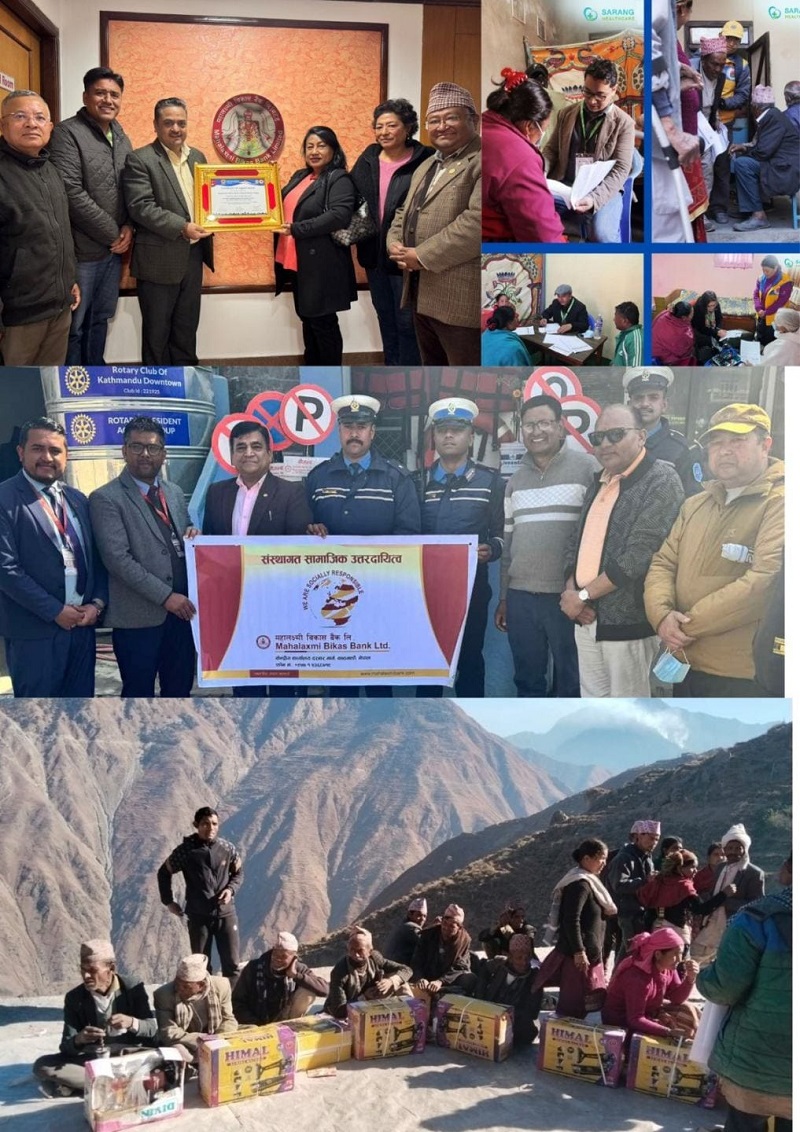
A significant pillar of the Mahalaxmi Development Bank CSR strategy is enhancing public health awareness and access. In collaboration with the Lions Club of Kathmandu Guras, the bank recently sponsored a comprehensive health camp at Shree Gandhakuti Vihar in Khokana, Lalitpur (Ward No. 21).
The camp provided essential diagnostic services free of charge to local residents, focusing on:
Cancer Screening: Early detection tests for breast, cervical, and colon cancer.
Metabolic Health: Screening for diabetes and thyroid disorders.
General Wellness: Routine health check ups and dental examinations.
By targeting early diagnosis of non communicable diseases, the bank aims to reduce the long term healthcare burden on families and improve the overall quality of life in semi urban communities.
Enhancing Road Safety and Urban Traffic Management
Addressing the growing challenges of urban congestion and road accidents, Mahalaxmi Development Bank has partnered with the Traffic Police Circle in Maharajgunj, Kathmandu. Under this initiative, the bank contributed “road furniture” and standardized traffic signages to the department.
This project is specifically aimed at:
Accident Reduction: Providing clear visual cues and warnings at critical intersections.
Parking Management: Solving the issue of haphazard parking on footpaths and busy roadsides.
Pedestrian Safety: Creating more organized zones for vehicle and pedestrian interaction.
The bank’s support helps the traffic police maintain better discipline in one of Kathmandu’s busiest hubs, contributing to a safer and more manageable urban environment.
Advertisement


Social Inclusion and Skill Empowerment in Humla
The Mahalaxmi Development Bank CSR initiatives also reach some of the most remote regions of Nepal, specifically Humla district. In partnership with the Dalit Sashaktikaran Kendra Nepal (Dalit Empowerment Center), the bank launched a skill based empowerment program in Adanchuli Rural Municipality.
Beneficiaries: Residents from Wards 1 to 6 of Adanchuli.
Equipment Distribution: Sewing machines were provided to individuals from marginalized communities.
Objective: To modernize and certify traditional occupational skills, enabling families to transition from subsistence activities to income generating small businesses.
This initiative is a prime example of the bank’s focus on sustainable livelihoods and the economic inclusion of historically underserved populations.
Educational Infrastructure Support in Rupandehi
Under its educational support program, the bank’s Bhairahawa branch facilitated the construction and improvement of a playground at Shree Bhanu Secondary School in Siddharthanagar 09, Rupandehi.
The technical support provided by the bank included:
Land Management: Soil filling and leveling to create a safe playing surface.
Drainage Solutions: Installing drainage systems to prevent waterlogging during the monsoon.
Holistic Growth: Providing students with a functional space for physical education, which is crucial for their overall mental and physical development.
The school, which serves over 700 students from various socio economic backgrounds, now possesses an upgraded facility that enhances the learning environment and promotes student well being.
Institutional Vision and Sustainable Development
Mahalaxmi Development Bank continues to align its CSR activities with the United Nations Sustainable Development Goals (SDGs). By integrating social responsibility into its core business values, the bank ensures that its growth is accompanied by the progress of the communities it serves. The bank’s management has indicated that future CSR plans will include more digital literacy workshops and environmental conservation projects, such as tree plantation and waste management drives in partnership with local municipalities.
Conclusion
The recent Mahalaxmi Development Bank CSR activities showcase a balanced approach to corporate citizenship, ranging from high tech health screenings in the valley to basic skill empowerment in the Himalayas. Through these diverse projects, the bank has successfully bridged the gap between financial services and social advocacy. For stakeholders and community members, these initiatives serve as a reminder that the bank is not just a lender but a dedicated partner in Nepal’s journey toward inclusive development.
For More: Mahalaxmi Development Bank CSR