
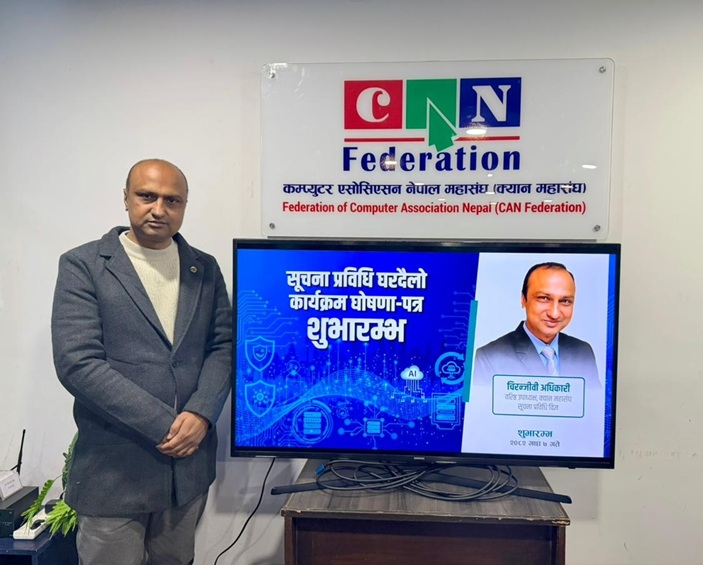
Nepal Emerging as an IT Hub: A “Door-to-Door” Campaign Begins to Reform Outdated Laws and Promote Startups

22nd January 2026, Kathmandu
Nepal’s Information Technology (IT) sector is no longer just a local interest; it is a rapidly growing industry attracting international attention.
Nepal Emerging IT Hub
As the nation moves toward the 2026 elections, a new movement led by IT activist Chiranjibi Adhikari is taking to the streets to ensure that the “Digital Nepal” dream becomes a reality through legislative and structural reform.
The Rise of the Nepalese IT Ecosystem
While historically centered in Kathmandu, IT centers, startups, and innovation hubs are now flourishing in provincial cities like Butwal, Dharan, and Janakpur.
Global Recognition: Nepalese youth are increasingly proving their excellence in software exports and global tech representation.
Investment Magnet: Foreign investors are drawn to the sector’s affordable, reliable, and high-quality services.
The “IT Door-to-Door” Campaign: A Strategic Policy Push
Launched by Chiranjibi Adhikari, Senior Vice President of the CAN Federation and a cybersecurity expert, this campaign aims to connect ground-level tech challenges with government action.
Direct Engagement: The campaign will visit 100+ IT companies, including startups, fintech, and AI firms.
Legislative Advocacy: The goal is to overhaul the Electronic Transactions Act (2006), which is nearly two decades old and fails to address modern tech like AI, cloud computing, and blockchain.
National IT Manifesto: Collected data will be synthesized into a long-term digital roadmap to be presented to the government.
Addressing the “Digital Nepal” Bottlenecks
Experts point out several critical areas where Nepal must improve to stay competitive:
Advertisement


High Taxation & Registration Hurdles: Startup entrepreneurs face complex registration processes and high taxes (up to 39%), which can stifle innovation and drive talent abroad.
Data Sovereignty: Most critical Nepalese data is currently hosted on foreign servers, posing significant national security and cybersecurity risks.
Data Exchange Gaps: The lack of a centralized Data Exchange Platform forces citizens to resubmit basic documents like birth certificates and tax records to multiple agencies.
The Role of Cybersecurity and National Security
As a cybersecurity specialist, Adhikari emphasizes that digital safety is now a matter of national stability. The campaign advocates for:
-
Strengthening the Computer Emergency Response Team (CERT).
-
Protecting critical infrastructure, such as banking and energy systems, from cyberattacks.
-
Educating political leaders on the risks of digital misinformation and hacking.
Looking Toward 2026: A Digital Commitment
With the 2026 elections on the horizon, the campaign is pressuring political parties to move beyond using social media for campaigning and instead include solid Digital Commitments in their manifestos. This includes investments in digital literacy, which experts from the World Bank say is essential for the success of any digital framework.
Summary of Key Recommendations
| Feature | Proposed Reform |
| Legal | Replace the 2006 Electronic Transactions Act with modern AI & Data laws. |
| Taxation | Reduce tax burdens for startups to encourage domestic growth. |
| Infrastructure | Build national data centers to secure Data Sovereignty. |
| Literacy | Launch nationwide digital literacy campaigns to bridge the digital divide. |
The “IT Door-to-Door” journey represents a pivotal moment for Nepal. By aligning private sector innovation with government policy, the nation is poised to establish itself as a leading IT hub in South Asia.
For more: Nepal Emerging IT Hub