Nepal Government Approves ‘Private Sector Protection and Promotion Plan’ (PSPP): A Game-Changer for Business

1st March 2026, Kathmandu
In a landmark decision for the Nepalese economy, the Council of Ministers has officially approved the ‘Private Sector Protection and Promotion Plan’ (PSPP).
Nepal Government Approves PSPP
The move, championed by the Federation of Nepalese Chambers of Commerce and Industry (FNCCI), is being hailed as a “historic achievement” that will redefine the relationship between the state and private enterprises.
Chandra Prasad Dhakal: “A New Era for Nepalese Entrepreneurs”
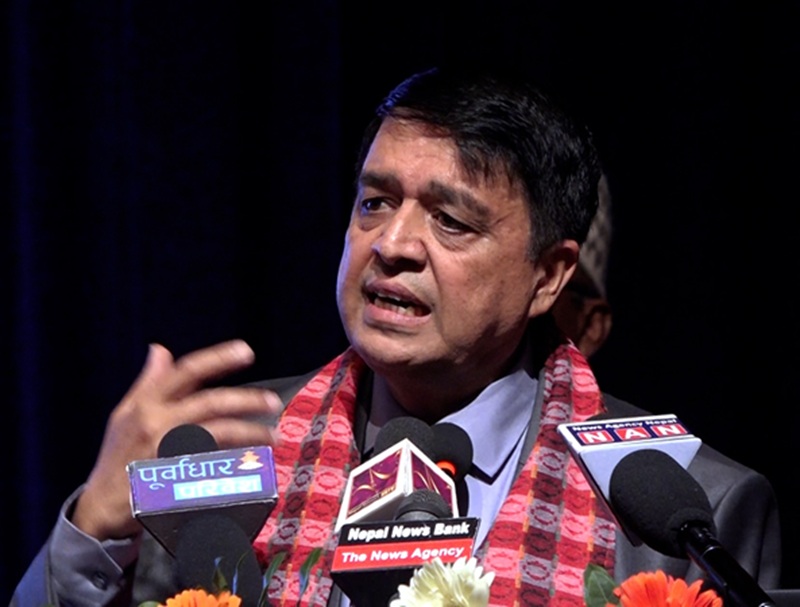
Speaking at the 13th Convention of the Federation of Contractors’ Associations of Nepal (FCAN), FNCCI President Chandra Prasad Dhakal expressed immense optimism.
According to Dhakal, the PSPP is not just a policy document but a strategic shield for the private sector, which contributes over 81% to Nepal’s GDP and generates more than 86% of the country’s employment.
“This plan addresses the core challenges we have faced for decades,” Dhakal stated. “From the physical security of our business leaders to the removal of administrative hurdles that stall massive infrastructure projects, the government has finally sent a clear message: the private sector is the engine of our national growth.”
Key Pillars of the Private Sector Protection and Promotion Strategy (PSPP)
The strategy, integrated as the 60th point of the Government’s 100-point governance reform agenda, focuses on several critical areas:
Physical Security & Asset Protection: Addressing long-standing concerns regarding the targeting of businesses during political unrest.
Regulatory Simplification: Streamlining bureaucratic processes to accelerate project implementation and “ease of doing business.”
Economic Recovery Packages: Introducing tax exemptions, interest subsidies, and loan restructuring for businesses hit by economic recession or recent protests.
Advertisement


Youth Entrepreneurship: Specific provisions to encourage startups and digital innovation through the Nagarik App and a new “One-Door Business Platform.”
Why the PSPP Matters for Nepal’s Economic Future
For years, Nepalese contractors and investors have struggled with project delays often blamed on the private sector. However, Dhakal pointed out that these delays are often caused by minor regulatory bottlenecks and security threats.
By implementing the PSPP, the government aims to:
Boost Investor Confidence: Attract both domestic and foreign direct investment (FDI).
Restore Private Sector Morale: Ensure that entrepreneurs can operate without fear of being targeted during civil movements.
Modernize Governance: Shifting commercial services to digital platforms within a 45-day window to ensure transparency.
The Path Forward: Collaboration and Reform
The approval of the PSPP coincides with a broader push for economic reform. Finance Minister Dr. Swarnim Wagle has already initiated the repeal of 15 obsolete laws to align with the National Economic Transformation 2030 roadmap.
As Nepal moves toward its goal of becoming a middle-income country, the synergy between the government and the FNCCI will be vital. As President Dhakal concluded, “Life without the private sector is unimaginable. This plan ensures that the pillar of our economy remains strong, secure, and promoted.”
For more: Nepal Government Approves PSPP