Nepal India Border Closure For Election Security

20th February 2026, Kathmandu
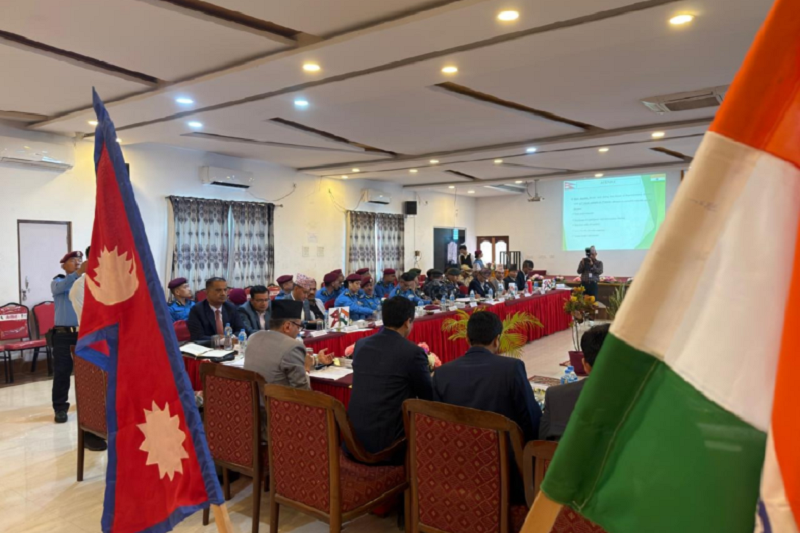
The democratic process in Nepal is entering a critical phase as the nation prepares for the House of Representatives general election scheduled for March 5, 2026 (Falgun 21, 2082). To ensure the integrity of the polling process and maintain a peaceful environment, the administrative authorities in Koshi Province have officially announced the temporary sealing of the Nepal-India border. This decision was reached during a high-level bilateral security coordination meeting involving the district security committees of Jhapa, Morang, and Sunsari from the Nepali side and the district magistrates and police chiefs from Kishanganj, Araria, and Supaul districts of India. The primary objective of this 72-hour border closure is to prevent any cross-border criminal activities, unauthorized movement of individuals, and the potential influx of illegal weapons or cash that could disrupt the fairness of the election.
Nepal India Border Closure
The border sealing is set to commence from the night of March 2, 2026 (Falgun 18, 2082), at midnight and will remain in absolute effect until the conclusion of polling on the night of March 5, 2026 (Falgun 21, 2082). During this period, all major and minor transit points across the three bordering districts of Koshi Province will be completely closed to the general public. This administrative measure is a standard protocol during major elections in Nepal, particularly in districts sharing an open and porous border with the Indian state of Bihar. The long history of social and economic ties between these regions often leads to a high volume of daily traffic, which security agencies believe must be strictly regulated to ensure that only eligible Nepali voters and authorized personnel are present in the constituency zones during the silent period and the day of the vote.
Under the specific security blueprint submitted to the Election Commission, certain exemptions have been made for essential and emergency services. While the movement of standard passenger vehicles and commercial trucks will be suspended, exceptions will be granted for ambulances, fire engines, and vehicles carrying patients for urgent medical treatment. Additionally, vehicles associated with diplomatic missions, the Election Commission, and accredited observers will be allowed to pass through designated checkpoints upon the presentation of valid permits. For humanitarian cases, such as funerals or critical family emergencies, the district administration offices (DAO) in Biratnagar, Bhadrapur, and Inaruwa have established a coordination mechanism to provide one-time transit passes after thorough verification by both Nepali and Indian security forces.
A significant focus of the current border closure is the regulation of Indian registered vehicles. Authorities in Morang and Sunsari have noted that the presence of a large number of Indian number plate vehicles during election campaigns can sometimes be used for unauthorized political mobilization. Consequently, the Assistant Chief District Officers of the respective districts have requested the Indian Sashastra Seema Bal (SSB) to cooperate in restricting the entry of non-essential Indian vehicles starting from the campaign silence period. Both sides have agreed to conduct joint patrols in the ten-yard no-man’s land (Das Gaja area) to ensure that no illegal encampments or smuggling activities take place during the high-alert phase. The Nepal Police and the Armed Police Force (APF) have significantly increased their intelligence sharing with Indian counterparts to monitor the movement of suspicious groups that might attempt to use informal jungle tracks to cross the border.
Advertisement


The security challenges in Koshi Province are heightened by the high density of polling stations categorized as sensitive or highly sensitive. In Morang alone, nearly one-third of the polling centers located near the border have been flagged for extra security surveillance. The provincial command post, coordinated by the Chief Secretary of Koshi Province, has deployed over 25,000 security personnel, including the Nepal Army, to maintain the outer perimeter of the border districts. This massive mobilization is aimed at deterring any form of electoral violence, which in the past has included incidents involving low-yield improvised explosive devices (IEDs) and physical confrontations between rival political factions. By sealing the border 72 hours in advance, the government intends to dry up the supply routes for any such disruptive elements.
From a diplomatic perspective, the 72-hour closure is a reciprocal gesture often seen during Indian elections as well. For instance, in late 2025, Nepal closed its borders to support the Bihar Assembly elections. This mutual cooperation reinforces the commitment of both governments to respect the democratic sovereignty of their neighbor. While the closure causes temporary inconvenience to the local business community and families with cross-border ties, the administration has emphasized that these measures are temporary and vital for the long-term stability of the nation. Business owners in the Biratnagar-Jogbani and Mechi-Panitanki corridors have been advised to stock essential commodities in advance, as customs offices will also suspend most of their clearing operations during the 72-hour period.
In conclusion, the Nepal-India border closure in Koshi Province represents a robust security shield designed to protect the democratic rights of the Nepali people. As the night of Falgun 18 approaches, the security mechanisms on both sides of the border are moving into a state of high readiness. The coordinated efforts of the Jhapa, Morang, and Sunsari administrations, in partnership with their Indian counterparts, are expected to minimize risks and provide a secure environment for a free, fair, and transparent election. Citizens are encouraged to cooperate with the security forces at checkpoints and adhere to the travel restrictions to ensure the success of the House of Representatives general election 2082.
For More: Nepal India Border Closure