NIC Asia Bank Scam Alert: Bank Warns Customers About Fake KYC Links

12th March 2026, Kathmandu
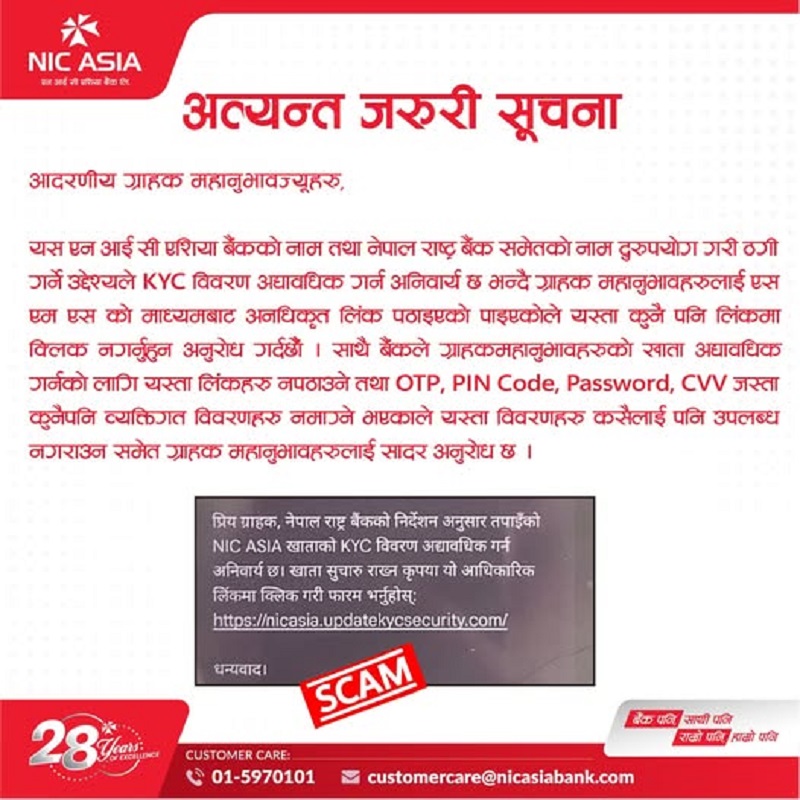
NIC Asia Bank has issued a critical security warning regarding a wave of sophisticated phishing attacks targeting its customer base in Nepal. Cybercriminals are currently disseminating fraudulent messages via SMS and email, masquerading as legitimate bank or Nepal Rastra Bank notifications. These messages urge customers to click on external links to update their Know Your Customer (KYC) details. The bank has explicitly clarified that these messages are malicious, designed to capture sensitive credentials, and has urged all account holders to ignore such communications immediately.
NIC Asia Bank Scam
The scammers are utilizing tactics designed to create a sense of urgency. By claiming that a customer’s account will be blocked or restricted if they fail to update their KYC information, they pressure users into clicking on malicious URLs, such as the unauthorized domain “https://www.google.com/search?q=nicasia.updatekycsecurity.com.” Once a user lands on these fake sites, they are often presented with a replica of the bank’s login portal, designed to harvest One-Time Passwords (OTP), transaction PINs, internet banking passwords, and sensitive card information like CVV codes.
Critical Safety Protocols for Customers
To safeguard your financial assets, it is imperative to follow these security rules:
Never click on any links sent via SMS, email, or social media platforms that claim to be from NIC Asia Bank.
The bank will never request your PIN, password, or OTP through an external link or a phone call.
Official KYC updates are only conducted at physical bank branches or through the official banking portal after a secure, verified login.
If you receive a message asking for personal financial data, do not reply. Instead, verify the request by calling the bank’s official number directly.
Advertisement


What to Do If You Receive a Suspicious Message
If you have been targeted by a phishing attempt, immediate action can prevent financial loss. Do not click the link and do not input any data. Instead, follow these verification steps:
Report the Message: Forward the fraudulent SMS or email details to the bank’s official customer care service.
Contact the Bank: Reach out to the bank directly via their official customer care line at 01-5970101 or email them at [email protected].
Monitor Your Account: If you have already clicked a suspicious link or shared any information, contact the bank immediately to freeze your mobile banking, internet banking, and debit card services.
Change Credentials: Once you have secured your account with bank assistance, change your banking passwords and PINs immediately.
The rise in digital banking usage across Nepal has unfortunately made customers more frequent targets for cybercriminals. Scammers rely on the trust that clients have in their banking institution. It is important to remember that professional banks operate under strict data protection protocols and will not use insecure, non-official domains to request sensitive personal documentation.
In conclusion, vigilance remains the most effective defense against online fraud. As phishing attempts become more complex, customers must develop a habit of verifying any communication that requests a change to their account status. By keeping your credentials private and relying only on official branches or verified apps, you can continue to enjoy the convenience of digital banking without falling victim to cybercrime.
For More: NIC Asia Bank Scam