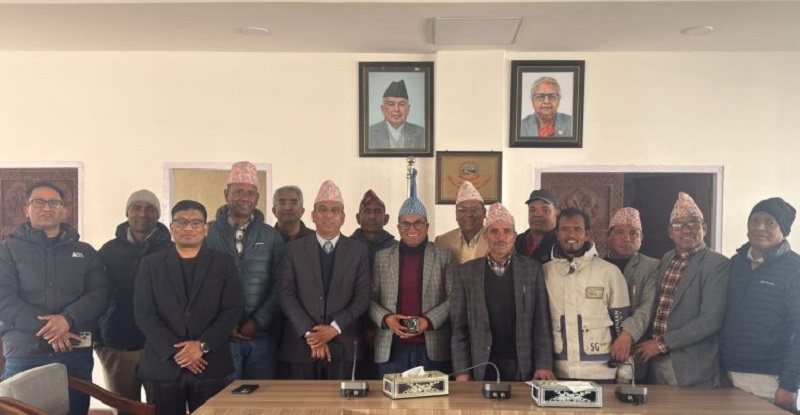
Shikhar Insurance Apple Farmers Agreement Finalized

18th January 2026, Kathmandu
The long-standing insurance dispute between Shikhar Insurance Company Limited and apple farmers of Jumla district has finally been resolved following extensive negotiations and multi-level coordination. The agreement brings significant relief to hundreds of farmers from Tatopani, Patarasi, and Kanakasundari rural municipalities, who had been demanding fair compensation for insured apple saplings affected by adverse weather conditions. This breakthrough, reached in early January 2026, marks a pivotal moment for agricultural insurance in Nepal.
Shikhar Insurance Apple Farmers
The Shikhar Insurance apple farmers agreement was finalized after a series of tripartite discussions involving farmers, local government representatives, and national authorities. According to the finalized terms, apple farmers will now receive insurance compensation ranging from Rs 350 to Rs 400 per sapling, depending on their specific municipality. This resolution is seen as a major step toward restoring trust between agricultural communities and private insurance providers.
Background and Escalation of the Conflict
The dispute originated from widespread dissatisfaction among farmers regarding the initial insurance damage assessment. Initially, Shikhar Insurance had fixed compensation at a nominal Rs 24 per sapling, which farmers argued was grossly inadequate. The farmers contended that this amount did not reflect the actual investment and losses incurred due to drought-related damage in the fiscal years 2080/81 and 2081/82.
In response to the low valuation, farmers launched series of protests and sit-in demonstrations. Tensions escalated when protesters placed a physical lock on Shikhar Insurance’s Jumla office, halting all local operations. Despite several rounds of local mediation coordinated by the Jumla District Administration Office, a consensus remained elusive until a high-level delegation of farmers traveled to Kathmandu to seek intervention at the ministerial level.
Government Mediation and Technical Re-evaluation
The breakthrough was facilitated by the Ministry of Agriculture and Livestock Development, which brought together Shikhar Insurance, the Nepal Insurance Authority, and the Department of Hydrology and Meteorology. A critical part of the negotiation involved a technical review of weather measurement data used for the index-based parametric insurance model.
The final talks held on Magh 2, 2082, revealed that inaccuracies in data collection had led to an unfair assessment. By correcting these data points, the affected regions were reclassified from severe drought zones to moderate drought zones within a different payout bracket. This technical correction allowed for the significant increase in the compensation rate per sapling, satisfying the farmers’ demands for a realistic payout.
Compensation Structure and Payment Timeline
Under the finalized Shikhar Insurance apple farmers agreement, the following compensation rates have been established:
Tatopani Rural Municipality: Rs 400 per sapling.
Advertisement


Patarasi and Kanakasundari Rural Municipalities: Rs 350 per sapling.
The total insurance claim amount will be paid in a lump sum, which includes the applicable government insurance subsidies. Shikhar Insurance has committed to processing the necessary documentation and completing all payments via cheque within 15 days of the agreement signing. Furthermore, the company has agreed to refund insurance premiums collected for saplings that were previously rejected for not meeting eligibility criteria, ensuring a fair and transparent settlement process.
Impact on the Local Economy and Apple Farming
This settlement will directly benefit over 511 apple farmers from Tatopani Rural Municipality alone, who had insured more than 97,000 apple saplings during the review period. For the wider Jumla district, which has nearly 19,000 farmers engaged in apple cultivation, this resolution provides the financial liquidity needed to prepare for the upcoming planting season.
Apple farming is the primary economic driver of Jumla, contributing significantly to the district’s annual export revenue. Delays in insurance payouts had placed immense financial strain on small-scale growers. The resolution is expected to stabilize income, prevent farmers from falling into debt, and encourage continued participation in crop insurance schemes which are vital for climate resilience.
Broader Significance for Nepal’s Insurance Sector
The Shikhar Insurance apple farmers agreement is being hailed as a precedent-setting case. It highlights the critical need for accurate, localized weather data in parametric insurance models. It also underscores the importance of prompt government mediation when technical disputes arise between private corporations and rural producers.
As climate-related risks like erratic rainfall and prolonged droughts become more common in Nepal, such agreements are essential for maintaining the viability of agricultural insurance. This case proves that when data is transparent and dialogue is prioritized, insurance can serve its true purpose as a reliable safety net for the nation’s food producers.
Conclusion
In conclusion, the resolution of the Shikhar Insurance apple farmers dispute in January 2026 represents a victory for fair assessment and community persistence. By increasing the compensation to a range of Rs 350–400 per sapling, the agreement provides the necessary support for Jumla’s apple industry to thrive. As the locks are removed from the insurance offices and payments begin to flow, the focus now shifts to improving weather monitoring technology to prevent similar disputes in the future.
For More: Shikhar Insurance Apple Farmers