
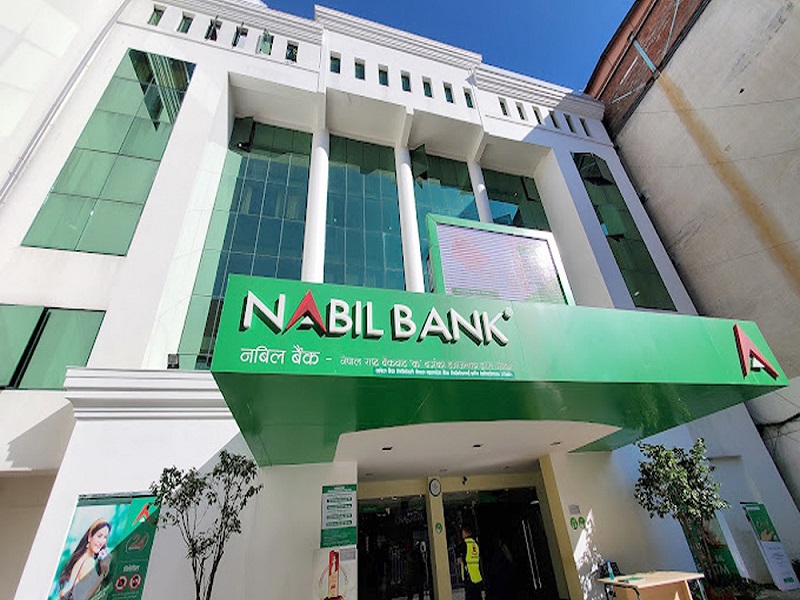
Nabil Bank Profit Growth Shows Strong Financial Recovery

29th January 2026, Kathmandu
The banking landscape in Nepal is currently witnessing a significant divergence in performance among commercial lenders. While many institutions are grappling with rising bad debts and compressed interest margins Nabil Bank Limited has emerged as a standout performer in the second quarter of the fiscal year 2082/83. According to the recently published mid term financial report the bank has achieved a net profit of 4.75 billion rupees. This represents a massive 46.71 percent growth compared to the 3.24 billion rupees recorded in the same period of the previous fiscal year. This double digit surge in profitability cements the banks position as a market leader and reflects its successful transition toward a more efficient operational model.
Nabil Bank Profit Growth
The primary engine behind this Nabil Bank Profit Growth is the significant improvement in core revenue streams and the effective management of the loan book. During the review period the banks net interest income reached 8.08 billion rupees representing a steady 2.42 percent increase. While this growth in interest income might appear modest compared to the bottom line surge it signifies a strategic shift toward high quality lending. The bank has prioritized stable interest margins and controlled funding costs over aggressive credit expansion. In an environment where the cost of deposits remains a concern for many private lenders the ability of Nabil Bank to maintain an interest income of over 8 billion rupees demonstrates superior balance sheet management.
One of the most impressive aspects of the financial statement is the growth in operating profit. The bank reported an operating profit of 6.57 billion rupees for the second quarter which is a 26.95 percent increase from the previous year. This improvement suggests that the bank has successfully optimized its internal processes and controlled personnel and administrative expenses. A high operating profit is essential for long term sustainability as it provides the bank with the financial flexibility to invest in new technologies and expand its digital banking services across Nepal.
A major catalyst for the sharp rise in net profit this year is the reversal of impairment charges. Unlike many of its peers that are forced to set aside billions of rupees for potential defaults Nabil Bank reported a write back of 48.8 million rupees in impairment charges. This indicates that the bank has successfully recovered previously stressed loans and moved them back into the performing category. Effective credit risk management and a proactive recovery department have allowed the bank to clean its balance sheet and direct recovered funds back into the profit column. This reversal is a strong indicator of the improving asset quality within the institution.
The banks asset quality metrics further validate this recovery story. The non performing loan ratio of Nabil Bank declined from 4.93 percent in the previous year to 4.25 percent by the end of Poush 2082. This reduction in bad loans is a testament to the banks rigorous credit monitoring and its selective approach to new loan disbursements. By maintaining a healthier loan portfolio the bank has reduced its provisioning requirements which has had a direct and positive impact on the overall Nabil Bank Profit Growth for this fiscal year.
Advertisement

Shareholders of Nabil Bank have much to celebrate in this latest financial report. The annualized earnings per share have jumped by 11.06 rupees to reach 35.04 rupees per share. This is one of the highest earnings figures in the industry for a bank of this capital size. Furthermore the distributable profit for the second quarter stands at 3.27 billion rupees with distributable earnings per share calculated at 22.50 rupees. These indicators suggest that Nabil Bank is in a very strong position to offer attractive dividends to its investors at the end of the fiscal year provided the current performance momentum continues.
The capital strength of Nabil Bank remains a cornerstone of its stability. The banks paid up capital has increased to 32.05 billion rupees following the strategic issuance of 5 billion rupees in non cumulative perpetual preference shares. In addition to this expanded capital base the bank holds a massive reserve fund of 36.70 billion rupees. This combined capital buffer provides the bank with the resilience needed to absorb any unexpected economic shocks and the firepower to pursue aggressive growth opportunities as the national economy recovers. The net worth per share of the bank currently stands at 235.64 rupees reflecting a solid book value for long term investors.
On the operational side Nabil Bank continues to dominate in deposit mobilization and credit disbursement. By the end of Poush the bank had collected total deposits of 566.05 billion rupees making it one of the largest deposit holders in the private sector. Meanwhile total loans and advances amounted to 434.73 billion rupees. The banks cautious approach to lending ensures that it maintains a healthy credit to deposit ratio while focusing on sectors that offer sustainable returns and lower risk.
In conclusion the financial performance of Nabil Bank in the first half of 2082 2083 is a masterclass in risk management and operational efficiency. By reversing impairment charges and focusing on high quality interest income the bank has achieved a near 50 percent growth in net profit. With a robust capital base, improving asset quality, and high shareholder returns Nabil Bank remains at the forefront of the Nepali banking industry. As the bank enters the third quarter investors and analysts will be watching closely to see if it can maintain this trajectory and set a new record for annual profitability.
For More: Nabil Bank Profit Growth