
Bandana Sharma on AI-Driven Digital Transformation in Nepal’s Financial Sector

17th February 2026, Kathmandu
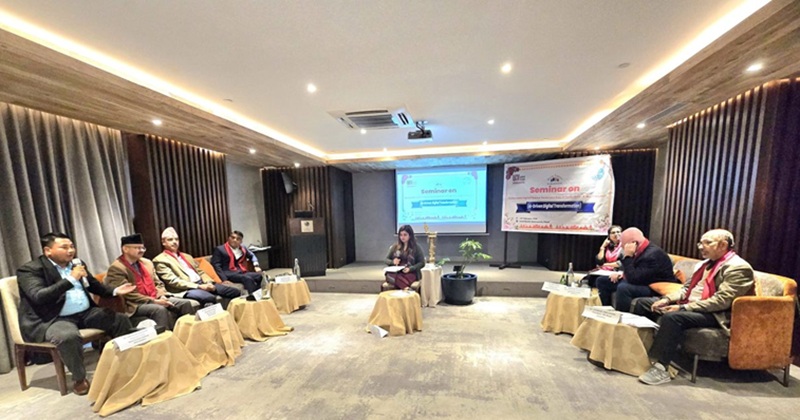
Nepal’s financial sector is undergoing a seismic shift. On February 14th, a landmark seminar titled “AI-Driven Digital Transformation in Nepal’s Financial Sector: Workforce Impact and the Role of Trade Unions” brought together industry leaders, tech experts, and labor advocates to dissect the future of work.
Bandana Sharma on AI-Driven

Among the prominent attendees was Bandana Sharma, Central Secretary of the Center for Cybersecurity Research and Innovation (CCRI Nepal), an executive member of the CAN Federation, and a recognized fintech expert. Bandana Sharma joined the dialogue to emphasize the critical intersection of technological advancement and human-centric governance.

Insights from Bandana Sharma: A Roadmap for AI Deployment
The session served as a critical platform for discussing how Nepalese financial institutions can embrace artificial intelligence without compromising the dignity and stability of their workforce. Bandana Sharma highlighted that while the technology is ready, the focus must shift toward structured governance and reskilling.
The seminar opened with a comprehensive concept note presented by Vivek Rana, which mapped out current AI deployments across three core pillars:
Banking: Automation of credit scoring and fraud detection.
Telecom: AI-driven customer service and network optimization.
E-commerce: Personalized consumer experiences and logistics efficiency.
The Regulatory and Ethical Frontier
As an expert in the field, Bandana Sharma noted that the engaging panel discussions further enriched the session by emphasizing the critical role of regulatory bodies. For Nepalese financial institutions to remain resilient, several key factors must be addressed:
Model Risk Management: Ensuring AI decisions are transparent and unbiased.
Regulatory Compliance: The need for bodies like Nepal Rastra Bank to evolve alongside technological shifts.
Advertisement

Ethical AI Adoption: Moving beyond profit-driven automation toward socially responsible tech integration.
The Crucial Role of Trade Unions
One of the most significant takeaways shared by Bandana Sharma was the proactive stance of labor organizations. Representatives from the Financial Institutions Employees Union Nepal (FIEUN) and UNI Global Union (including UNICTS and UNI NLC) highlighted that the goal is not to resist technology, but to negotiate its terms.
“The conversation is no longer about resisting technology, but about negotiating responsible transformation that balances innovation, compliance, and workforce protection,” Bandana Sharma observed regarding the shifting industry sentiment.
Trade unions are increasingly acting as bridge-builders, ensuring that:
Workforce Dignity is maintained amidst automation.
Productivity Gains are shared fairly with employees.
Job Security is addressed through robust reskilling programs.
Bandana Sharma’s Vision for a Future-Ready Financial Sector
As AI continues to reshape operational models, the collaboration between fintech experts like Bandana Sharma and global labor unions marks a new era for Nepal.
The consensus is clear: building a resilient, ethical, and future-ready financial sector requires a tripartite commitment between the government, tech innovators, and the workforce.
The journey toward a digital Nepal is well underway. By prioritizing accountable digital transformation, Bandana Sharma and her colleagues at CSRI Nepal aim to ensure that this technological leap forward leaves no worker behind.
For more: Bandana Sharma on AI-Driven