7 Construction Companies Blacklisted for Contract Delay

25th February 2026, Kathmandu
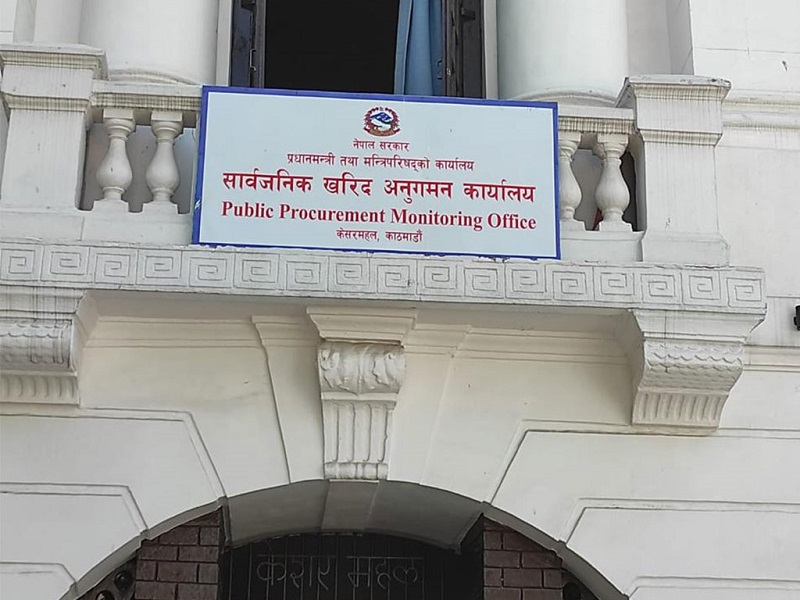
The regulatory oversight of infrastructure development in Nepal has reached a critical juncture as the Public Procurement Monitoring Office (PPMO), operating under the Office of the Prime Minister and Council of Ministers, officially blacklisted seven construction and supply companies. This decisive action, announced through a formal public notice in February 2026 (Falgun 2082), comes as a response to chronic delays and the failure of these firms to meet their contractual obligations on various government projects. The PPMO has exercised its authority under the specific provisions of the Public Procurement Act 2063 to restrict these entities from participating in any new public bidding processes. This move is part of a broader national effort to clean up the construction sector, which has long been plagued by the issue of sick contracts and projects that remain incomplete years after their intended deadlines.
7 Construction Companies Blacklisted
The legal basis for this enforcement is rooted in Section 63, Subsection 1 of the Public Procurement Act 2063. This legislation empowers the government to penalize contractors who demonstrate negligence, violate contract terms, or fail to mobilize resources effectively. According to the monitoring office, the recommendations for blacklisting were submitted by various public entities, including local municipalities and provincial ministries, who reported that these specific companies had abandoned project sites or failed to provide goods and services as promised. By implementing these restrictions, the PPMO is sending a clear signal to the entire industry that the era of impunity for underperforming contractors is coming to an end. The integrity of the public procurement system relies on the accountability of the private sector partners, and the current blacklisting is a necessary step to safeguard taxpayer money and ensure the timely delivery of public services.
The list of the seven blacklisted companies includes Dimensional Construction, Three Star Construction, Chure Construction and Suppliers, Jagat Singh Construction Service, Quality Solution Company, New Rohit Traders and Order Suppliers, and GB Metal Craft Industries and Suppliers. The duration of the blacklist varies for each firm, ranging from six months to one year, depending on the severity of the contract breach and the extent of the negligence documented by the reporting entities. During this period, these companies are strictly prohibited from submitting bids for any new government tenders, whether at the federal, provincial, or local level. This restriction effectively freezes their ability to grow their business through public funds, serving as a significant financial and reputational penalty.
The implications of being blacklisted extend beyond a mere temporary ban on bidding. For many of these firms, the PPMO notice results in an immediate loss of credibility with financial institutions and joint venture partners. In the construction industry, where performance bonds and bank guarantees are essential for operation, a blacklisted status can lead to a withdrawal of credit facilities. Furthermore, other public agencies that were considering these firms for upcoming projects must now look elsewhere, creating a ripple effect that reshapes the competitive landscape of the procurement market. The goal of the PPMO is to ensure that only capable and responsible contractors remain in the pool of eligible bidders, thereby increasing the overall success rate of public infrastructure projects in the year 2082.
Advertisement

The issue of delayed construction projects has been a major bottleneck for Nepal’s economic development. From bridges and irrigation canals to school buildings and administrative offices, thousands of projects across the country have suffered due to contractors who overextend themselves by bidding on too many projects without having the technical or financial capacity to execute them. This practice, often referred to as low bidding, frequently leads to situations where the contractor cannot sustain the work once the initial mobilization fund is exhausted. The current action by the PPMO addresses this systemic issue by punishing those who fail to deliver, encouraging more realistic bidding and better project management practices in the future.
Public transparency is a cornerstone of this enforcement mechanism. The PPMO maintains a publicly accessible database where the names of all blacklisted individuals and firms are listed, along with the reasons for their suspension and the dates when their eligibility will be restored. This transparency allows project managers in every corner of Nepal to verify the standing of a bidder before awarding a contract. It also empowers citizens and civil society organizations to monitor the performance of companies working in their communities. By making this information public, the government is fostering a culture of accountability where a company’s past performance directly dictates its future opportunities.
For the construction industry as a whole, this move serves as a wake up call. While the Federation of Contractors Associations of Nepal (FCAN) has often cited issues such as delayed payments by the government and site clearance problems as reasons for project delays, the PPMO has emphasized that negligence and breach of contract terms cannot be excused. The government is working to improve its own payment systems and project preparation processes, but it expects contractors to uphold their end of the bargain. Moving forward, companies are being urged to invest in better equipment, skilled manpower, and robust financial planning to ensure they can meet the rigorous demands of public contracts.
In conclusion, the blacklisting of seven construction companies by the Public Procurement Monitoring Office is a landmark move toward establishing a disciplined and efficient procurement environment in Nepal. By barring Dimensional Construction, Three Star Construction, and the other five firms for their failure to meet contractual deadlines, the government is prioritizing the completion of national development projects over the interests of negligent contractors. As the fiscal year 2082/83 progresses, the PPMO is expected to continue its vigilant oversight, ensuring that public funds are utilized effectively and that the people of Nepal receive the infrastructure they were promised. This action reinforces the principle that timely performance is not just a preference but a mandatory requirement for doing business with the state.
For More: 7 Construction Companies Blacklisted