Young Leader Sudan Gurung Demands Nepal Telecom End PAYG Charges and Expand Gorkha-1 Towers

13th March 2026, Kathmandu
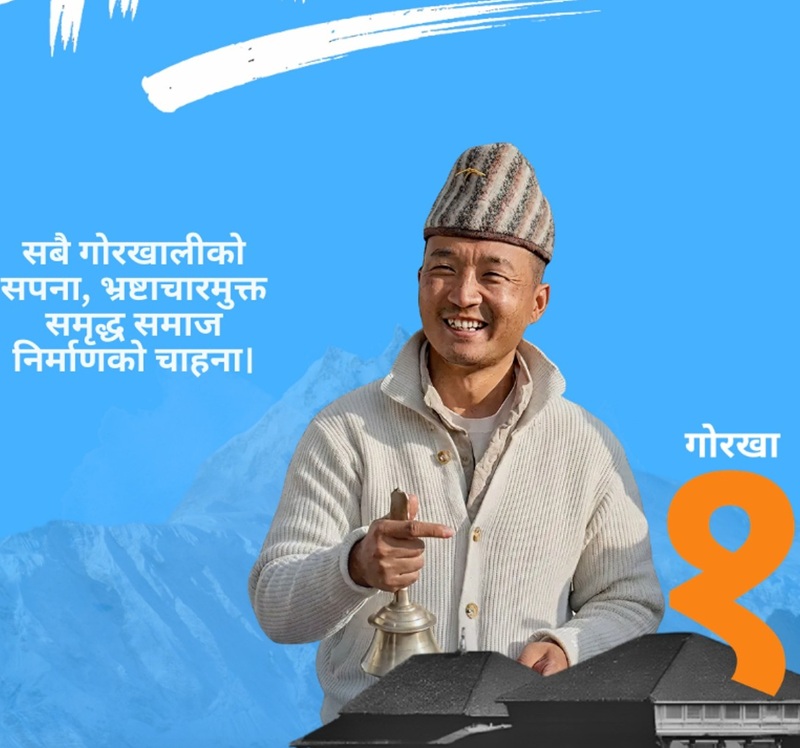
Sudan Gurung, the prominent “Gen Z” leader and newly elected Lawmaker from Gorkha-1 representing the Rastriya Swatantra Party (RSP), has launched a dual-front campaign to overhaul Nepal’s telecommunications sector.
Young Leader Sudan Gurung Demands
Gurung, widely recognized as the Coordinator of Hami Nepal and a pivotal figure in the 2025 youth-led social movements, has formally challenged Nepal Telecom (NTC) and other operators regarding unfair billing practices and regional service gaps.

The Fight Against Deceptive PAYG Charges
During a high-level discussion with Nepal Telecom officials, Gurung demanded an immediate removal of the system that deducts funds from a user’s main balance once a data pack is exhausted. Under the current “Pay As You Go” (PAYG) model, users often see deductions of NRs 5 or more per MB without explicit consent.
“Deducting money from a citizen’s main balance without clear, real-time consent is a deceptive practice,” Gurung stated. “Many consumers do not receive expiry notifications in time. We are demanding a ‘Hard Stop’—services must automatically pause once a pack expires to protect users from unexpected financial loss.”
Connecting Gorkha: Urgent Demand for Towers
Representing the remote and geographically challenging constituency of Gorkha-1, Lawmaker Gurung has taken a decisive step toward digital inclusion. In a formal letter dated March 12, 2082 (B.S.), he urged the government and Nepal Telecom to prioritize the installation of towers in underserved areas.
The letter specifically identifies several villages where residents struggle with basic mobile and internet connectivity, including:
-
Arughat, Lapu, and Philim
-
Chumnubri, Dharche, and Gumda
Advertisement

-
Siranchowk, Ajirkot, and Barpak Sulikot
Gurung emphasized that the “Digital Nepal” vision cannot be realized as long as the residents of Gorkha remain in a communication “black hole” due to the district’s remote terrain.
Conclusion: The Crisis of Service Quality and Internal Politics
While leaders like Sudan Gurung push for external expansion and consumer protection, Nepal Telecom (NTC) faces an internal crisis that threatens its dominance. The quality of services (QoS) has seen a noticeable decline, characterized by frequent call drops, slow 4G/5G speeds, and inconsistent customer support.
Industry experts point to internal union politics as a primary bottleneck. The state-owned giant has long been hampered by fragmented labor unions aligned with various political factions.
These internal power struggles often stall critical procurement processes for new equipment and delay the maintenance of existing infrastructure.
Instead of focusing on technical innovation to compete with private giants, the management is frequently bogged down by administrative gridlock caused by these union interests.
If Nepal Telecom is to fulfill the demands of lawmakers like Gurung and serve the Nepalese people effectively, it must prioritize professional management over political maneuvering.
Without a radical shift in internal governance, the gap between NTC’s potential and its actual service delivery will continue to widen.
For more: Young Leader Sudan Gurung Demands