Jush Shrestha Announces Candidacy For FNCCI Executive Member: A New Era of Youth Leadership and Digital Transformation

9th April 2026, Kathmandu
Federation of Nepalese Chambers of Commerce and Industry (FNCCI) prepares for its highly anticipated Annual General Meeting (AGM) and upcoming elections, the business community is witnessing a significant shift toward generational transition.
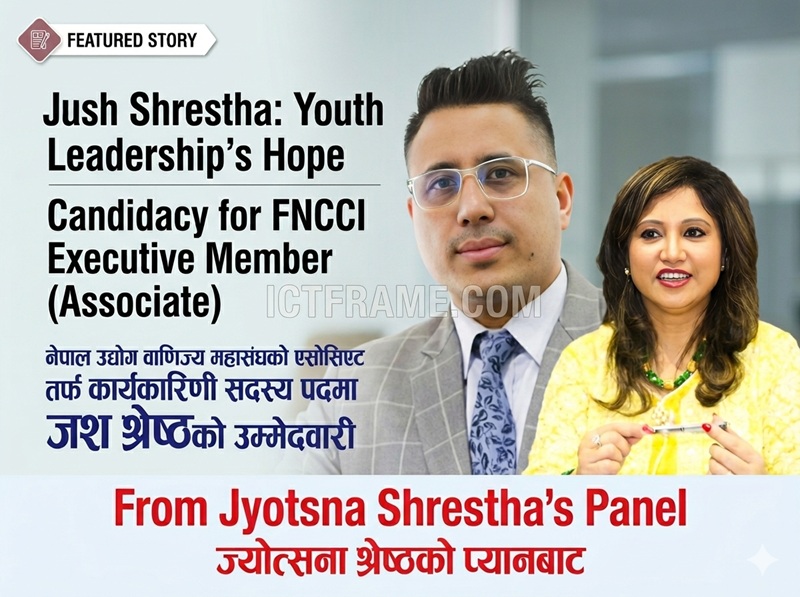
Jush Shrestha Candidacy FNCCI Executive Member
Among the most talked-about candidacies is that of Jush Shrestha, a dynamic young entrepreneur who has officially entered the race for the position of Executive Member (Associate Category).
Representing the energetic new generation of the Nepalese private sector, Shrestha’s campaign is built on a foundation of innovation, modern business practices, and a commitment to creating a sustainable entrepreneurial ecosystem in Nepal.
Her candidacy is not just a bid for a seat; it is being viewed as a movement to infuse the nation’s apex business body with fresh perspectives and contemporary solutions.

A Powerful Alliance: The Dhakal Panel
In the complex landscape of FNCCI internal politics, alliances often dictate the direction of the federation’s policy advocacy. Jush Shrestha has strategically aligned herself with a high-profile team supported by the incumbent President, Chandra Prasad Dhakal. This “power panel” represents a blend of seasoned leadership and emerging talent.
Key figures in this alliance include:
Hem Raj Dhakal: Currently serving as Vice President, he is vying for the pivotal role of Senior Vice President.
Jyotsna Shrestha: The current Vice President (Associate), who is seeking re-election or elevation within the leadership ranks.
The open endorsement from top-tier FNCCI officials has positioned this group as the frontrunner in the 2026 election cycle. For Jush Shrestha, being part of this team provides a robust platform to voice the concerns of young business owners while leveraging the experience of established leaders to drive institutional reforms.
Who is Jush Shrestha? The Face of Modern Nepalese Entrepreneurship
Jush Shrestha is widely recognized for her modern approach to trade and industry. In an era where traditional business models are being challenged by rapid technological shifts, Shrestha has emerged as a champion for digital integration and result-oriented work styles.
Her professional background reflects a keen interest in:
Market Trend Adaptation: Understanding how global economic shifts affect local Nepalese markets.
Digital Innovation: Advocating for the adoption of AI, fintech, and e-commerce to streamline business operations.
Youth Advocacy: Bridging the gap between veteran industrialists and the booming startup culture in Kathmandu and beyond.
Her reputation as a proactive and clear-headed leader has earned her widespread popularity among young entrepreneurs who feel that the FNCCI needs to be more responsive to the challenges of the 21st-century digital economy.
Strategic Pillars of Shrestha’s Campaign
Jush Shrestha’s election manifesto centers on three core pillars designed to revitalize the private sector’s contribution to the national economy.
Empowering Youth and Startups
Shrestha believes that the future of the Nepalese economy lies in its youth. Her campaign emphasizes creating “facilitation centers” within FNCCI to help young entrepreneurs navigate the complexities of government regulations, access to finance, and market entry.
By prioritizing youth-centric policies, she aims to reduce the “brain drain” of talented Nepalese professionals seeking opportunities abroad.
Advertisement

Innovation and Digital Transformation
The push for a Digital Nepal is a central theme in Shrestha’s vision. She advocates for the digitalization of FNCCI’s internal processes and the promotion of tech-driven industries.
Her goal is to ensure that Nepalese businesses are not just local players but are competitive on a global scale through the use of modern technology.
A Business-Friendly Policy Environment
Working within the Dhakal panel, Shrestha aims to lobby for legislative reforms that protect small and medium enterprises (SMEs). She emphasizes the need for a stable policy environment where innovation is incentivized rather than hindered by red tape.
The Significance of Generational Shift in FNCCI
For decades, the FNCCI has been the primary bridge between the private sector and the Government of Nepal. However, the rapidly changing global trade environment demands a leadership that understands both traditional manufacturing and the “gig” or tech economy.
Jush Shrestha’s presence in the election signals a “generational transition” within the federation. Her candidacy addresses the growing demand for leaders who can speak the language of international venture capital, digital marketing, and sustainable development.
By blending the wisdom of experienced mentors like Chandra Prasad Dhakal and Hem Raj Dhakal with her own innovative energy, she represents a balanced path forward for the organization.
Why This Election Matters for Nepal’s Economy
The 2026 FNCCI election comes at a critical time for Nepal. As the country recovers from global economic fluctuations and aims for higher GDP growth, the private sector’s role as an “engine of growth” has never been more vital.
A strong, visionary leadership at FNCCI can:
Attract Foreign Direct Investment (FDI): By showcasing a professional and modern business environment.
Enhance Public-Private Partnerships: Creating a more collaborative atmosphere with the Ministry of Finance and the Nepal Rastra Bank.
Boost Export Potential: Helping Nepalese products reach international markets through better branding and quality standards.
Jush Shrestha’s commitment to these goals makes her a candidate to watch. Her belief that “with the right opportunities and facilitation, the Nepalese private sector can reach new heights” serves as a rallying cry for voters in the Associate Category.
Conclusion: A Visionary Step Forward
In summary, Jush Shrestha’s candidacy for FNCCI Executive Member offers a hopeful outlook for the future of business in Nepal.
Supported by a powerful team and fueled by a clear vision for reform, she is well-positioned to bring long-term, sustainable change to the federation.
As the election date draws near, the eyes of the entire business community, from the small shopkeepers in the Terai to the tech moguls in Kathmandu, remain fixed on this emerging leader.
Her success could very well define the trajectory of the Nepalese private sector for the next decade.