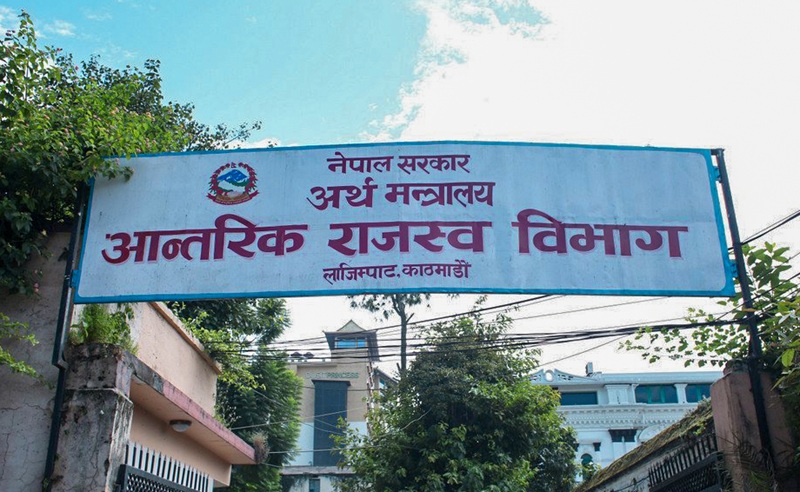
IRD Mandates Electronic Billing For Businesses with Rs. 200 Million Turnover

19th April 2026, Kathmandu
In a decisive move toward the complete digitalization of the national economy and the enhancement of tax transparency, the Inland Revenue Department (IRD) of Nepal has issued a new directive.
IRD Mandates Electronic Billing
Effective immediately following the end of the fiscal quarter in Chaitra, all business entities with an annual turnover exceeding Rs. 200 million (20 Crore) are now legally mandated to issue invoices through electronic means.
This policy adjustment represents a significant tightening of tax administration. Previously, the threshold for mandatory electronic billing was set at an annual turnover of Rs. 250 million (25 Crore).
By lowering this ceiling, the government aims to bring a much larger pool of medium-to-large-scale enterprises under the direct, real-time oversight of the tax authorities.

Understanding the Centralized Billing Monitoring System (CBMS)
The core of this new regulatory requirement is the Centralized Billing Monitoring System (CBMS). Businesses falling within the specified turnover bracket must integrate their accounting software with the IRD’s central server.
When a transaction occurs, the electronic billing system does not merely print a receipt for the customer; it simultaneously transmits the transaction data to the government’s central database. This ensures that:
-
Every invoice generated is recorded in real-time.
-
Data cannot be altered or deleted post-issuance without leaving a digital audit trail.
-
The government has an accurate, up-to-the-minute view of a company’s sales and potential tax liabilities.
By utilizing the CBMS, the Inland Revenue Department seeks to eliminate the practice of “double-billing” or manual record manipulation that has historically contributed to significant revenue leakage in the Nepalese market.
Objectives: Transparency and Revenue Growth
The IRD has been vocal about the strategic importance of this shift. The primary objective is the minimization of tax evasion. When records are digital and centralized, the scope for under-reporting sales is drastically reduced.
This transparency is expected to lead to a substantial increase in national revenue collection, providing the state with the necessary funds for developmental projects and infrastructure.
Furthermore, the department emphasizes that this is a trust-building exercise. A robust digital system reduces the need for intrusive physical audits and manual interventions by tax officers.
If the data in the system matches the filings of the business, the relationship between the taxpayer and the government becomes smoother and more professional.
Exemptions and Voluntary Participation
While the directive is sweeping, the Inland Revenue Department has provided clarity on specific sectors. Currently, Banks and Financial Institutions (BFIs) are not required to integrate with the Centralized Billing Monitoring System (CBMS).
Advertisement

Given the highly regulated nature of the banking sector and their existing sophisticated internal auditing and reporting mechanisms to the Nepal Rastra Bank, they are currently exempt from this specific mandatory electronic billing ledger.
On the other end of the spectrum, the IRD is also opening doors for Small and Medium Enterprises (SMEs). Even those businesses with a turnover well below the Rs. 200 million mark are being encouraged to join the electronic billing system voluntarily.
The department plans to launch various incentive schemes to encourage small vendors to go digital, citing that early adoption will make future compliance easier as the mandatory threshold is expected to be lowered even further in the coming years.
The Road Ahead: A Fully Digital Tax Ecosystem
This reduction in the turnover threshold is not a one-time event but rather a step in a phased roadmap. The IRD’s long-term vision is to bring every business entity in Nepal, regardless of size, into the digital billing ecosystem.
For businesses, this shift requires a transition from traditional manual bookkeeping to modern ERP (Enterprise Resource Planning) or specialized accounting software.
While this may pose an initial technical challenge for some traditional traders, the long-term benefits include:
Reduced Compliance Costs: Automated tax filing becomes possible.
Accuracy: Human errors in manual invoicing and VAT calculations are eliminated.
Better Business Insights: Digital records allow business owners to analyze their sales data more effectively.
Implementation and Compliance
Businesses that cross the Rs. 200 million threshold must act swiftly to upgrade their billing systems. Failure to comply with the mandatory electronic billing requirement can lead to significant penalties and increased scrutiny from tax authorities.
The IRD has indicated that its monitoring teams will be strictly observing compliance levels through the newly integrated server data.
As Nepal moves toward Fiscal Year 2083 and beyond, the integration of technology into the tax system remains a top priority.
This latest move by the Inland Revenue Department is a clear signal that the days of manual, opaque financial reporting are coming to an end, paved over by a more transparent, efficient, and digital future.
Summary Checklist for Businesses
| Requirement | Details |
| New Threshold | Annual turnover > Rs. 200 Million |
| Old Threshold | Annual turnover > Rs. 250 Million |
| System | Must connect to CBMS (Centralized Billing Monitoring System) |
| Exemptions | Banks and Financial Institutions (currently) |
| Objective | Transparency, tax evasion control, and revenue growth |
Do you need assistance in identifying certified software providers that are compatible with the IRD’s Centralized Billing Monitoring System?
For more: IRD Mandates Electronic Billing