Nepal Pledges FATF Grey List Exit and Middle Class Expansion

20th May 2026, Kathmandu
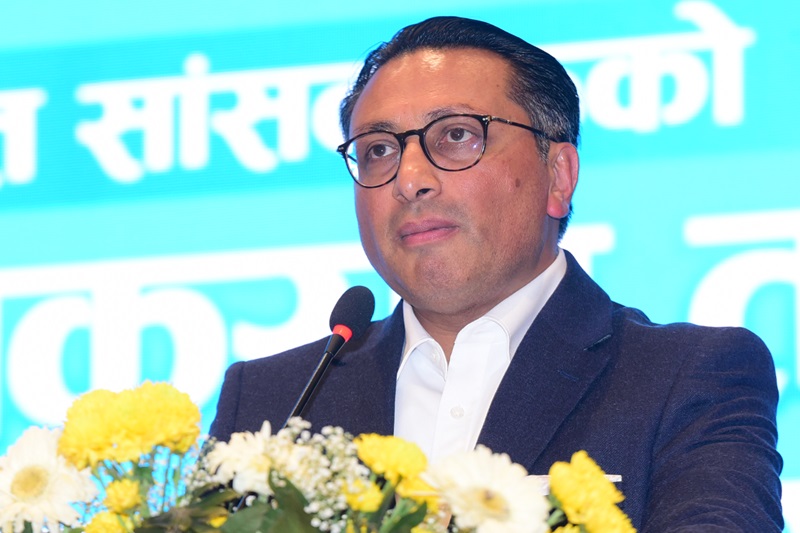
The Ministry of Finance has officially declared a highly ambitious policy agenda aimed at upgrading the economic standing of Nepal on both global and domestic fronts. During a high level multi agency strategy session, Finance Minister Dr. Swarnim Wagle announced a firm national commitment to systematically moving the country out of the Financial Action Task Force grey list.
FATF Grey List Exit
Simultaneously, the state leadership revealed that the upcoming national budget for the fiscal year 2083/84 will be engineered to aggressively expand the size and purchasing power of the domestic middle class, marking a clean break from traditional budgetary allocations.

Addressing the Root Causes of the Asia Pacific Group Monitoring Status
Speaking before an elite gathering organized under the direct coordination of the Office of the Prime Minister and Council of Ministers, Finance Minister Wagle addressed the historical policy gaps that led to the current financial screening. He noted that the grey list classification by the International Cooperation Review Group of the Asia Pacific Group on Money Laundering reflects nearly three decades of weak regulatory enforcement and slow governance reforms. To correct these deep structural vulnerabilities, the current administration has placed institutional accountability and good governance at the absolute center of its national policy framework.
Executing a Fifteen Point Anti Money Laundering Action Plan with Urgency
To restore complete international confidence in the domestic financial framework, the state apparatus is actively implementing a comprehensive 15 point action plan. This targeted operational roadmap is designed to modernize national anti money laundering tracking systems and strengthen counter terrorism financing enforcement mechanisms to match global standards. The finance minister reported that enforcement agencies have achieved substantial progress over recent months, strengthening digital tracking networks across commercial banks, tightening cross border wealth transfers, and fast tracking long delayed financial crimes case files.
International Regulators Call for Continued Enforcement in Asset Tracking
Despite the positive developments reported by the treasury, international oversight delegates emphasize that the path to complete delisting requires sustained institutional effort. The Deputy Executive Secretary of the Asia Pacific Group, David Shannon, noted during the review sessions that while initial legislative updates are commendable, the country still has significant enforcement milestones to cross before securing an official exit from the monitoring list. Global evaluators are looking for concrete prosecution records, higher conviction rates for major tax evasion schemes, and the permanent closure of informal underground wealth channels.
Advertisement

Strengthening Inter Agency Policing and Global Intelligence Coordination Channels
As part of the ongoing evaluation cycle, the visiting international delegation held separate high level operational meetings with the Inspector General of Nepal Police, Dan Bahadur Karki. The police headquarters confirmed that the technical discussions focused heavily on upgrading field enforcement capabilities, boosting asset recovery rates in complex white collar crimes, and sharpening forensic accounting investigations. The leadership circle agreed to expand real time data sharing protocols between the Financial Information Unit, the Department of Money Laundering Investigation, and international police agencies to suppress cross border financial crimes.
Designing the Fiscal Year 2083/84 Budget to Fuel Middle Class Expansion
On the domestic front, the Ministry of Finance is finalizing a major economic restructuring plan to be launched through the upcoming fiscal year 2083/84 national budget. The core financial blueprint aims to expand the national middle class by systematically lifting low income citizens into stable income brackets. The government strategy focuses on raising baseline minimum wages, delivering specialized industrial skill building workshops, and opening fresh economic pathways to ensure that family wealth accumulation moves beyond traditional urban centers.
Uplifting Marginalized Communities and Eliminating Bureaucratic Exploitation
The upcoming national budget strategy will prioritize channelling capital investments toward poor families, daily wage laborers, smallholder farmers, and marginalized rural communities that have historically been left out of industrial progress. Minister Wagle explained that the state will combine these welfare spending adjustments with aggressive structural governance campaigns. By actively dismantling corrupt middleman networks, reducing bureaucratic processing delays, and blocking institutional exploitation, the state aims to rebuild public trust and ensure that development funds reach intended citizens directly.
Defining the Four Primary Pillars of the Upcoming National Financial Strategy
The finance ministry has clarified that the forthcoming economic program will be constructed upon four interconnected structural pillars:
- Strengthening good governance by applying strict digital monitoring across all state offices.
- Restructuring the national economy to attract higher levels of foreign direct investment.
- Expanding social investments in universal healthcare, public schools, and vocational training centers.
- Shifting from an import dependent marketplace toward a self sustaining production oriented economy.
The administration also called upon opposition parties to provide constructive support for these updates, warning against shielding financial irregularities under the guise of protecting private enterprise.
For More: FATF Grey List Exit