Nepal’s 2026 Budget: A Landmark For IT and Digital Innovation

3rd June 2026, Kathmandu
The recently announced national budget of NPR 2.124 trillion (approximately USD 16 billion) for the fiscal year 2083/84 (2026) by the Government of Nepal has marked a significant shift in the strategic economic framework of the nation.
Nepal’s 2026 Budget Landmark
For the first time, the budget emphasizes Information Technology (IT) and Digital Innovation as central pillars of long-term economic strategy. This bold move is aimed at transforming Nepal from an import-driven economy into a “Weightless High-Value Digital Economy.”

Positive Industry Reception
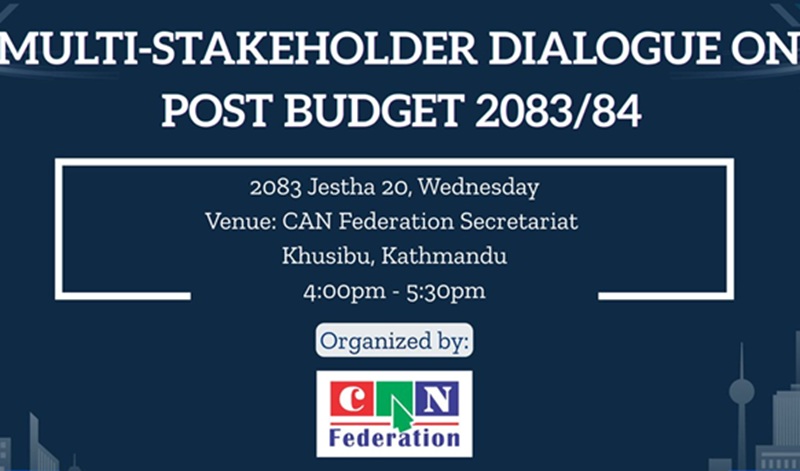
The technology sector has received this ambitious objective positively, foreseeing a potential shift that could open up numerous opportunities for growth and development. To discuss the implications, opportunities, and challenges of this budget in detail, the Computer Association of Nepal (CAN) has announced a multi-stakeholder dialogue.
Under the leadership of CAN’s Acting President and IT entrepreneur, Chiranjibi Adhikari, a conceptual framework has been developed to clarify how crucial this budget is for Nepal’s tech ecosystem.
Despite the attractive policy announcements, one critical question remains: Will this budget genuinely unlock doors for innovative startups, software exporters, freelancers, and digital entrepreneurs, or will traditional administrative and structural barriers hinder its progress?
Key IT Catalysts in the 2083/84 Budget
To accelerate digital transformation, the government has rolled out several ambitious plans and policy reforms this year:
Sovereign AI Compute Center: A cutting-edge facility aimed at boosting AI developments.
Attractive Tax Incentives for IT Exports: These incentives aim to encourage software exports.
Advertisement

10% VAT Rebate: Aimed at reducing operational costs for digital businesses.
Share Sale of Nepal Telecom and Tech Hub Financing: This is expected to generate capital for further tech advancements.
Expansion of E-Governance and Fintech Ecosystem: Enhancing the digital service landscape for citizens and businesses alike.
Concerns and Challenges for Startups and Innovators
While the budget proposals are promising, startup founders, experts, and stakeholders have raised significant questions regarding practical implementation. Key questions raised include:
- Will the Sovereign AI Compute Center be accessible to small startups and independent developers, or will it primarily serve large corporate conglomerates?
- Will the 50% export income tax rebate be easily accessible to freelancers and early-stage startups considering Nepal’s cumbersome administrative bureaucracy?
- With the NPR 500 million Enterprise Fund, will the fund embrace innovation without collateral, or will it get stuck in the traditional collateral-based banking system?
Furthermore, several longstanding issues persist in Nepal’s tech landscape that the budget has yet to address effectively:
- Limitations surrounding the International Payment Gateway.
- Complicated processes for Intellectual Property Registration.
- Financial shortages for early-stage Research and Development (R&D).
- Lack of seamless access to global cloud infrastructure and digital financial tools.
Looking Forward
The forthcoming interaction organized by CAN will bring together government representatives, policymakers, private sector leaders, technology entrepreneurs, financial experts, and economic journalists, all to deliberate on the realities of this budget and the future of Nepal’s digital economy.
Date: Wednesday, June 3, 2026
Time: From 4:00 PM to 5:30 PM
Venue: CAN Federation Secretariat, Khusibu, Kathmandu.
Conclusion
The focus on digital transformation in the budget has the potential to be a turning point for Nepal’s economy. However, without real commitment and strategic implementation, it may remain an unfulfilled dream. Continued dialogue among stakeholders will be essential to ensure that the promising initiatives translate into tangible benefits for the nation.
For more: Nepal’s 2026 Budget Landmark