TechPaaila Innovations Launches Regional Office in Pokhara, Championing AI and IT Solutions to Curb Nepalese Youth Migration

7th June 2026, Kathmandu
To mitigate the rapidly rising migration of skilled Nepalese youth seeking opportunities abroad, top industry leaders and tech advocates have called for an aggressive expansion of jobs and skill-development frameworks within the Information Technology (IT) and Artificial Intelligence (AI) sectors.
TechPaaila Innovations Regional Office
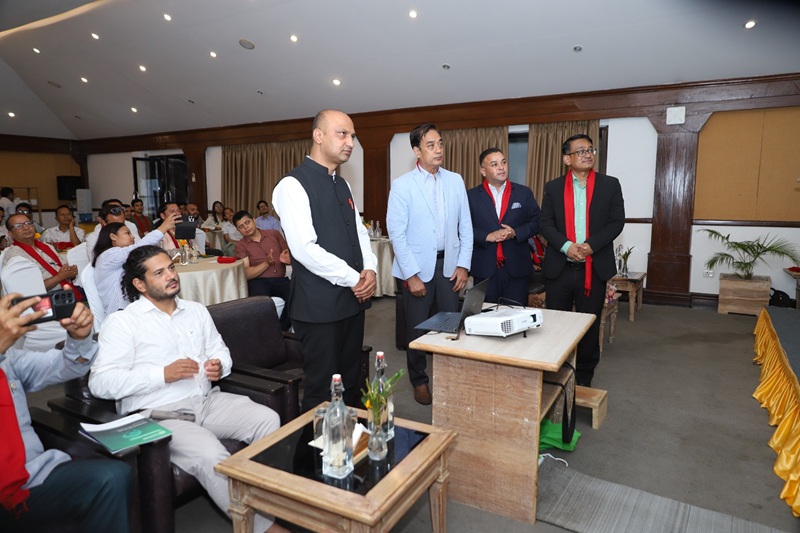
The agenda took center stage during the grand launch of TechPaaila Innovations’ Gandaki Province regional office in Pokhara. The inauguration marks a strategic milestone for the pioneering tech organization as it expands its footprint to drive digital transformation and high-value tech employment at the provincial level.

1. Digital Transformation as Nepal’s Economic Anchor
The regional facility was officially inaugurated by Chief Guest Rajendra Malla, Immediate Past President of the Nepal Chamber of Commerce. Highlighting the intersection of technology and national economic growth, Malla emphasized that the global economy is shifting rapidly toward an AI-driven model.
“Artificial Intelligence and IT are the ultimate pillars for Nepal’s economic prosperity, job creation, and digital transformation,” Malla stated during his keynote address. “We cannot afford policy delays in research, infrastructure, and skilled manpower development.”
Malla raised concerns over the thousands of Grade 12 graduates leaving the country, urging the creation of an ecosystem where youths can “learn, earn, and enjoy” within Nepal. He proposed establishing dedicated AI Compute Centers to grant startups and students access to world-class processing infrastructure, positioning Nepal as a potential digital hub in South Asia. He also extended praise to TechPaaila Innovations’ Associate Director, Chiranjibi Adhikari, for pioneering a nationwide “Skill-First” campaign.
2. Moving from ‘Certified’ to ‘Qualified’ Tech Professionals
Addressing the gathering as the main speaker, Chiranjibi Adhikari, Acting President of the Computer Association of Nepal Federation (CAN Federation) and Associate Director of TechPaaila Innovations, stressed that real-world capability must supersede traditional degrees.
Traditional Degrees (Certificates Only) ──> Outpaced by Global Standards

Skill-First Education (Cyber & AI) ──> Drives Global Employability & Security
“Simply understanding how AI works isn’t enough anymore,” Adhikari explained. “Our priority must be cultivating a ‘Skill-First’ mindset by introducing cutting-edge, market-driven professional curricula in AI, Cybersecurity, and Data Science. We need a workforce that can build with AI, mitigate the complex cyber risks that come with it, and make secure, data-driven decisions.”
Adhikari added that to retain Nepalese talent, foster deep tech innovation, and protect domestic infrastructure, the digital and AI economies must be integrated directly into national strategic priorities.
3. Calls for Government Incentives and Tax Rebates
The event also featured sharp insights into the operational challenges faced by the tech ecosystem. Bigyan Shrestha, Chairperson of Softed Group, emphasized that the development of localized AI engines requires direct government support.
Advertisement

He urged policymakers to introduce targeted tax rebates and fiscal concessions for rising tech startups. Shrestha reaffirmed Softed Group’s dedication to providing practical, high-quality technical education to uplift local youth capabilities.
The launch drew an influential gathering of ICT stalwarts, including:
-
Purushottam Kunwar (President, CAN Federation Kaski)
-
Gunanidhi (GN) Pande (President, CAN Federation, Gandaki Province)
-
Chintamani Bastola & Khadka Bahadur Gurung (Central Executive Members, CAN Federation)
-
Jagan Gurung (ICT Leader)
-
Pramod Poudel (Principal, Softwarica College)
The program, chaired by TechPaaila Innovations’ Gandaki Province Regional Director, concluded with a mutual commitment among IT entrepreneurs, educators, and policymakers to actively expand Pokhara’s technical footprint.
For more: TechPaaila Innovations Regional Office