NIC Asia Bank Supports Schools in Doti and Sindhupalchok Under CSR Initiative

1st July 2026, Kathmandu
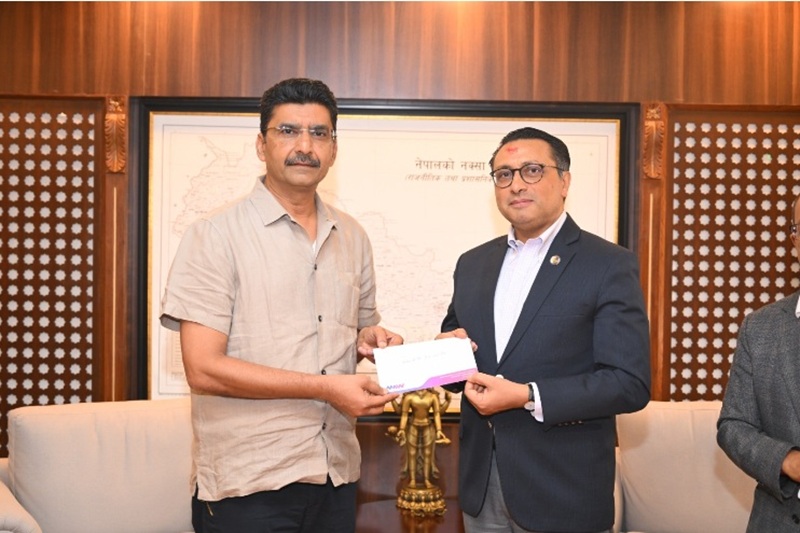
NIC Asia Bank has extended significant financial and material assistance to two rural community schools located in the Doti and Sindhupalchok districts.
NIC Asia Bank Supports
This distribution was conducted under the active Corporate Social Responsibility framework of the banking institution.
The primary objective of this widespread initiative is to provide essential educational and infrastructure support to community learning centers. By doing so, the bank aims to directly enhance the daily learning environment for hundreds of public school students.

ENHANCING HEALTH AND INFRASTRUCTURE IN DOTI
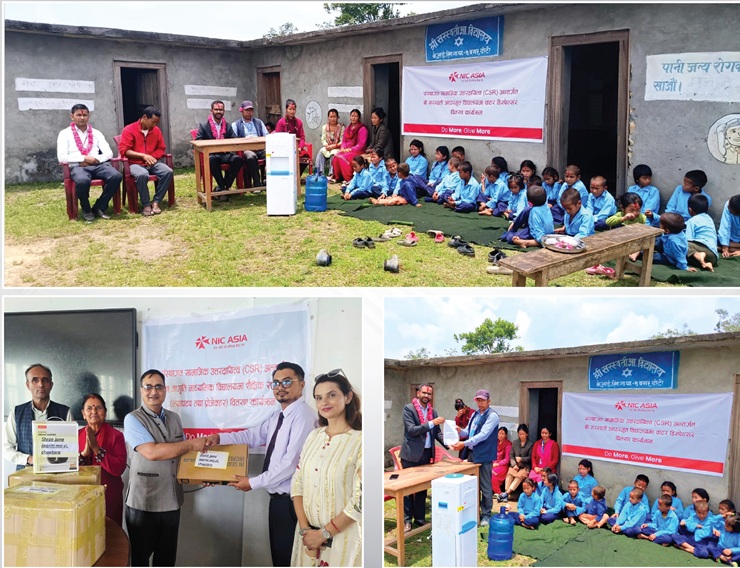
As the initial part of this double district initiative, the financial institution donated a heavy duty water dispenser to Shree Saraswati Basic School. This particular educational facility operates within the K.I. Singh Rural Municipality Ward Number 4, located in Bagar Bayal, Doti.
Shree Saraswati Basic School currently serves more than 36 young students. The student demographic spans from Early Childhood Development programs up to Grade 5 classes.
The school carries an additional social responsibility by providing complete residential accommodation for its student body. This accommodation includes daily food and safe lodging facilities for 21 underprivileged students who have lost their parents.
The critical water purification and dispensing equipment was formally handed over during a special school ceremony organized on June 29. Dipayal Branch Manager Ramesh Ojha presented the asset directly to the principal of the school, Padam Singh Bista.
The bank management noted that clean drinking water access is a fundamental necessity that directly impacts student health and classroom attendance. By providing this infrastructure, the bank helps the residential facility maintain health standards for vulnerable children.
BRIDGING THE DIGITAL DIVIDE IN SINDHUPALCHOK
In a separate educational development program held on June 30, the bank directed its corporate resources toward technological empowerment in Sindhupalchok. The beneficiary of this phase was Shree Jan Jagriti Secondary School.
This second educational institution is situated in Chautara Sangachokgadhi Municipality Ward Number 12, inside the Sindhupalchok district. The school caters to a much larger student body, educating nearly 450 active students from Early Childhood Development through to Grade 12.
To support modern digital literacy, the bank provided a comprehensive technology package. This package consisted of one laptop computer, three desktop computer systems, and one high definition digital projector.
Advertisement

The newly donated electronic equipment is intended to improve student access to modern computing technology. It will also support teachers in delivering high quality interactive education through multimedia classroom setups.
The educational materials and digital devices were jointly handed over by senior executives of the banking institution. Sophie Adhikari Paudyal, who serves as the Head of the ESG and Sustainable Banking Department, led the central delegation.
She was joined by Amritman Shrestha, the Banepa Circle Head for the bank. The equipment was received by Dipendra Prasad Nepal, who holds the dual roles of Chairperson of the School Management Committee and Ward Chair of Ward Number 12.
The school principal, Dhruvaraj Giri, was also present to receive the technological assets during the official handover event. The school administration expressed gratitude for the timely intervention in their digital curriculum development.
COMMITMENT TO SUSTAINABLE EDUCATION AND SOCIAL IMPACT
NIC Asia Bank expressed strong corporate confidence that this targeted support will strengthen actual classroom learning experiences. The introduction of computers and projectors allows rural students to experience the same technological benefits as urban learners.
The bank has been systematically expanding its Environmental, Social, and Governance initiatives across various remote regions of Nepal. The management believes that sustainable banking involves investing deeply into the social capital of local communities.
By targeting both health infrastructure in Doti and digital education infrastructure in Sindhupalchok, the bank addresses diverse challenges faced by public schools. These efforts are part of a long term corporate philosophy to foster holistic societal growth alongside financial operations.
The banking enterprise intends to continue its community outreach programs by identifying other underfunded educational institutions nationwide. This strategy ensures that corporate profits are continuously channeled back into meaningful social development.
EXPANSIVE BANKING NETWORK SUPPORTING COMMUNITY GROWTH
The ability to execute widespread corporate social responsibility projects across remote regions is backed by the extensive corporate footprint of the bank. The institution has established one of the largest physical and digital service networks in the country.
Through its nationwide network of branches and digital delivery points, the bank maintains close relationships with local communities. This presence allows local branch managers to identify genuine community needs and recommend targeted corporate interventions.
The continuous expansion of the bank into remote districts ensures that both financial services and social support reach underserved populations. Moving forward, the bank remains dedicated to enhancing the overall quality of education and public infrastructure through strategic corporate giving.
For More: NIC Asia Bank Supports