ADB President Masato Kanda Arrives in Kathmandu, Reaffirms Commitment to Nepal’s Development

6th July 2026, Kathmandu
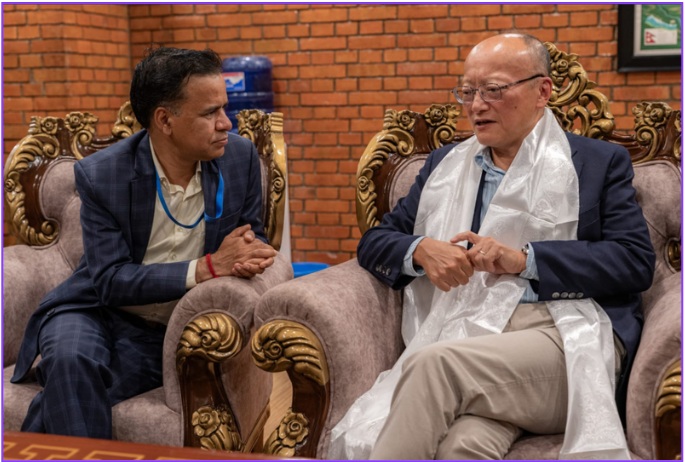
The President of the Asian Development Bank, Masato Kanda, has arrived in Kathmandu to begin an official high-level diplomatic visit.
ADB President Masato Kanda Arrives
Upon landing in the capital, the head of the regional multilateral lending institution reaffirmed the bank’s continued structural commitment to supporting the long-term economic transformation, sustainable development, and comprehensive poverty reduction strategies of Nepal.
The international development leader shared news of his arrival through a statement broadcast on social media platform X. He highlighted the deep and growing developmental partnership that connects the regional funding body with the economic modernization goals of the country.

ADB PLEDGES CONTINUED SUPPORT FOR LOCAL INFRASTRUCTURE
Following his arrival, Kanda emphasized that the funding institution remains dedicated to helping Nepal secure climate-resilient development and balanced economic expansion. He stated that the multilateral lender would maintain its core focus on upgrading critical physical infrastructure across multiple provinces.
The targeted infrastructure financing models are systematically designed to generate mass employment opportunities, optimize supply chain connectivity, and expand localized commercial prospects. The approach aims to support micro-level trade ecosystems and build long-term financial resilience across rural and urban centers alike.
NEARLY USD 3.9 BILLION IN ACTIVE PROJECT PORTFOLIOS
According to metrics shared by the executive board, the institution manages an expansive development portfolio inside the country, with projects worth approximately USD 3.9 billion currently undergoing active implementation. This massive capital commitment solidifies the bank’s position as one of the leading development partners assisting the state treasury.
Advertisement

The active investment packages are spread across various critical sectors, including clean energy production, urban water management, transport logistics, and climate-smart agricultural frameworks. These strategic project grids are designed to insulate the national economy against external shocks while strengthening base public utility networks.
HIGH-LEVEL CONFERENCES ON STRATEGIC PRIORITIES
During his official stay in Kathmandu, Kanda is scheduled to lead several high-level bilateral meetings with senior government officials, including the leadership of the Ministry of Finance and national planning boards. The discussions will center on analyzing the immediate development priorities outlined by the newly formed government administration.
The executive delegations will explore future fields of technical cooperation, including digital governance upgrades, green energy grid integration, and private sector capital mobilization models. Kanda expressed his readiness to steer these deep policy reviews to align future credit allocations with actual local needs.
SIX DECADES OF SUCCESSFUL REGIONAL PARTNERSHIP
The bank chief noted that Nepal and the regional lender have maintained an uninterrupted, highly collaborative partnership for more than six decades. This long-term association has seen the execution of multiple historic transport links, educational access enhancements, and emergency reconstruction operations.
Kanda expressed firm confidence that this historic cooperation would continue to deepen in the coming years. By introducing simplified project execution rules and deploying advanced technical knowledge, the institution aims to help Nepal graduate smoothly from its least developed country status while maintaining stable macroeconomic performance.
For More: ADB President Masato Kanda Arrives