
I Used to Buy New Clothes or a Pen and Diary with Dashain Blessings: Ghimire Yubaraj

22nd October 2026, Kathmandu
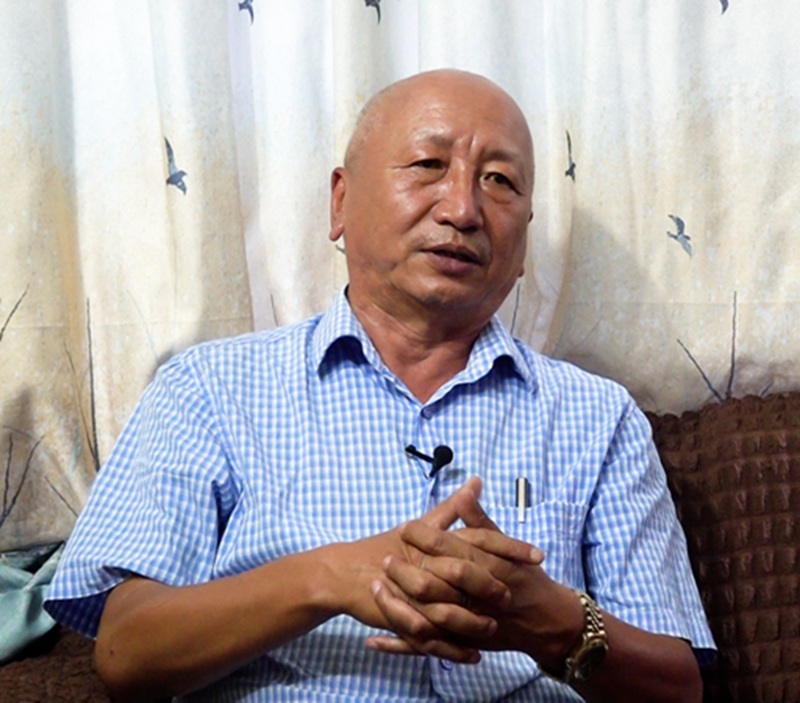
For theater artist and founder of Shilpee Theatre, Ghimire Yubaraj, Dashain has evolved from a cherished childhood memory into a festival deeply intertwined with social and economic realities.
He recalls that during his childhood, Dashain simply meant holidays, family, vibrant colors, traditional swings (ping), and spending time with friends. Today, however, he feels that rapid urbanization and changing lifestyles have narrowed the very definition of festive joy.
Having been occupied with busy schedules for a long time, Yubaraj views this year’s Dashain as an opportunity to rest, spend quality time with his parents and wife, and complete his writing projects. After traveling extensively outside Kathmandu for theater performances, he plans to spend his holiday relaxing and focusing on his creative writing.
Childhood Memories & Festive Atmosphere
Yubaraj grew up in a joint family. As the youngest among 17 to 18 family members until the age of 11 or 12, he remembers receiving immense love and affection from everyone. In his village, three to four traditional bamboo swings were set up in open spaces. From Dashain through Tihar, the entire village immersed itself in swinging and participating in Deusi-Bhailo cultural programs.
The warm autumn sunshine of Ashwin–Kartik, the fragrance of blooming flowers, the chirping of birds, and the transformed rural environment made childhood Dashain uniquely special.

Consumerism & Changing Traditions
However, Yubaraj points out that today’s Dashain has become increasingly expensive and ostentatious. In the past, simple clothes and home-cooked meals brought immense joy. Today, he observes a growing tendency where people’s desires remain unsatiated, leading to endless consumer purchases.
Recalling his childhood, Yubaraj shared how he used to purchase new clothes or a favorite pen and diary using his monetary blessings (dakshina).
He fondly remembered counting crisp new banknotes, keeping track of who gave how much, and predicting which uncle (Mama) would give the biggest cash gift. Looking back, however, he believes it is inappropriate to measure happiness solely by financial gifts.
Economic Reality & Call for Simplicity
According to Ghimire, this year’s Dashain needs to be financially modest. Citing the economic damage following recent Gen Z movements and natural disasters like floods and landslides, he cautions that excessive spending during festivals could further deepen the economic crisis.
He emphasizes that trends like buying new clothes, repainting homes, purchasing lavish foods, and keeping up with social expectations add severe financial pressure on families.
Advertisement

Therefore, festivals should be treated as opportunities to share happiness with loved ones rather than grounds for financial competition.
Views on Animal Sacrifice & Cultural Dimensions
Ghimire Yubaraj holds a clear stance on animal sacrifice. Having given up meat 21 years ago, he argues that animal slaughter and its gruesome sight question the true meaning of a celebration. While he does not criticize individual meat consumption, he advocates for changing the cruel methods of slaughter carried out in the name of festivals.
While acknowledging the cultural importance of Dashain, he stresses the need for open dialogue on its social and political dimensions.
Although Dashain is often called the “greatest festival of all Nepalese,” he argues it is wrong to assume every community celebrates it the same way.
He highlights the socio-political inequality where the state provides long public holidays and special amenities for Dashain, whereas festivals of other communities do not receive equal state priority.
Mental Well-being, Community Spirit, and Modern Times
Yubaraj notes that collective festive practices positively impact mental health. In the past, villagers collaborated to cut bamboo, weave ropes, build swings, and celebrate together.
Nowadays, digital technology and mobile entertainment have drastically reduced community participation, which he worries could weaken interpersonal bonds and shared social experiences.
He believes Dashain should be kept away from religious superstitions, financial burdens, and superficial ostentation, evolving into a meaningful cultural festival. While tradition naturally evolves, it should not push people into financial distress or reinforce social inequalities.
Adapting to changing times, such as celebrating with family abroad via video calls, is completely natural. Ultimately, the essence lies in avoiding ostentation, taking care of health, celebrating within one’s financial capacity, and prioritizing human connections over religious or social divisions.
By keeping family, harmony, cultural memory, and human relationships at the center, the warmth and intimacy of Dashain can be successfully passed down to future generations.
For more: I Used to Buy New Clothes