
NRB Website Shutdown: Global PHP Vulnerability & Cybersecurity Guidelines

23rd October 2026, Kathmandu
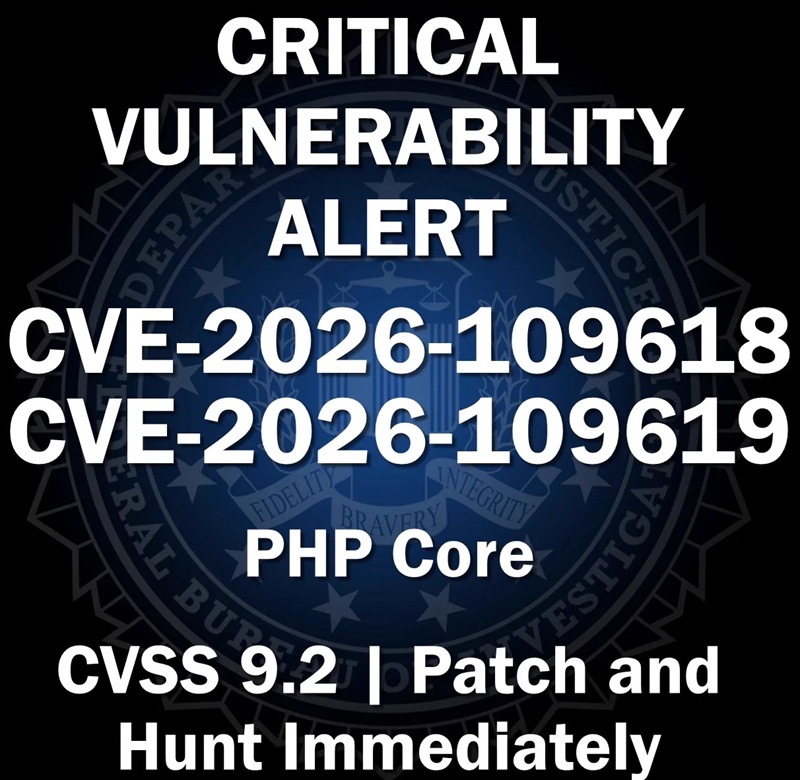
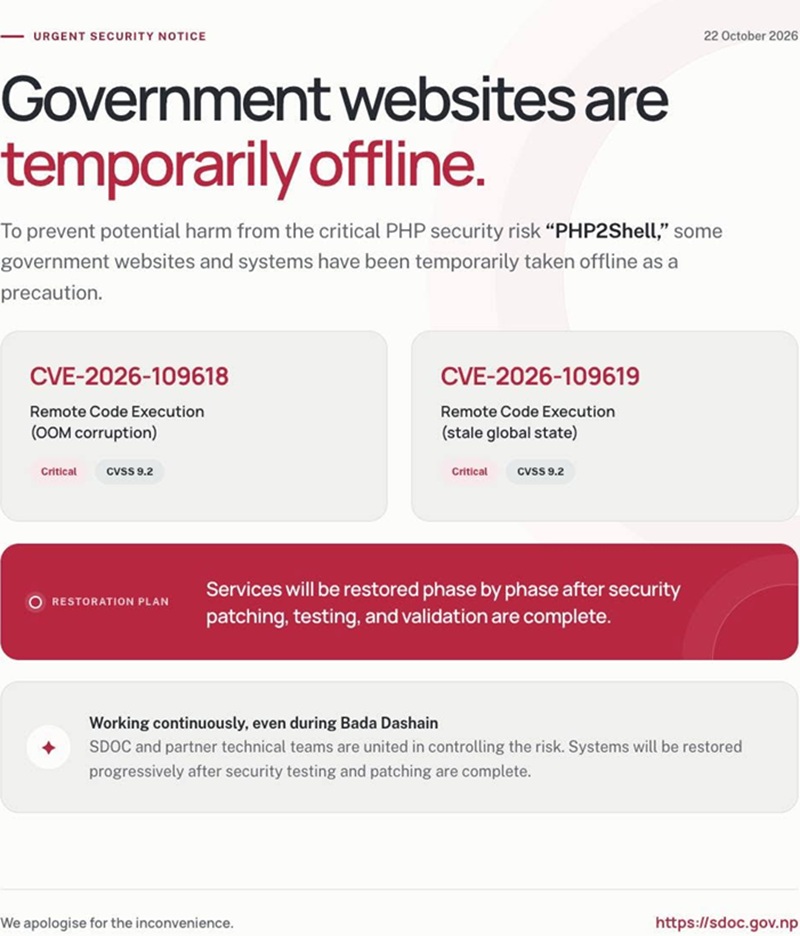
Following a severe global PHP security vulnerability, Nepal Rastra Bank (NRB) has temporarily suspended its website and related services as a precautionary measure. To protect Nepal’s financial sector, NRB has urged all banks, BFIs, PSOs, and PSPs to strengthen server security, continuously monitor logs, and maintain heightened vigilance. Learn about critical cybersecurity recommendations, patch updates, NIST/ISO frameworks, and expert assessment strategies for financial systems.
Following severe global security vulnerabilities discovered in the PHP web programming language, Nepal Rastra Bank (NRB) temporarily suspended its website and related services as a precautionary measure. This incident highlights the critical need for robust cybersecurity measures across the financial sector.
Key Highlights
The Vulnerability: Severe security flaws in PHP could allow unauthorized attackers to bypass login credentials, gain unauthorized access, and steal sensitive data.
NRB’s Precautionary Shutdown: To prevent potential cyber-attacks, the central bank temporarily halted its website services.
Call to Action: Banks, Financial Institutions (BFIs), Payment System Operators (PSOs), Payment Service Providers (PSPs), and remittance companies have been urged to adopt high-level security vigilance.

1. Cybersecurity Recommendations (Patch Release & Updates)
Immediate Patching: Organizations must urgently update and patch their PHP environments to the latest secure releases provided by official vendors.
Component Updates: Regularly update all web frameworks, CMS plugins, and third-party libraries.
Strict Access Control: Enforce Multi-Factor Authentication (MFA) for administrative access and backend databases.
2. Cybersecurity Assessment
VAPT (Vulnerability Assessment and Penetration Testing): Conduct comprehensive penetration testing to proactively identify and remediate server and application flaws.
Advertisement

Source Code Security Audits: Perform thorough code reviews on PHP-based applications to eliminate security vulnerabilities like injection flaws.
Continuous Log Monitoring: Implement Security Information and Event Management (SIEM) solutions for real-time threat detection.
3. Frameworks and Standards
Financial institutions should align with recognized security frameworks:
ISO/IEC 27001: Establish an Information Security Management System (ISMS).
NIST Cybersecurity Framework: Follow the Identify, Protect, Detect, Respond, and Recover functions.
PCI-DSS: Ensure strict compliance for handling payment and transaction data (mandatory for PSOs and PSPs).
NRB IT Directives: Strictly comply with the central bank’s technology and cybersecurity guidelines.
Human Resources & Cybersecurity Experts
Dedicated Security Personnel: Employ certified cybersecurity professionals (such as CISSP, CEH, CISM) or partner with trusted managed security service providers (MSSPs).
Employee Training Programs: Conduct regular security awareness workshops to train staff against social engineering, phishing, and web-based threats.
For more: NRB Website Shutdown Global PHP Vulnerability