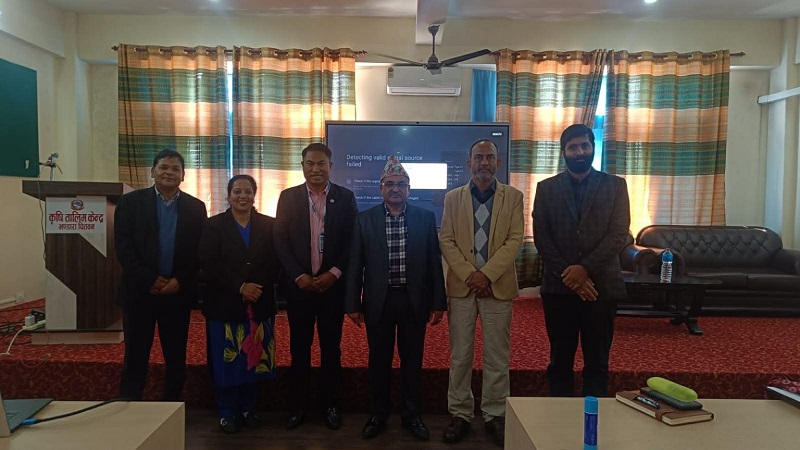
Chitwan Agriculture Insurance Training Held for Agents

19th February 2026, Kathmandu
The agricultural landscape of Nepal has reached a significant milestone in risk management with the successful conclusion of a specialized three day orientation program in Chitwan. Held at the Agriculture Training Center in Bhandara from Falgun 4 to Falgun 6, 2082 (February 16-18, 2026), the training was a collaborative initiative organized by the Department of Agriculture under the Ministry of Agriculture and Livestock Development and co-organized by the Nepal Insurance Authority. This workshop was specifically designed to bridge the gap between institutional insurance policies and the practical needs of rural farmers, focusing on the technical empowerment of insurance agents who serve as the primary link between the agrarian community and financial safety nets.
Chitwan Agriculture Insurance Training
Agriculture remains the backbone of Nepal’s economy, yet it is increasingly susceptible to the unpredictable impacts of climate change, including unseasonal floods, drought, and emerging pest infestations. The slogan of the training center, Krishi Mulashcha Jeevanam, which translates to agriculture is the foundation of life, served as the guiding philosophy for the sessions. Throughout the three day period, more than 50 technical employees and prospective insurance agents were immersed in a rigorous curriculum that balanced legal frameworks with hands-on operational training. The presence of high-level officials, including Province Secretary Baikuntha Adhikari and Deputy Director Rajendra Maharjan from the Nepal Insurance Authority, underscored the government’s commitment to making insurance a mandatory component of modern farming in the Bagmati Province.
The instructional design of the program was divided into thematic modules to ensure a comprehensive understanding of the sector. The first day was dedicated to the foundational principles of the Agriculture, Livestock, and Herbal Insurance Directive, 2079 (revised for 2082). Participants were educated on the government’s massive subsidy program, where the state provides up to an 80 percent subsidy on insurance premiums for smallholder farmers. For the fiscal year 2082/83, the government has allocated over 2.03 billion rupees for these subsidies, a figure that highlights the scale of the state’s involvement in de-risking the agricultural sector. The trainers emphasized that agents must be well-versed in these subsidy slabs—80 percent for sums insured up to 50 lakhs, 65 percent for 50 lakhs to 1 crore, and 50 percent for amounts exceeding 1 crore—to accurately guide farmers through the enrollment process.
As the training progressed into the second day, the focus shifted toward specialized insurance products and the legal rights of the insured. Detailed sessions were conducted on animal insurance policies, covering cattle, buffalo, and poultry, as well as niche sectors like beekeeping and production-based vegetable crop insurance. A particularly innovative segment of the workshop focused on contract farming and seed production insurance, which are vital for the commercialization of the Chitwan district’s fertile plains. The participants discussed the challenges of claim settlements, where delays often occur due to a lack of proper documentation. To address this, the Nepal Insurance Authority introduced the Draft of the Damage Assessor Directive, which aims to standardize the evaluation of losses and ensure that farmers receive their payouts in a transparent and timely manner.
Advertisement


The final day of the workshop was perhaps the most technically intensive, as it introduced participants to the Agriculture Insurance Real Time Software, commonly known as ALIS. This digital platform is a central pillar of the Nepal Insurance Authority’s strategy to modernize the sector. By using ALIS, agents can upload real-time data from the field, including photographs of tagged livestock and damaged crops, directly to the insurer’s server. This reduces the administrative burden of physical paperwork and minimizes the potential for fraudulent claims. Practical demonstrations on the ALIS software allowed participants to practice entering data for diverse crops like ginger, banana, and fish, as well as collective Chaite paddy insurance, which is a priority for the food security of the region.
The socio-economic impact of such training programs extends far beyond technical knowledge. By empowering local agents with legal and operational clarity, the Nepal Insurance Authority is fostering a culture of trust. Historically, many Nepali farmers have been hesitant to adopt insurance due to complex procedures and a lack of local support. However, with trained agents residing within the community, farmers now have a direct point of contact for grievance handling and policy renewal. The workshop also emphasized the ethical responsibility of agents, reminding them that they are not just selling a product but are providing a service that protects a family’s livelihood in the event of a disaster.
In conclusion, the Chitwan agriculture insurance training marks a proactive step toward a more resilient and insured agricultural ecosystem in Nepal. The combination of state-funded subsidies, advanced digital tools like ALIS, and a well-trained workforce of agents is transforming agriculture from a high-risk subsistence activity into a protected commercial venture. As the trainees return to their respective municipalities, the lessons learned in Bhandara will play a critical role in increasing insurance penetration across the 77 districts. This initiative ensures that the foundations of life, as reflected in the center’s motto, are secured against the uncertainties of nature and the market alike.
For More: Chitwan Agriculture Insurance Training