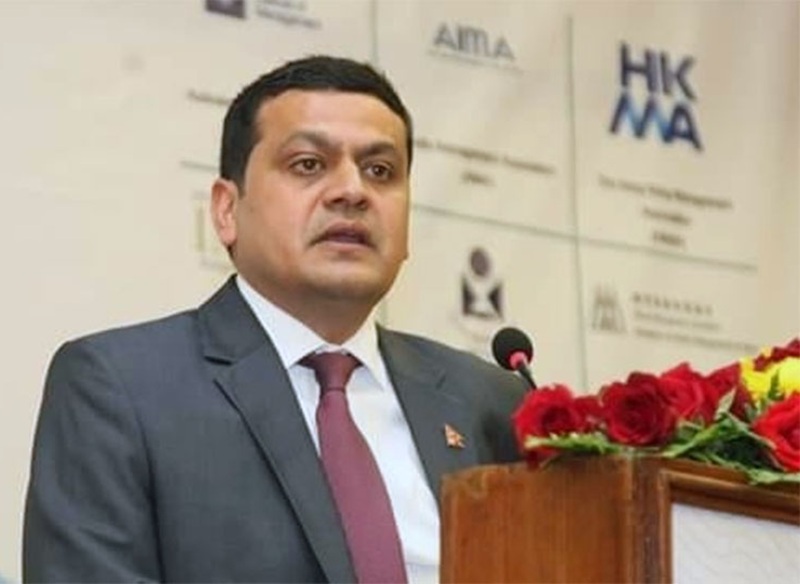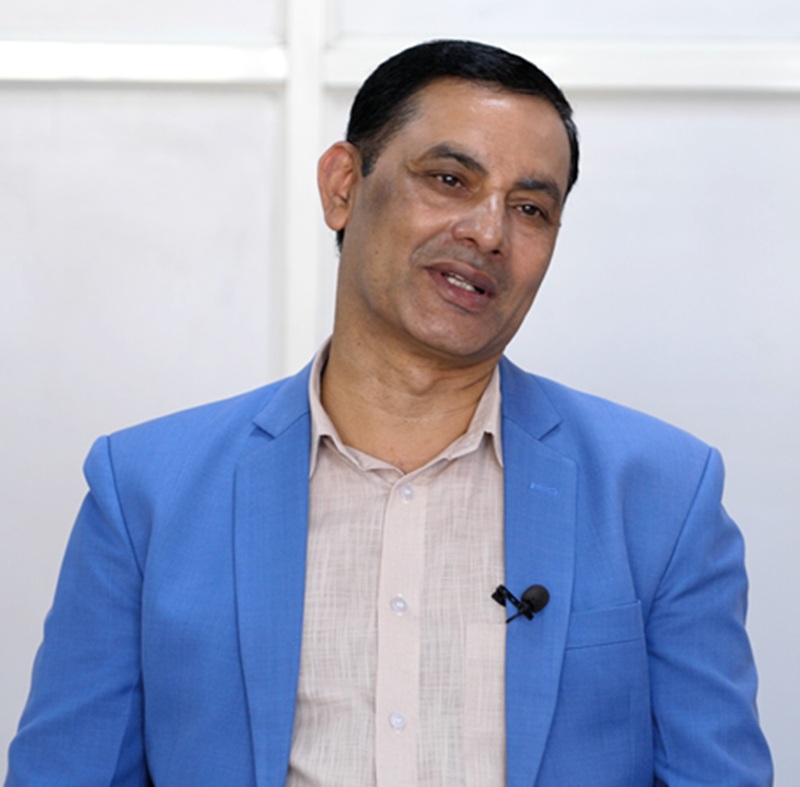
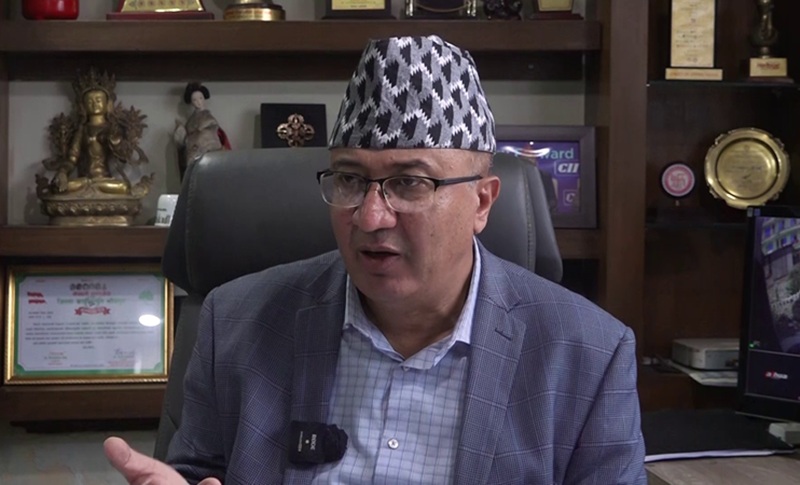
Dashain Market Active but Private Sector Holds ‘Wait-and-Watch’ Stance: FNCCI’s Hemraj Dhakal

18th October 2026, Kathmandu
FNCCI Former VP Hemraj Dhakal highlights festival market trends, flood impact on supply chains, and the urgent need for second-phase economic reforms in Nepal.
While the festive season of Dashain and Tihar has brought a temporary surge in consumer spending, Nepal’s private sector remains cautious. Hemraj Dhakal, Former Vice President of the Federation of Nepalese Chambers of Commerce and Industry (FNCCI), stated that the economy will fail to achieve sustained growth without deep-seated policy reforms and an investor-friendly environment.
Speaking in an interview with Nepal News Bank, Dhakal, who is also a leading candidate for the upcoming FNCCI presidency, highlighted that while the new government’s commitments to good governance and corruption control offer hope, business leaders are adopting a “wait-and-watch” approach until tangible policy results emerge.
Festive Demand Drives Short-Term Market Activity
The Dashain-Tihar period traditionally represents the peak retail and trading season in Nepal. Post-monsoon economic activity combined with holiday shopping for clothing, gold, food products, and home essentials has injected needed liquidity into local markets like Indrachowk and Asan.
However, Dhakal pointed out that full economic recovery faces headwinds:
Infrastructure Disruptions: Recent severe floods and landslides across major river basins from Bhotekoshi to Kaligandaki have severed vital transport linkages across multiple districts.
Muted Festivities: Human and property losses caused by natural disasters have dampened overall consumer enthusiasm for travel and entertainment compared to previous years.

FNCCI Demands ‘Second-Phase Economic Reforms’
According to Dhakal, short-term festive spending is insufficient to sustain nationwide economic health. Since the COVID-19 pandemic, the private sector has consistently pushed for structural reforms, including a dedicated Credit Recovery Act and a multi-rate tax system.
To unlock long-term domestic and Foreign Direct Investment (FDI), Dhakal outlined critical priority areas:
Advertisement

1. Eliminating Bureaucratic Red Tape
The government must shift its perspective toward private enterprise. Businesses drive job creation, state revenue, and capital formation. Government agencies need to streamline service delivery in land acquisition, forestry clearance, and local tax administration rather than creating regulatory bottlenecks.
2. Easing FDI and Capital Flow Frameworks
Nepal needs clear and simplified procedures for foreign investors to enter the market and repatriate profits. Strategic policy adjustments are also necessary to modernize the management of domestic capital.
3. Opening New Avenues for Private Investment
Drawing parallels to the landmark 1991 (2048 B.S.) economic liberalization—which unlocked private enterprise in banking, insurance, education, healthcare, and hydropower—Dhakal urged the government to open up new sectors:
Commercial Agriculture & Land Banks: Utilizing idle state land for large-scale agricultural corridors (such as apple farming in Jumla or maize cultivation in Jhapa).
Infrastructure Collaboration: Expanding private sector participation in power transmission lines and road construction.
Divestment of Inactive SOEs: Evaluating underperforming or non-operational state-owned enterprises and transferring them to private operation.
Outlook: Political Stability Key to Rebuilding Confidence
Dhakal emphasized that long-term capital deployment depends heavily on political stability. If business confidence grows around government stability and policy consistency over a five-year horizon, enterprises will be encouraged to expand existing operations and inject fresh capital into the economy.
Key Takeaway: While Dashain shopping provides a temporary boost to market liquidity, long-term economic acceleration in Nepal hinges on the government executing its promised second-phase economic reforms, reforming bureaucracy, and enabling private sector-led growth.
For more: Dashain Market Active but Private Sector Holds Wait