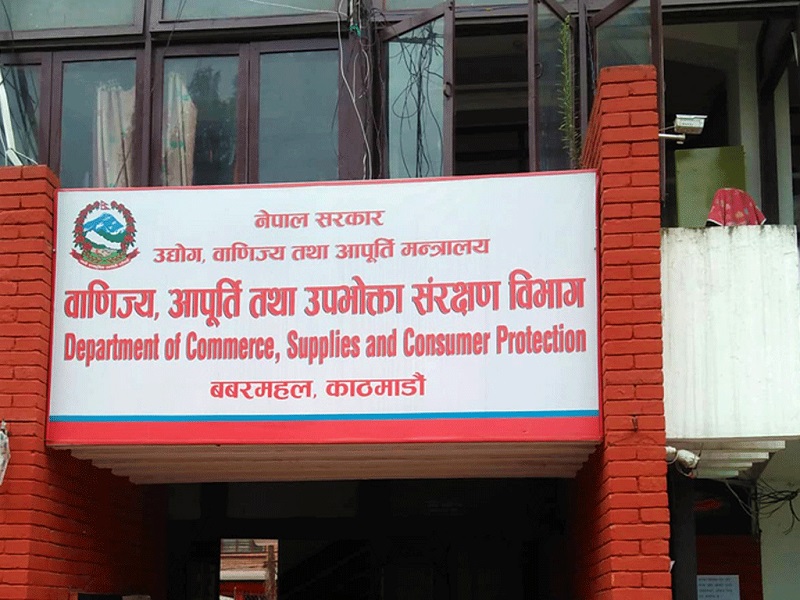
Department of Commerce Action Report: Fines and Ultimatum for Firms

23rd February 2026, Kathmandu
The regulatory landscape in the Kathmandu Valley has witnessed a significant tightening as the Department of Commerce, Supply, and Consumer Protection (DoCSCP) released its latest market monitoring and action report. In an effort to curb illegal business practices and protect the fundamental rights of consumers, the department has escalated its field inspections across various commercial hubs. On February 23, 2026 (Falgun 11, 2082), official records revealed that the department has transitioned from simple warnings to aggressive financial penalties and legal ultimatums. This move comes at a time when public concern over artificial price hikes, substandard food quality, and the lack of transparent billing has been rising. By utilizing the powers vested under the Consumer Protection Act 2075, the department is sending a clear signal to the business community that non-compliance will carry a heavy financial and reputational cost.
Department of Commerce Action
One of the most significant actions highlighted in the report is the heavy fine imposed on Bansbari Rice Mill. Located in the Bansbari area of Kathmandu, the mill was penalized 200,000 Nepali rupees for serious violations related to production and sales standards. The inspectors found evidence of illegal activities that compromised the integrity of the supply chain. Specifically, the firm was found to be in violation of Section 16 of the Consumer Protection Act, which deals with the prohibited acts of producers and sellers. In a separate action, Jayas Anya Ghar, situated in Mulpani Babachowk within the Kageshwari Manohara Municipality, was fined 10,000 rupees for minor regulatory lapses. While the amounts differ based on the severity of the offense, both penalties were levied according to the administrative fine procedures outlined in Section 39 of the Act, which allows the department to take immediate on-site action against offenders.
Beyond immediate fines, the Department of Commerce action report includes a stern three-day ultimatum issued to four major commercial entities. Most notably, Mega Mart Private Limited has been summoned to present comprehensive business documentation, including purchase invoices, tax registration papers, and quality certification records, for departmental verification. This investigative approach is designed to uncover deeper systemic issues such as hoarding, tax evasion, or the sale of smuggled goods. The department has clarified that if these firms fail to provide the required documentation within the seventy-two-hour window, they will face escalating legal consequences, which could include the sealing of their premises or the filing of formal criminal charges in the district court.
The scope of the department’s latest mission also extended to corrective instructions for seven other businesses found to have procedural irregularities. These firms were not immediately fined but were given written directives to overhaul their daily operations. The core issues identified during the inspection included the failure to display updated price lists, the absence of mandatory billing systems, and the presence of expired products on retail shelves. The department’s inspectors emphasized that displaying a visible price list is a mandatory requirement that allows consumers to make informed choices and prevents arbitrary overcharging. Furthermore, the instructions highlighted the necessity of adhering to strict labeling standards, which must include the batch number, manufacturing date, and the maximum retail price (MRP) in a legible format.
Advertisement


The strategic objective behind these proactive measures is to restore discipline in the marketplace. For too long, small and medium enterprises in Kathmandu have operated with a degree of laxity regarding consumer laws. By conducting high-profile raids and publishing the names of non-compliant firms, the department aims to foster a culture of accountability. Such initiatives are vital for maintaining a fair competitive environment where honest businesses are not undercut by those engaging in unethical practices. The department has announced that its monitoring teams will now be active during non-traditional hours, including early mornings and late evenings, to catch wholesalers and distributors who might be attempting to move unauthorized goods outside of regular business hours.
Furthermore, the Department of Commerce is collaborating with local municipalities and the Nepal Police to ensure that the ultimatums are respected. This multi-agency coordination is essential for handling large-scale commercial entities that have significant market influence. The department has also urged the general public to act as informal monitors by reporting suspicious activities, such as the relabeling of expired food items or the refusal of shopkeepers to provide a receipt. A dedicated hotline and digital portal have been established to receive such complaints, ensuring that the department’s limited manpower is deployed to the areas where consumer grievances are highest. This community-driven monitoring approach is expected to significantly amplify the impact of the department’s enforcement actions.
In conclusion, the Department of Commerce action report serves as both a record of enforcement and a warning to the private sector. With the imposition of substantial fines on entities like Bansbari Rice Mill and the strict documentation ultimatums given to firms like Mega Mart, the government is demonstrating its zero-tolerance policy toward consumer exploitation. As the three-day deadlines approach, the business community must realize that the cost of compliance is far lower than the cost of penalties and potential closure. For the consumers of the Kathmandu Valley, these actions provide a necessary safeguard, ensuring that the products they purchase are safe, accurately priced, and legally sourced. The department’s commitment to ongoing and impartial monitoring is a cornerstone of a healthy and transparent national economy in the year 2082 and beyond.
For More: Department of Commerce Action