CAN Federation Unveils ‘Digital Koshi Vision’ to Transform Local Governance and Eradicate Digital Divide

13th June 2026, Kathmandu
In a major push to decentralize digital governance and bridge the digital divide at the grassroots level, Chiranjibi Adhikari, Acting President of the Computer Association of Nepal (CAN) Federation, has officially unveiled the ‘Digital Koshi Vision.’
Digital Koshi Vision
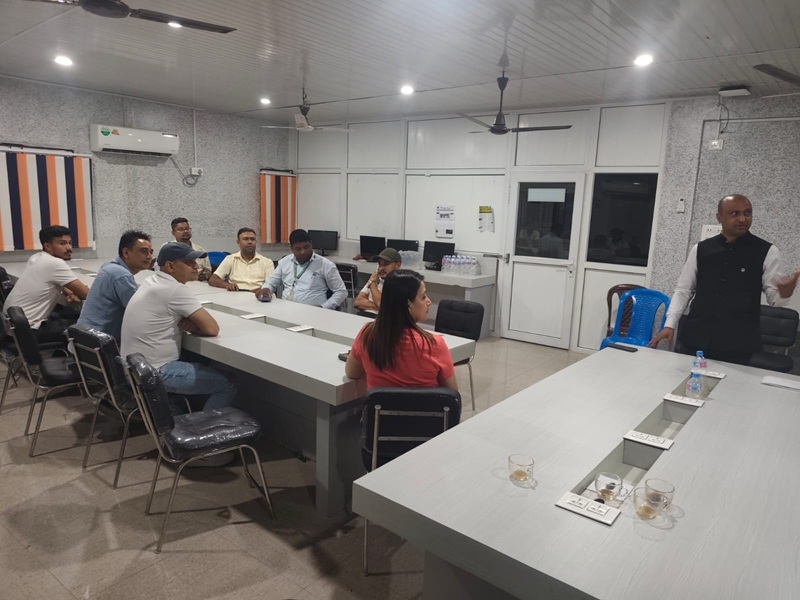
The landmark strategic roadmap was presented during the “Digital Koshi Dialogue 2026” held in Birtamod. Jointly organized by the CAN Federation Koshi Province and CAN Federation Jhapa Chapter, the event gathered key Nepalese ICT experts, local government representatives, and tech entrepreneurs to discuss the theme: “Digital Governance in Municipalities and Provinces: Perspectives, Status, Efforts, and the Way Forward.”

Nepal’s Digital Governance: Higher Rankings But Pressing Challenges
During his keynote presentation, Adhikari highlighted Nepal’s notable progress on the global stage. According to the United Nations E-Government Development Index (EGDI), Nepal has successfully transitioned from the “Middle” to the “High” category. This milestone places Nepal among the leading nations within the Least Developed Countries (LDCs) group, alongside Bhutan, Bangladesh, and Cambodia.
However, data from the World Bank’s GovTech Maturity Index (GTMI) points to critical bottlenecks that Nepal must overcome:
Improved Service Delivery: The Public Service Delivery Index (PSDI) improved from a ‘C’ to a ‘B’ rating, signaling better online access to public services.
The Civic Engagement Gap: Conversely, the Digital Civic Engagement Index (DCEI) dropped from ‘C’ to ‘D’.
“The decline in civic engagement highlights an urgent need for interactive, e-participation tools that involve citizens directly in local government decision-making processes,” Adhikari emphasized.
The Reality of Local Governance: A Deepening Digital Divide
While Koshi Province currently leads the country in developing “core digital systems,” a recent survey of 434 local bodies across Nepal exposes an alarming digital disparity.
Although local governments widely use official websites and digital revenue logging, basic connectivity remains broken. Approximately 4% to 13% of local bodies still operate on internet speeds below 1 to 2 Mbps. Compounding this issue, these under-connected local offices are paying exorbitant monthly fees ranging from Rs. 13,000 to Rs. 16,000 for sub-par services.
‘Locked Data’ Choking Economic Growth
One of the most critical warnings issued in the Digital Koshi Vision is the prevalence of “Data Silos.” Because different local bodies utilize isolated software systems built by fragmented vendors, data cannot seamlessly flow between departments.
Advertisement

“Until data is contextualized and integrated, it is just a useless string of numbers,” Adhikari stated bluntly. “Our development is stagnant because our data is locked. Weak network designs, absolute vendor lock-in, and a lack of power and data backups are frequently halting essential public services.”
The 10 Strategic Pillars of the Digital Koshi Vision
To address these systemic flaws and foster holistic provincial growth, the CAN Federation outlines ten foundational pillars:
| Pillar | Target Focus | |
| 1 | Digital Infrastructure | High-speed connectivity for all local government tiers. |
| 2 | Digital Education | Smart classrooms and modernized, tech-driven curricula. |
| 3 | Digital Tourism | Smart tourism platforms to promote Koshi’s landmark destinations. |
| 4 | Cybersecurity & Data Management | Implementation of strict data sovereignty and security protocols. |
| 5 | Digital Entrepreneurship | Ecosystem support for Nepalese tech startups and local innovators. |
| 6 | Digital Governance | Safe, transparent, and completely paperless citizen services. |
| 7 | Digital Health | Integrated telehealth networks and digitized medical records. |
| 8 | Digital Agriculture | Tech-driven farming, market pricing apps, and agricultural data. |
| 9 | Digital Finance | Seamless digital wallets and cashless local governance transactions. |
| 10 | Smart Cities | Sustainable, planned, and IoT-enabled urban ecosystems. |
Policy and Technological Reforms: Implementing Sovereign AI
To convert this vision into an immediate reality, the CAN Federation has proposed bold, actionable policy overhauls:
Sovereign AI Deployment: Localize Large Language Models (LLMs) to create a secure, Sovereign AI platform tailored for local languages and municipal workflows.
Mandatory Security Audits: Implement the National Minimum Security Standards (NMSS) across all municipal portals, public applications, and the citizen-facing Nagarik App.
Tax Incentives for Nepalese Tech: Introduce a 1% corporate tax rate for homegrown IT companies and mandate a “Made in Nepal” software procurement preference for public offices.
Infrastructure as a Service (IaaS): Utilize Public-Private Partnerships (PPP) to set up green data centers and regional ICT innovation labs across Koshi Province.
A Call for Coordinated Digital Democracy
The event saw strong backing from regional leaders. Krishna Ghimire, Secretary of CAN Federation Koshi Province, hailed the vision as a “vital blueprint” for local digital transformation. Similarly, Subha Kumai Pathak, President of CAN Federation Jhapa, added that achieving deep digital literacy at the root level is the only way to ensure sustainable development across the province.
Concluding his presentation, Adhikari reiterated that effective e-governance requires a collaborative, tri-tier government model: “Federal leadership, Provincial facilitation, and Local execution.”
By shifting the perspective of IT from an operational expense to a core infrastructural investment, the CAN Federation believes Nepal is well on its way to entering a new era of citizen-centric digital democracy.
For more: Digital Koshi Vision